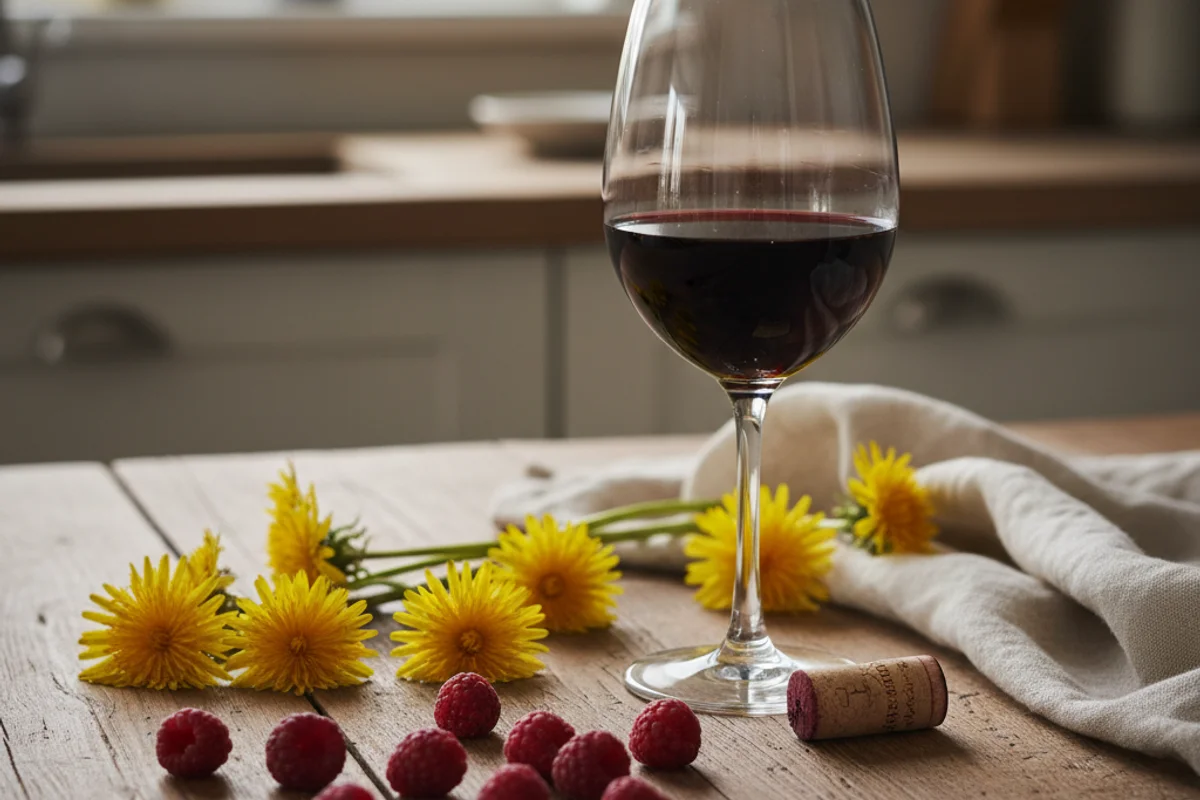
Dandelion and Black Raspberry Wine
Spring’s most overlooked weed meets one of its boldest berries. Dandelion petals bring a delicate, almost honey-like floral note that disappears the moment you cook them wrong — but handled carefully, they become the backbone of something genuinely surprising. Black raspberries push back with deep, jammy fruit and a tartness that keeps the whole thing from going flat. Cinnamon, citrus zest, and a generous pour of honey round out a wine that drinks like a warm afternoon in early May. Give it a full year in the bottle and it will reward your patience.
The beginner trap: Using the entire dandelion flower — including the green sepals — instead of petals only will make your wine unpleasantly bitter.
Ingredients
- 2 quarts dandelion petals (from freshly picked blossoms, green parts removed)
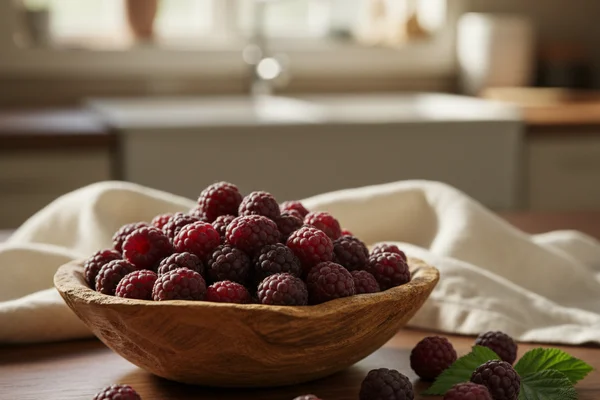
- 1 cup black raspberries, fresh or frozen
- 5 cups honey (clover or wildflower work well)
- 1 lemon
- 1 orange
- 1 cinnamon stick, about 4 inches
- 5½ pints (11 cups) water
- 1 tsp yeast nutrient
- 1 Campden tablet, crushed
- ¼ tsp wine tannin (or 2 oz strongly brewed black tea as a substitute)
- 1 packet wine yeast (Lalvin 71B or EC-1118)
Method
- Pull the petals away from every dandelion blossom and discard all green parts — stems, sepals, and bases — completely.
- Use a vegetable peeler to remove thin strips of zest from the lemon and orange, then cut away and discard all the white pith before slicing the fruit thinly.
- Put the petals, citrus slices, citrus zest, black raspberries, and cinnamon stick into a nylon straining bag and tie it shut; place the bag in your primary fermenter.
- Add the honey to the primary, bring the water to a full boil, then pour it directly over the bag; stir thoroughly until the honey fully dissolves.
- Cover the fermenter loosely and let it cool; once it is below 90°F, stir in the yeast nutrient and tannin.
- When the must reaches room temperature (65–75°F), sprinkle the yeast over the surface and re-cover.
- Squeeze and stir the bag once a day for five days to draw out flavor and color.
- On day five, lift the bag and let it drip drain back into the fermenter; squeeze it gently one last time, then discard the solids.
- Dissolve the crushed Campden tablet in ½ cup of warm water and stir it into the must; re-cover and continue fermenting until the specific gravity reaches 1.010 (typically 14–21 days).
- Rack the wine into a clean secondary fermenter (a 1-gallon glass jug works fine) and fit an airlock.
- Rack again every 30 days for the next 90 days, topping up each time to minimize headspace.
- After the final racking, stabilize with potassium sorbate and potassium metabisulfite, let the wine settle for two weeks, then rack into bottles and age for at least one year.
Why this works
Dandelion petals are loaded with flavonoids but have almost no natural acid, body, or tannin on their own — which is exactly why this recipe leans on four other sources to fill those gaps. The citrus provides tartaric and citric acid, which keep the wine lively and help prevent spoilage. Black raspberries contribute anthocyanins (the pigments that give red wines their color) and just enough fruit tannin to add texture. The added wine tannin supplements structure further. Honey brings fermentable sugars but very little flavor of its own at this dilution, letting the floral and berry notes stay front and center. The long aging time allows esters to form, softening any rough edges and knitting all these separate flavors into one coherent wine.
Notes
Frozen black raspberries are an excellent choice here — freezing breaks down cell walls and releases more juice and flavor than fresh fruit often does. If you can’t find black raspberries, blackberries are the closest grocery-store substitute. Campden tablets are sold at most homebrew shops and online; potassium metabisulfite powder used at ¼ tsp per 5 gallons is a direct swap if tablets aren’t available.