Dandelion and Kiwi Wine
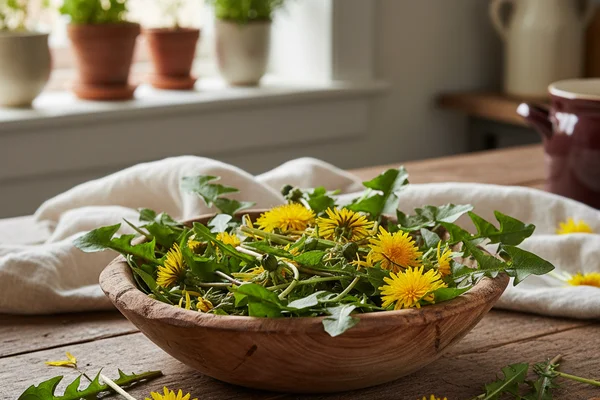
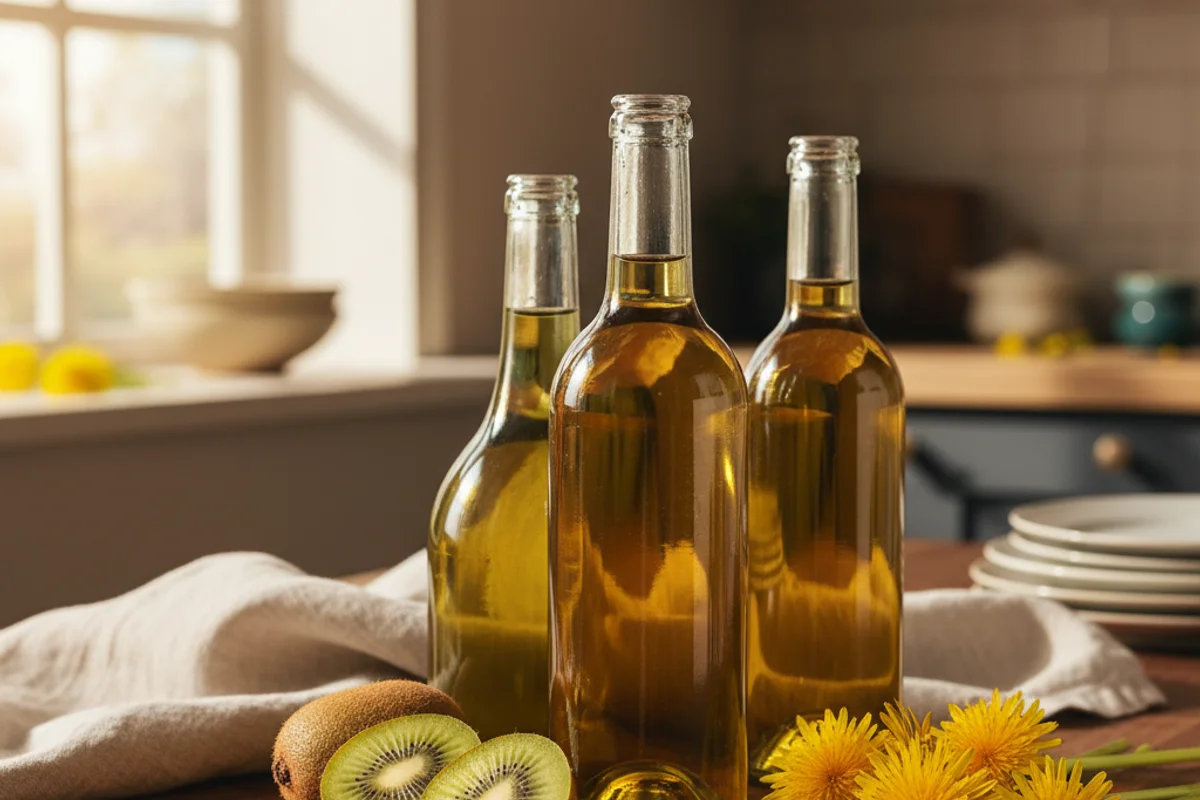
Dandelions are a weed to your lawn care guy and a goldmine to a winemaker. Their petals carry a delicate, honey-like floral note that disappears fast if you’re not careful — but pair them with kiwi’s bright tartness and a hit of citrus zest, and something genuinely interesting happens. The result is a pale, aromatic wine with a tropical edge that most people can’t place on the first sip. It’s the kind of thing you open in summer and finish before you meant to.
The beginner trap: Using dandelion flowers with the green base (calyx) still attached will push bitter, grassy flavors into your wine — pull petals only.
Ingredients
- 3 quarts dandelion petals (green parts removed)
- 12–16 kiwis, fresh or frozen, sliced thin (no need to peel)
- ¼ cup golden raisins, finely chopped
- Juice and zest of 2 lemons
- Juice and zest of 1 orange
- 5 cups granulated white sugar
- 7¼ pints (about 3.6 liters) water
- 1 Campden tablet, crushed
- 1 tsp yeast nutrient
- ½ tsp pectic enzyme
- 1 packet wine yeast (Lalvin 71B or EC-1118 work well)
Method
- Bring the water to a full boil. While it heats, zest and juice the lemons and orange, chop the raisins, and slice the kiwi.
- Add the dandelion petals, chopped raisins, citrus zest, sugar, and yeast nutrient to your primary fermenter. Pour the boiling water over everything and stir until the sugar fully dissolves.
- Let the mixture cool to room temperature (below 75°F / 24°C). Add the sliced kiwi, citrus juice, and crushed Campden tablet. Stir, cover, and leave it alone for 12 hours.
- Add the pectic enzyme, re-cover, and wait another 10 hours.
- Activate your yeast according to the packet instructions, then pitch it into the must. Cover loosely to allow CO₂ to escape.
- Stir the must once daily. After 5 days of active fermentation, strain out all solids and transfer the liquid to a glass secondary fermenter (carboy).
- Do not top up yet — leave some headspace. Fit an airlock and let it sit for 5 more days.
- Top up to within an inch of the airlock with water or a neutral wine, then refit the airlock.
- Once the wine clears, rack it off the sediment into a clean carboy, top up, and refit the airlock. Repeat this racking every 3 months until no new sediment forms over a full 3-month period.
- Stabilize the wine (potassium sorbate + a fresh Campden tablet), wait 2 weeks, then rack carefully into bottles. Wait at least 6 months before opening the first one.
Why this works
Kiwi is loaded with pectin, the same stuff that makes jam gel. Left alone, pectin turns your finished wine cloudy and stubbornly hazy. Pectic enzyme (also sold as “pectinase” at homebrew shops) breaks those long-chain carbohydrates apart before fermentation really gets going, giving you a clear wine instead of a murky one. The staggered timeline — Campden first, then pectic enzyme hours later — matters because sulfite from the Campden tablet can inhibit the enzyme. Waiting those extra hours lets the sulfite dissipate enough so the enzyme can actually do its job.
Notes
Frozen kiwi works fine here and is often easier to find year-round; thaw completely before slicing. If you can’t find golden raisins, regular seedless raisins are a fair swap — they add body and a small amount of nutrients without much flavor impact. Pectic enzyme is sold at any homebrew supply store and on Amazon; don’t skip it with kiwi.