Dandelion and Peach Wine
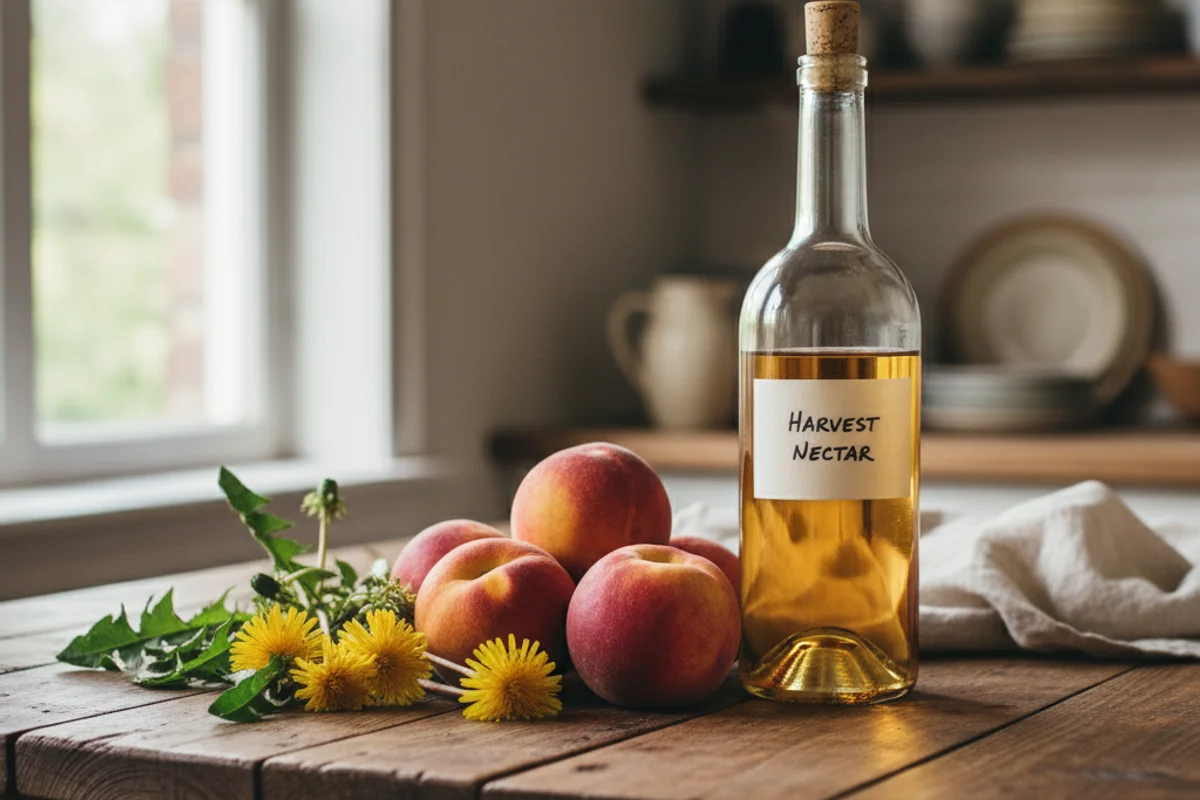
Dandelion petals bring something unexpected to the glass: a faintly honey-like, almost grassy sweetness that you can’t quite name but absolutely can’t ignore. Pair that with ripe summer peaches and a hit of citrus zest, and you get a wine that smells like a warm afternoon and tastes like you planned the whole thing on purpose. This is a slow build — the kind of wine that rewards patience and punishes shortcuts. The good news? Most of the work happens in the first week. The rest is just waiting.
The beginner trap: Using dandelion petals that still have green sepals attached — those bitter green bits will throw a harsh, vegetal flavor through the entire batch, so strip the petals clean before anything else.
Ingredients
- 3 quarts dandelion petals, green parts removed
- 3 lbs ripe peaches, fresh or frozen, pitted and chopped
- ¼ cup golden raisins, finely chopped (regular raisins work fine)
- Juice and zest of 2 lemons
- Juice and zest of 1 orange
- 5 cups granulated white sugar
- 6¾ pints water (about 13½ cups)
- 1 Campden tablet, crushed
- 1 tsp yeast nutrient
- 1 tsp pectic enzyme
- 1 packet wine yeast (Lalvin 71B or EC-1118 are solid choices)
Method
- Bring the water to a full boil. While it heats, pit and chop the peaches, finely chop the raisins, and zest and juice the citrus.
- Combine the dandelion petals, peaches, raisins, citrus juice, citrus zest, sugar, yeast nutrient, and crushed Campden tablet in your primary fermenter (a food-grade bucket works great).
- Pour the boiling water over everything and stir well until the sugar fully dissolves.
- Cover the fermenter loosely and let it cool to room temperature — this usually takes 2–3 hours.
- Once cool, stir in the pectic enzyme, re-cover, and leave it alone for 10 hours.
- Activate your yeast according to the packet instructions, then add it to the must and cover again.
- Stir the must once daily for 5 days while active fermentation runs its course.
- After 5 days, strain out all the solids through a mesh bag or fine strainer, then transfer the liquid to your secondary fermenter (a glass carboy is ideal). Do not top it up yet — leave that headspace.
- Fit an airlock and let it sit for another 5 days, then top up with a little water or similar wine to minimize headspace and reattach the airlock.
- Once the wine clears, rack it into a clean vessel, top up, and refit the airlock.
- Continue racking every 3 months until no new sediment forms over a full 3-month period.
- Stabilize the wine (potassium sorbate plus a Campden tablet), wait 2 weeks, then rack carefully into bottles. Wait at least 6 months before opening one — a year is better.
Why this works
Dandelion petals and peaches are both low in the tannins and acids that give wine its backbone, so the recipe borrows structure from two other sources. The lemon and orange juice supply tartaric and citric acid, which keep the pH in a range where yeast thrive and spoilage bacteria struggle. The raisins add a small but meaningful dose of natural tannin along with extra fermentable sugars and body. Pectic enzyme is non-negotiable here — both peaches and citrus are loaded with pectin, a natural thickener that will leave your wine permanently cloudy without enzymatic help. Adding it after the must cools below about 80°F (27°C) protects the enzyme’s activity; heat destroys it fast.
Notes
Frozen peaches work beautifully here and are often riper-tasting than off-season fresh fruit — thaw them completely before use. If you can’t find golden raisins, regular dark raisins substitute 1:1 with no drama. Collecting dandelion petals takes time; harvest from lawns that have never been sprayed with herbicides or pesticides, and pick in the morning when the blooms are fully open.