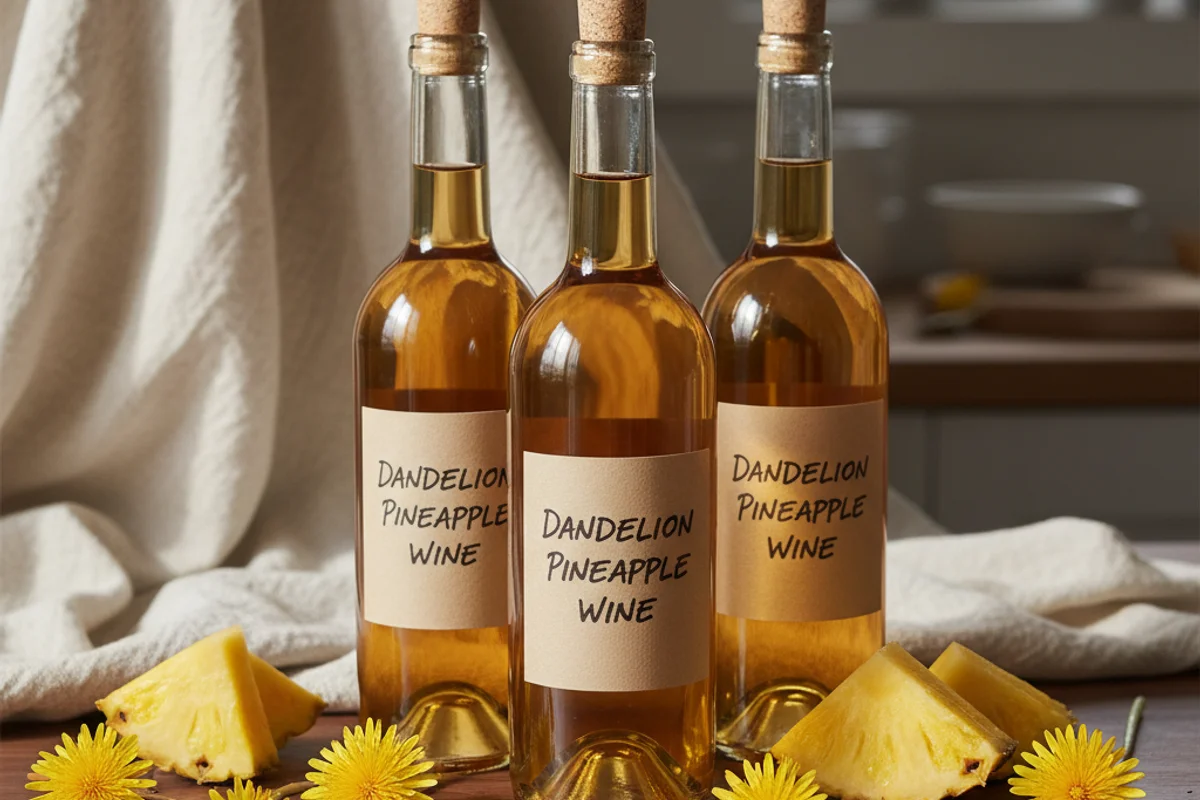
Dandelion and Pineapple Dessert Wine
Picture a lazy summer afternoon — the lawn dotted yellow, a pineapple ripening on the counter. Now imagine turning both of those things into a chilled, golden dessert wine that tastes like sunshine filtered through tropical fruit. Dandelion petals bring a soft, honey-like floral note. Very ripe pineapple — skin, core, and all — brings bright acidity and bold tropical sweetness. Together they build a wine that finishes rich enough to serve after dinner but refreshing enough to pour over ice on a hot day.
The beginner trap: Skipping the full five-day cold steep for the dandelion petals — rushing this step leaves you with thin, grassy flavor instead of the deep floral character the wine needs.
Ingredients
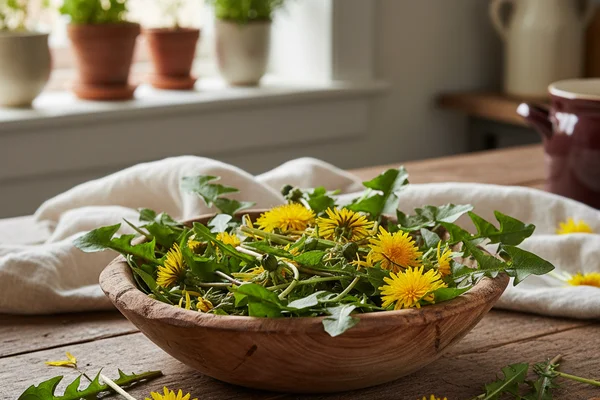
- 3 quarts dandelion flower petals (all green parts removed)
- 1 very ripe pineapple, unpeeled and uncored, cut into ½-inch chunks (fresh; canned will not substitute well here)
- 7 pints (3.5 quarts) water
- Juice and zest of 2 lemons
- 4 lbs granulated white sugar, divided
- 1 Campden tablet, crushed
- 1 tsp yeast nutrient
- 1 packet high-alcohol wine yeast (such as EC-1118 or Red Star Premier Cuvée)
Method
- Bring the water to a full boil, then pour it over the dandelion petals in your primary fermenter. Cover tightly and let it steep at room temperature for 5 days.
- Strain the dandelion liquid through a nylon mesh straining bag, squeezing firmly to pull out every bit of flavor. Discard the spent petals.
- Remove the top and stem from the pineapple but leave the skin and core on. Slice it crossways into ½-inch rounds, then cut those rounds into ½–¾-inch chunks, saving every drop of juice that runs off the cutting board.
- Add the pineapple chunks and juice, lemon juice and zest, 2 lbs of the sugar, the crushed Campden tablet, and the yeast nutrient to the dandelion liquid. Stir until the sugar dissolves, then cover and let it sit for 12 hours.
- Prepare your yeast according to the packet directions, then add the activated yeast to the must. Cover loosely and stir daily until the specific gravity drops to 1.010.
- Stir in the remaining 2 lbs of sugar until fully dissolved. Re-cover and leave it alone until the specific gravity falls to 1.010 again.
- Strain the wine through a clean nylon bag, pressing the pineapple pieces to recover all the liquid, then transfer everything to a glass secondary fermenter fitted with an airlock.
- Rack, top up with water or a neutral wine, and refit the airlock every 30 days until the wine clears completely.
- After 60 more days, rack again, top up, and add a stabilizer (potassium sorbate plus a fresh Campden tablet). Wait 10 days.
- Rack one final time, sweeten to a specific gravity of 1.020 (taste as you go), then bottle. Age in the bottle for at least one year before opening.
Why this works
Two fermentation stages with a sugar split is not just old-fashioned caution — it is smart yeast management. Adding all four pounds of sugar up front would create a high-osmotic environment that stresses yeast early and can stall fermentation. By holding back half the sugar until the first wave of activity winds down, you keep the yeast happy through both phases and push the final alcohol higher without a stuck ferment. The unpeeled pineapple is equally deliberate: the skin and core hold tannin-like compounds and concentrated aroma that the flesh alone cannot provide. The long cold infusion on the dandelion petals works the same way — time extracts the delicate floral oils that heat alone would destroy.
Notes
Wild-harvested dandelions work best; just make sure they come from a lawn that has never been treated with herbicides or pesticides. If dandelion season is short in your area, freeze freshly picked petals (green parts already removed) in zip-lock bags and use them directly from frozen — no thawing needed. For the pineapple, the riper the better: the natural sugar content is higher and the bromelain enzyme is more active, both of which help fermentation move along cleanly.