Dandelion and Strawberry Wine
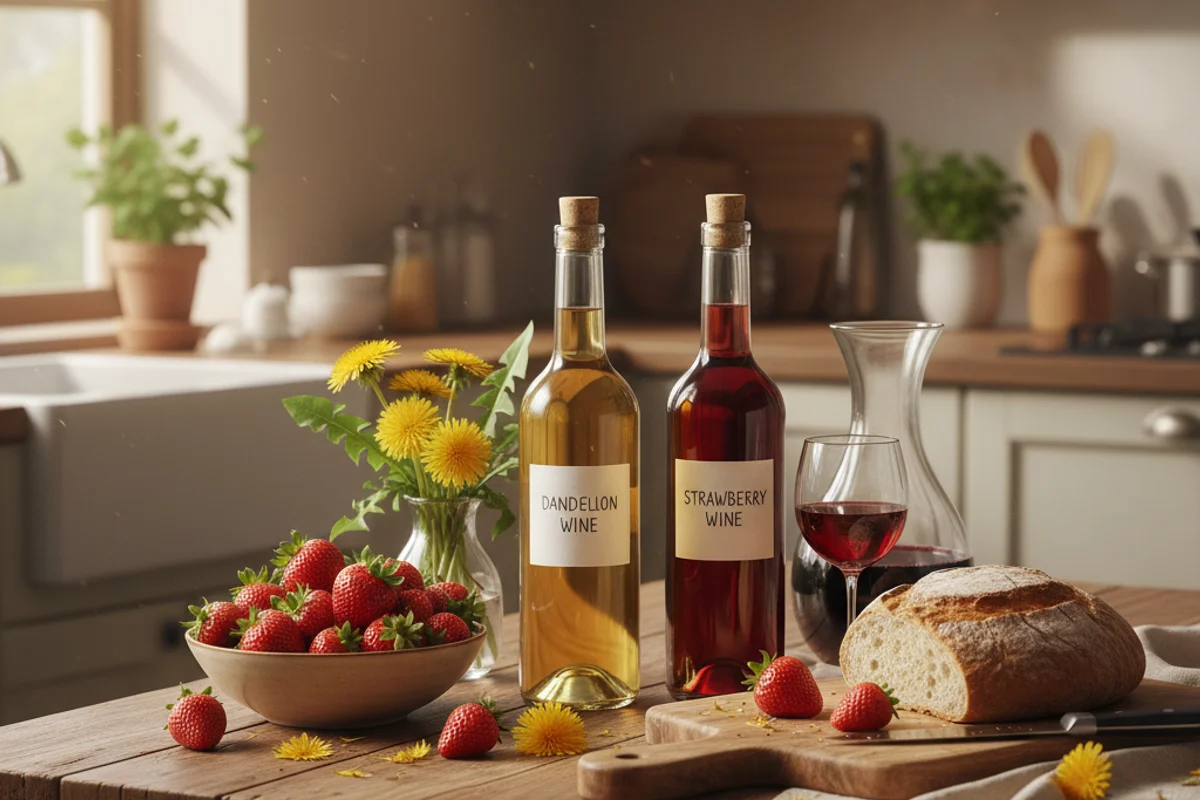
Spring arrives, and suddenly your lawn becomes a winery. Dandelion petals bring a faint, grassy honey note — almost like someone left wildflower tea out in the sun — while strawberries pull the whole thing back toward something familiar and bright. Together, they make a wine that tastes like the first warm weekend of the year smells. It’s floral without being perfumey, fruity without being syrupy, and genuinely surprising in the glass.
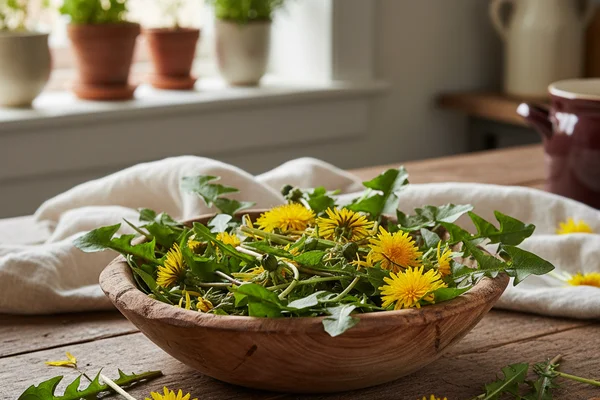
The beginner trap: Leaving any green parts of the dandelion — stems, calyxes, white base — in the must will make your wine unpleasantly bitter.
Ingredients
- 2 quarts dandelion petals, yellow only (no green parts)
- 2 lbs strawberries, fresh or frozen
- 2 lbs granulated sugar
- Juice of 1 lemon
- Juice of 2 oranges
- 3/4 tsp pectic enzyme
- 1 Campden tablet, crushed
- 1 tsp yeast nutrient
- 1 packet wine yeast (Lalvin 71B or EC-1118 work well)
Method
- Wash the dandelion heads and pull the yellow petals free, discarding every bit of green stem and base.
- Rinse and hull the strawberries, then chop them coarsely. If using frozen, thaw them first and keep the juice.
- Combine the petals, strawberries, citrus juice, sugar, yeast nutrient, and crushed Campden tablet in your primary fermenter. Stir well until the sugar is fully dissolved.
- Cover the vessel and leave it in a cool spot for 12 hours.
- Stir in the pectic enzyme, cover again, and wait another 12 hours.
- Activate your yeast according to the packet instructions, then add it to the must.
- Stir the must once daily for 5–7 days while fermentation is most active.
- Strain out the solids, pressing them gently to recover most of the liquid. Discard the pulp.
- Transfer the wine to a secondary fermenter (a glass carboy or jug), but leave some headspace — do not top it up yet. Attach an airlock.
- Ferment for 30 days, then rack into a clean vessel, top up with water or a similar wine to minimize headspace, and reattach the airlock.
- Rack again every two months until the wine is clear and no new sediment appears between rackings.
- Stabilize the wine (potassium sorbate plus a fresh Campden tablet), wait two weeks, then sweeten to taste if desired, and bottle.
- Age at least 6 months before opening — a year will reward your patience.
Why this works
Strawberries are loaded with pectin, the same stuff that makes jam gel. In wine, pectin creates a stubborn haze that no amount of patience will fix on its own. That’s exactly what pectic enzyme — also sold as pectinase — is for. It breaks the long pectin chains apart, letting the haze drop out and your wine clear properly. The 24-hour wait between adding the Campden tablet and adding the enzyme matters too: sulfite from the Campden can inhibit the enzyme if they’re introduced at the same time. Letting the sulfite off-gas first gives the enzyme a clean environment to do its job.
Notes
Frozen strawberries are an excellent choice here — the freeze-thaw cycle breaks down cell walls and releases more juice and flavor than fresh fruit often does. If you can’t find dandelions (or your yard is treated with herbicides), this recipe still works well as a straight strawberry wine — just increase strawberries to 3 lbs and skip the petals.