Dandelion and Yellow Rose Petal Wine
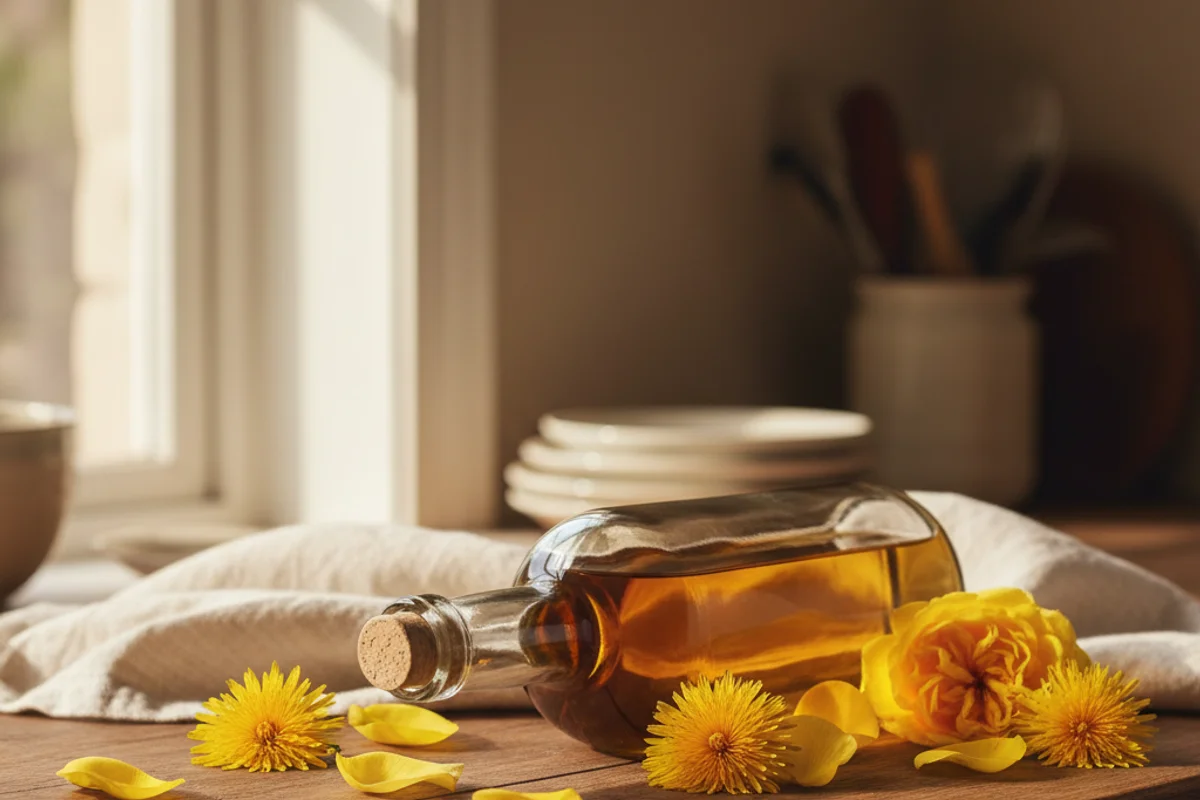
Spring puts out two of its finest ingredients for free, and this wine uses both. Dandelion petals bring a faintly honeyed, grassy bitterness, while fragrant yellow rose petals layer in soft floral aromatics that smell like a warm afternoon in someone’s grandmother’s garden. White grape concentrate and citrus zest give the whole thing backbone and brightness. The result is a pale golden wine that rewards patience — it genuinely needs a full year in the bottle before it shows you what it’s capable of.
The beginner trap: Using green dandelion parts or scentless grocery-store roses will strip most of the flavor from the finished wine — petals only, and make sure they actually smell like something before they go in.
Ingredients
- 3 pints dandelion petals (green sepals removed)
- 3 pints fragrant yellow rose petals (fresh; no pesticide-treated flowers)
- ½ pint white grape concentrate (canned or frozen, from a homebrew shop or online)
- 7¼ pints water
- Juice and zest of 2 lemons
- Juice and zest of 1 orange
- 2½ lbs granulated white sugar
- 1 Campden tablet, crushed
- ¼ tsp pectic enzyme
- 1 tsp yeast nutrient
- 1 packet wine yeast (Lalvin 71B or a general-purpose white wine yeast)
Method
- Wash the flower petals and strip off any green material — stems, leaves, and sepals add bitterness you don’t want.
- Place petals in your primary fermenter, add the crushed Campden tablet and all the water, then cover loosely and let it sit for 3 days.
- Add the grape concentrate, sugar, lemon juice, lemon zest, orange juice, orange zest, pectic enzyme, and yeast nutrient; stir well to dissolve the sugar.
- Recover the fermenter and wait 12 hours, then sprinkle in your wine yeast.
- Cover and ferment for 5–7 days at room temperature, stirring the must once a day.
- Pour the must through a nylon straining bag; squeeze the petals gently to pull out extra flavor, but don’t wring them dry or you’ll push through bitter compounds.
- Transfer the strained liquid to a carboy, fit an airlock, and let it ferment undisturbed for 30 days.
- Rack into a clean carboy, top up with a little water to minimize headspace, refit the airlock, and wait another 30 days.
- Rack one more time, top up again, and add your stabilizer (potassium sorbate plus a fresh Campden tablet); wait 2 weeks.
- Sweeten to taste if desired, then bottle and store somewhere cool and dark for at least one full year before opening.
Why this works
Dandelion and rose petals hold their flavor in delicate aromatic compounds that are sensitive to heat, light, and oxidation. The Campden tablet at the start kills off wild yeast and bacteria without cooking anything, giving your chosen yeast a clean runway. Pectic enzyme breaks down the cell walls in the petals and citrus zest, releasing more color and aroma while also preventing a pectin haze in the finished wine. The white grape concentrate quietly adds body and a touch of natural acidity — flower wines lack the tannin and acid structure of grape wines, so without it you’d end up with something thin and flat. The long aging time lets harsh young alcohols mellow and lets the floral esters fully develop.
Notes
Only use roses you are certain have not been sprayed with pesticides — farmers’ market vendors or your own garden are your safest bets; florist shop roses are almost always treated. If you can’t find white grape concentrate at a homebrew shop, a small can of frozen white grape juice concentrate from the grocery store works as a substitute. This wine is quite pale, so expect a delicate straw-yellow color rather than anything bold.