DANDELION MEAD (Metheglin)
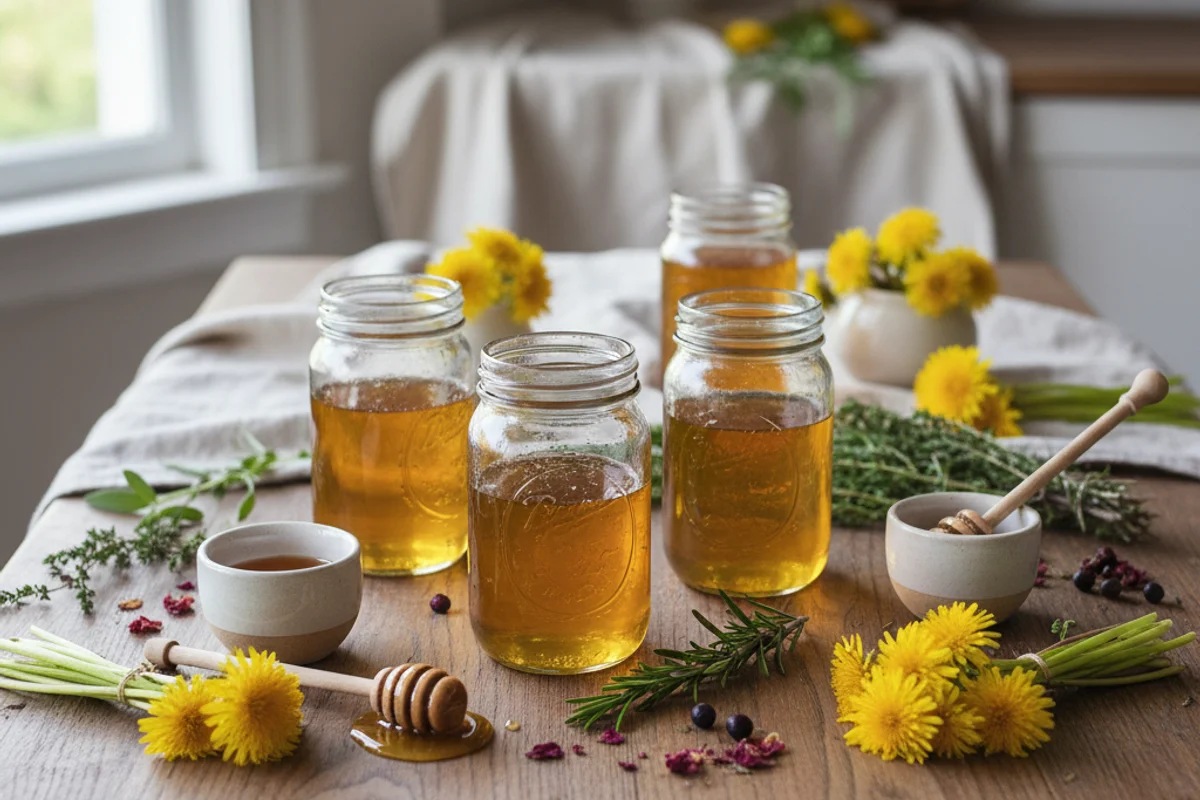
Dandelions are the weed your neighbor hates and your mead pot loves. Their petals carry a delicate, honey-like sweetness with just a whisper of bitterness — and when you pair them with real honey, citrus zest, and raisins, something genuinely surprising happens. The result is a golden, floral mead that smells like a warm spring afternoon and drinks like something far more intentional than a yard full of “weeds” has any right to produce. This is a slow reward: patience here is measured in months, not days.
The beginner trap: Squeezing the fruit bag to get more liquid will press bitter compounds and harsh tannins straight into your mead — drip-drain only, and walk away.
Ingredients
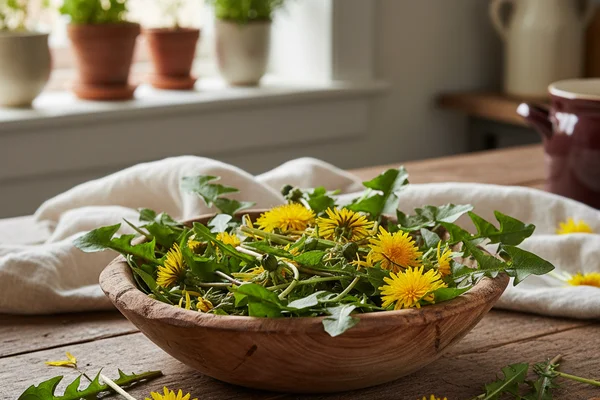
- 2 qts loosely packed dandelion petals (fresh or frozen; petals only — remove all green parts)
- 2½ lbs honey (any mild variety; clover or wildflower work well)
- ¾ lb white raisins or sultanas, chopped (adds body and nutrients)
- Juice and zest of 1 lemon
- Juice and zest of 1 orange
- 1 tsp powdered pectic enzyme
- 1 tsp acid blend (or substitute 2 tsp lemon juice if unavailable)
- ¼ tsp grape tannin (or ½ cup strong-brewed plain black tea)
- 1 Campden tablet, crushed
- 1 tsp yeast nutrient
- White wine yeast (Lalvin 71B or EC-1118 both work)
- Water to make 1 gallon total
Method
- Bring 2 quarts of water to a boil, stir in the honey, and keep at a low boil for 20 minutes, skimming off any foam that rises to the surface.
- Remove from heat, cover the pot, and let the honey-water cool to room temperature.
- While it cools, chop the raisins and prepare your lemon and orange zest.
- Place the dandelion petals, chopped raisins, and both zests into a fine-mesh nylon straining bag and tie it closed.
- Once the honey-water has cooled, pour it into your primary fermenter and top up to 1 gallon with cool water.
- Add the straining bag, pectic enzyme, acid blend, grape tannin, crushed Campden tablet, and yeast nutrient; stir well, cover, and let it rest for 12 hours.
- Activate your yeast according to the packet, add it to the must, and cover the fermenter loosely.
- Stir the must once daily for 7–10 days, until active fermentation visibly slows down.
- Lift the straining bag out and let it drip-drain into the fermenter — do not squeeze it.
- Transfer the liquid to a clean secondary fermenter (glass jug or carboy) and attach an airlock.
- After 30 days, rack the mead into a clean vessel, top up to minimize headspace with water or a neutral mead, and refit the airlock.
- Rack again every 45–60 days until the mead runs clear and leaves no new sediment behind.
- Once clear, stabilize the mead, then bulk age for 6 months before doing anything else.
- Sweeten to taste if desired, rack into bottles, and age another 3–6 months before opening.
Why this works
Dandelion petals contain bitter sesquiterpene lactones — the same compounds that make your lawn guy nervous. Keeping only the petals (zero green) limits that bitterness while preserving the floral aromatics. Honey is almost entirely fermentable sugar with very little nitrogen, which is why yeast stalls in straight meads. The raisins fix that: they deliver natural nutrients and a small amount of unfermentable body-building compounds. Pectic enzyme breaks down cell walls in the fruit and petals, preventing a permanent pectin haze. The long aging timeline matters because honey-based meads carry volatile alcohols that need time to mellow and integrate. Skipping it produces something harsh; honoring it produces something memorable.
Notes
Frozen dandelion petals work just as well as fresh — freeze them in a single layer on a baking sheet first, then transfer to a bag. If acid blend isn’t available at your local homebrew shop, simply increase the lemon juice by about a teaspoon; it won’t be identical but it will do the job. If the mead stalls during fermentation, a second dose of yeast nutrient usually gets things moving again.