Dandelion Wine (14)
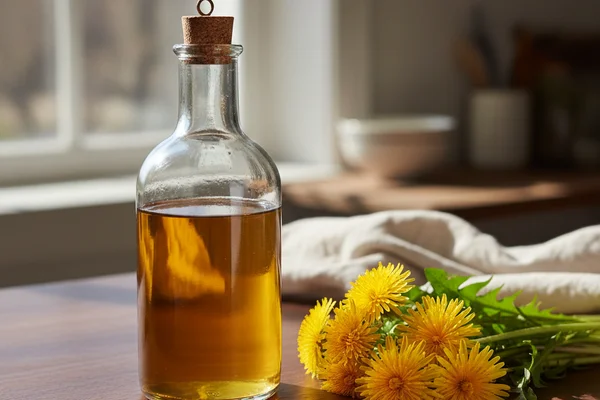
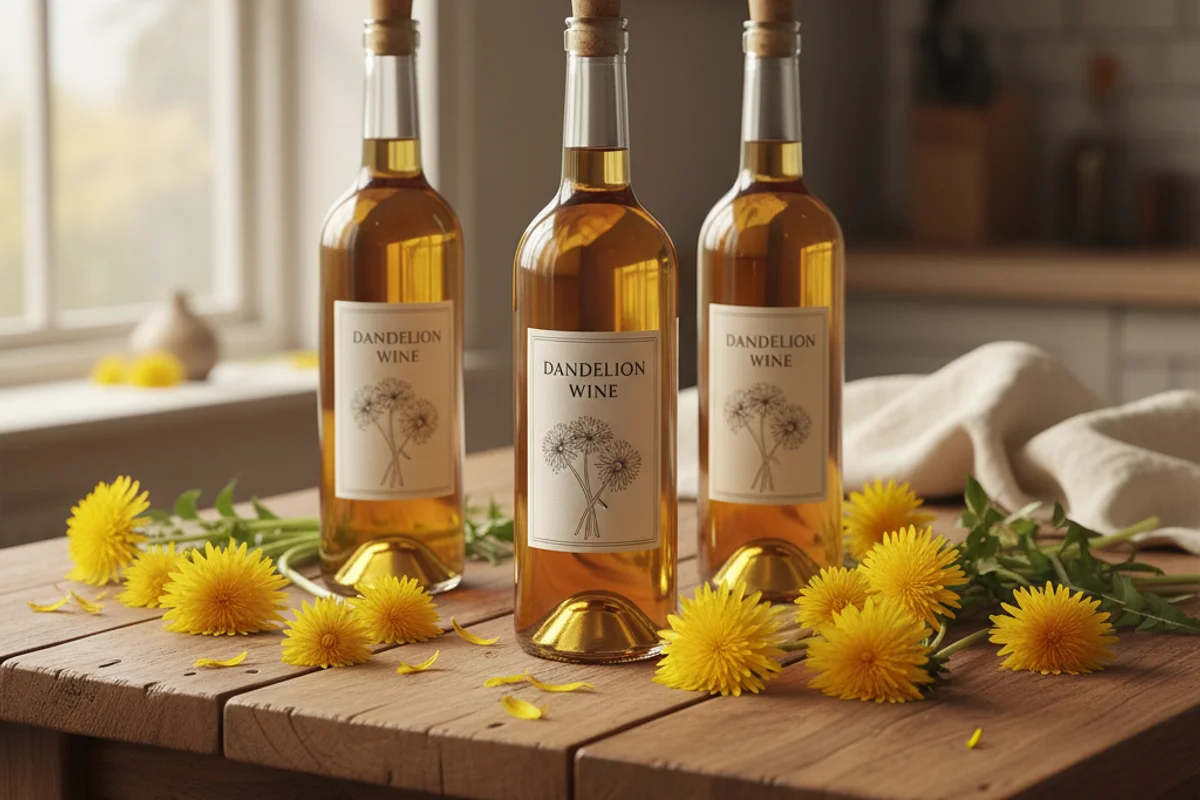
Dandelion wine is the original “free as the yard” ferment — golden, faintly honey-like, with a grassy brightness that tastes like early May smells. The petals carry aromatic compounds that mellow dramatically over time, transforming from something raw and weedy into a wine that’s genuinely floral and clean. Think light white wine energy with a wildflower twist. This recipe uses a long, patient aging schedule to let those rough edges round out. Pick on a dry, sunny morning when the flowers are fully open and the bitterness is lowest. Your patience will be rewarded in the glass.
The beginner trap: Leaving any green material — sepals, stem, or the white base of the flower — attached to the petals will push harsh bitterness into your wine that no amount of aging will fix.
Ingredients
- 6–8 cups dandelion petals, green parts fully removed
- 3 lbs granulated sugar
- 1 gallon water, divided
- 3 tsp acid blend (or the juice of 2–3 lemons as a grocery-store stand-in)
- ¼ tsp wine tannin (or 1 cup unsweetened strong-brewed black tea)
- 1 tsp yeast nutrient
- 1 packet Champagne or Montrachet wine yeast
Method
- Rinse the petals under cool water and spread them out to check for any remaining green bits — remove everything that isn’t pure petal.
- Place the petals in a medium saucepan, add 1 quart of water, and bring to a gentle simmer over medium heat for 10 minutes.
- Turn off the heat, cover the pan, and let the petals steep for 1 to 6 hours — shorter for a lighter flavor, longer for something more assertive.
- While the petals steep, bring the remaining 3 quarts of water to a boil in a large pot and dissolve in the sugar, acid blend, tannin, and yeast nutrient. Stir until fully combined, then remove from heat.
- Strain the petal liquid through a fine-mesh strainer or nylon straining bag into your primary fermenter, squeezing the bag firmly to pull out every drop of liquid.
- Add the sugar-water mixture to the primary fermenter and stir to combine. Cover and let everything cool to room temperature (around 70°F).
- Activate your yeast according to the packet instructions, then pitch it into the cooled must and stir gently.
- Ferment in the primary for 3–5 days, checking specific gravity daily until it reads around 1.020.
- Rack the wine into a glass secondary fermenter (carboy), attach an airlock, and leave it undisturbed for 30 days.
- Rack again after those 30 days, top up with water or a similar light white wine to minimize headspace, and reattach the airlock.
- After 3 months, rack once more, top up, and reattach the airlock.
- Three months after that, rack a final time, add wine stabilizer (potassium sorbate plus potassium metabisulfite), and wait 30 days before bottling.
- Cellar the bottled wine for at least one full year before opening. Serve well chilled.
Why this works
Dandelion petals contain terpenoids and phenolic compounds that give the raw wine a sharp, almost medicinal edge. Simmering and steeping the petals in water extracts the aromatic flavor compounds while keeping bitter chlorophyll (concentrated in the green parts) out of the equation. The long secondary aging — close to eight months total before bottling, plus another year in the bottle — gives those volatile harsh compounds time to either bind with other molecules or off-gas through the airlock. Sugar provides the fermentation fuel (and eventual alcohol), while the acid blend balances the wine’s pH so the yeast stays happy and the finished wine tastes bright rather than flat. Patience isn’t optional here; it’s an ingredient.
Notes
If you can’t source acid blend at a homebrew shop, fresh lemon juice works fine — start with 3 tablespoons and adjust to taste before pitching yeast. Frozen dandelion petals (picked and frozen at peak bloom) can substitute for fresh with no loss of quality; thaw completely and drain before use. If your finished wine still has a bitter edge after aging, a small dose of fining agent like bentonite can help pull out remaining tannin-bound compounds before bottling.