Dandelion Wine (18)
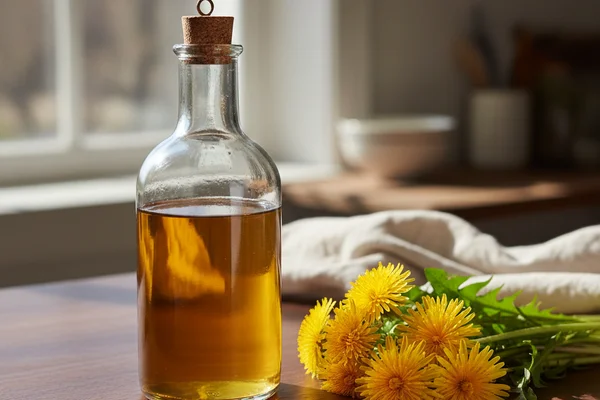
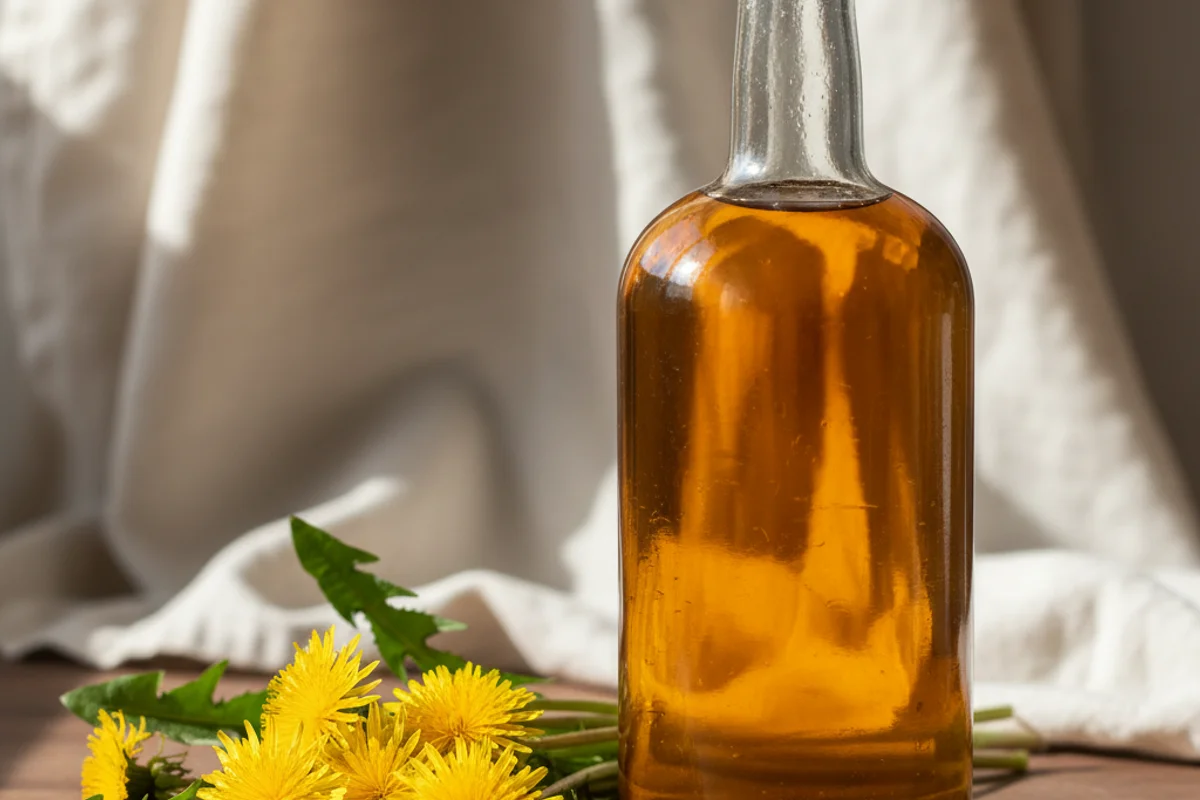
There’s a moment every spring when your lawn becomes a winery waiting to happen. Dandelion wine is one of the oldest homemade wines in the book — a pale, honey-toned pour with a faintly floral, almost herbal quality that tastes nothing like what grew in your yard. This is a stripped-down recipe: no fruit, no acid blend, just flowers, sugar, water, and yeast. The result is delicate and dry, with a clarity that rewards patience. Pick on a dry, sunny day when the flowers are fully open and bright yellow.
The beginner trap: Leaving any green parts — stems, calyxes, or the base of the flower head — will add bitterness that no amount of aging will fix.
Ingredients
- 1 gallon dandelion flower heads, green parts removed
- 3 lbs granulated sugar
- 1 gallon water
- 1 packet wine yeast (Lalvin EC-1118 or any dry wine yeast works well)
Method
- Bring the water to a full boil.
- While the water heats, wash the flower heads and trim away all stems and any green base material — use only the yellow petals.
- Place the flower heads in your primary fermenter and pour the boiling water over them.
- Cover the fermenter and let the flowers steep for 5 days at room temperature.
- Strain out all solids and discard them, then stir in the sugar until it fully dissolves.
- Activate your yeast according to the packet instructions, then add it to the must and cover the fermenter loosely.
- After 14 days, rack the wine into a secondary fermenter (a 1-gallon glass jug works perfectly) and fit an airlock.
- After 2 months, rack again, add a stabilizer (½ tsp potassium sorbate plus one Campden tablet, crushed), and let it sit for 2 more weeks.
- Rack into bottles and store in a cool, dark place — give it at least 6 months before opening.
Why this works
Boiling water pulls color, aroma compounds, and a small amount of fermentable sugars out of the petals through simple extraction — think of it as making a very strong floral tea. The long 5-day steep increases that extraction without needing any added acid or enzymes. Because dandelion flowers contribute almost no natural sugar on their own, all the fermentable material comes from the added granulated sugar. That keeps the wine light-bodied and dry. The extended primary fermentation (14 days) gives the yeast time to work through a relatively dilute sugar solution without rushing, which helps build cleaner flavor.
Notes
This recipe produces a very lean wine with no acid or nutrient additions — if fermentation stalls, stir in ¼ tsp of yeast nutrient. If you can’t pick enough flowers at once, freeze petals in batches and combine them when you have a full gallon; frozen petals steep just as well as fresh. A Campden tablet (sodium or potassium metabisulfite, available at any homebrew shop or online) can substitute for the stabilizer step if you’re not back-sweetening.