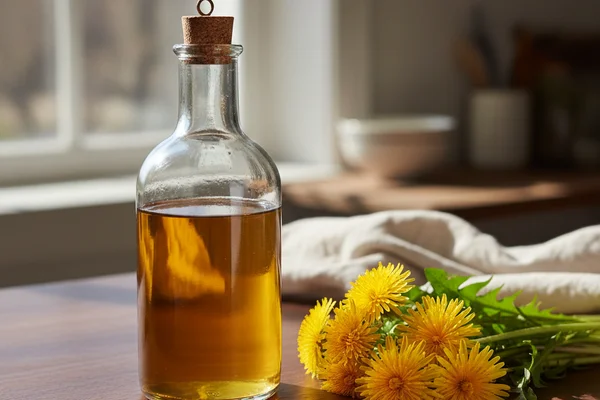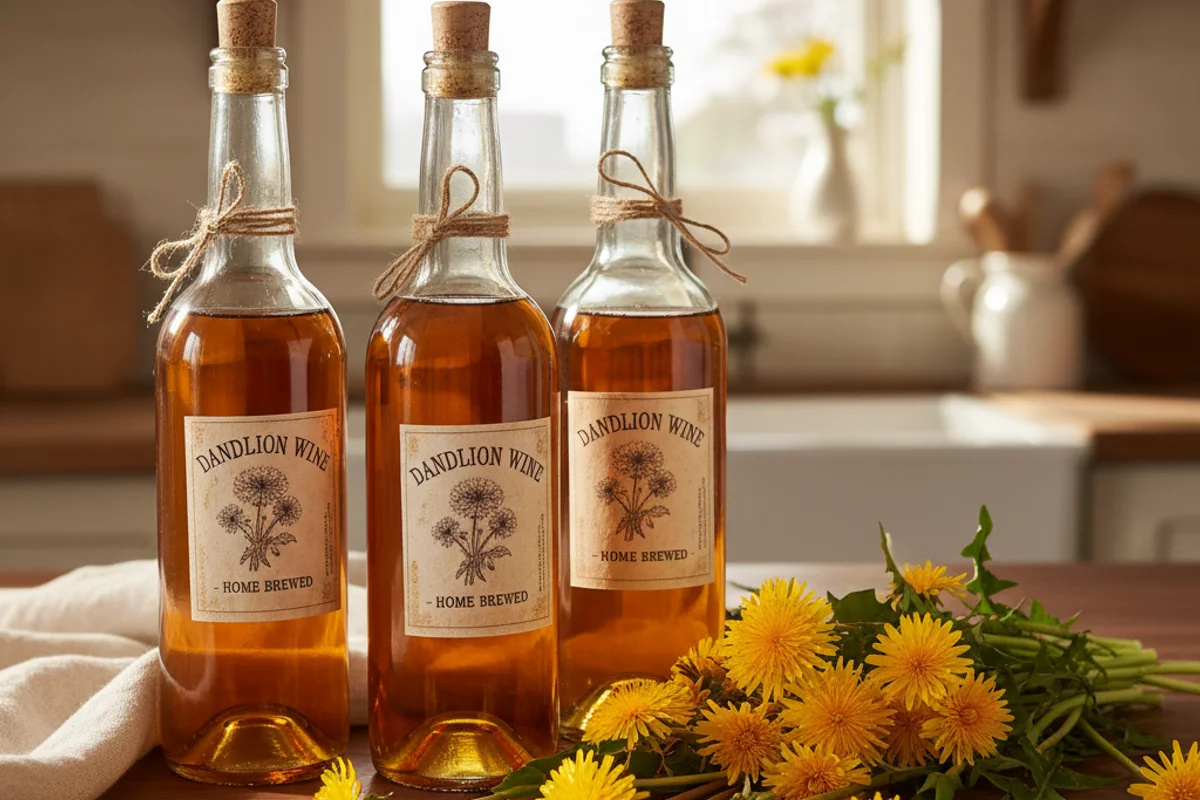
Dandelion Wine (2)
There’s a reason this recipe is tied to a specific hour of the day. Dandelion flowers open fully around midday, and that’s exactly when their flavor is at its peak — bright, faintly honey-like, with a subtle earthiness that disappears fast once the sun moves on. Pair them with orange zest and juice, and you get a wine that’s lighter in body than most dandelion recipes but surprisingly complex in flavor. It takes patience, but the payoff is real.
The beginner trap: Leaving the bitter green sepals on the flower heads will make your wine taste harsh — pull them off before steeping, every time.
Ingredients
- 2 quarts dandelion flower heads, green parts removed (fresh or frozen)
- 2 lbs 11 oz granulated sugar
- 4 oranges (zest and juice, no white pith)
- 1 gallon water
- 1 packet wine yeast (bread yeast works in a pinch, but wine yeast gives cleaner results)
- 1 tsp yeast nutrient (available at homebrew shops or online)
Method
- Pick dandelion flowers at midday when they are fully open, then strip away as much green material as possible until you have 2 quarts of prepared flower heads.
- Bring 1 gallon of water to a full boil, then pour it over the flowers in a large heat-safe container and cover with a clean cloth.
- Let the flowers steep for exactly 2 days — no longer, or off-flavors can develop.
- Pour the steeped liquid into a pot and bring it back to a boil.
- Use a vegetable peeler to remove the zest from all 4 oranges in wide strips, avoiding the white pith, then add the zest to the boiling liquid and boil for 10 minutes.
- Strain the hot liquid through a fine mesh strainer or cheesecloth into a bucket containing the sugar, stirring until the sugar fully dissolves.
- Let the liquid cool to room temperature (below 75°F), then stir in the fresh juice from all 4 oranges, the yeast, and the yeast nutrient.
- Transfer to a fermentation vessel, fit with an airlock, and let it ferment until bubbling stops completely.
- Rack into a clean vessel once the wine begins to clear, then bottle when it is fully clear.
- Age at least 6 months in the bottle before opening — a full year brings noticeably better results.
Why this works
The two-day cold steep pulls flavor compounds and natural color from the petals without extracting too many bitter tannins. Boiling the orange zest afterward does two things at once: it sterilizes the liquid and releases aromatic oils from the zest that would otherwise stay locked in the peel. Those citrus oils give the wine its brightness and help mask any residual earthiness from the flowers. The white pith is pure bitter alkaloid — skipping it keeps the flavor clean. Finally, the acid from fresh orange juice gives the yeast a healthy environment to work in and adds structure that keeps the finished wine from tasting flat.
Notes
Frozen dandelion petals work well here — freeze them the day you pick them and thaw before steeping. If you can’t find yeast nutrient locally, a small handful of raisins added at the steeping stage provides a rough substitute. This wine is lighter-bodied than recipes using more flowers or added raisins, so don’t expect a thick pour — think crisp and floral rather than rich and heavy.