Dandelion Wine (23)
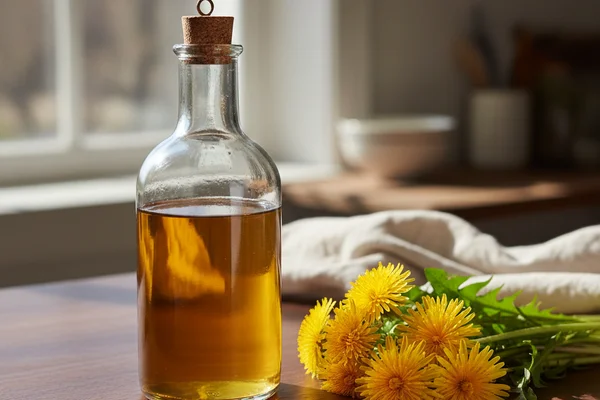
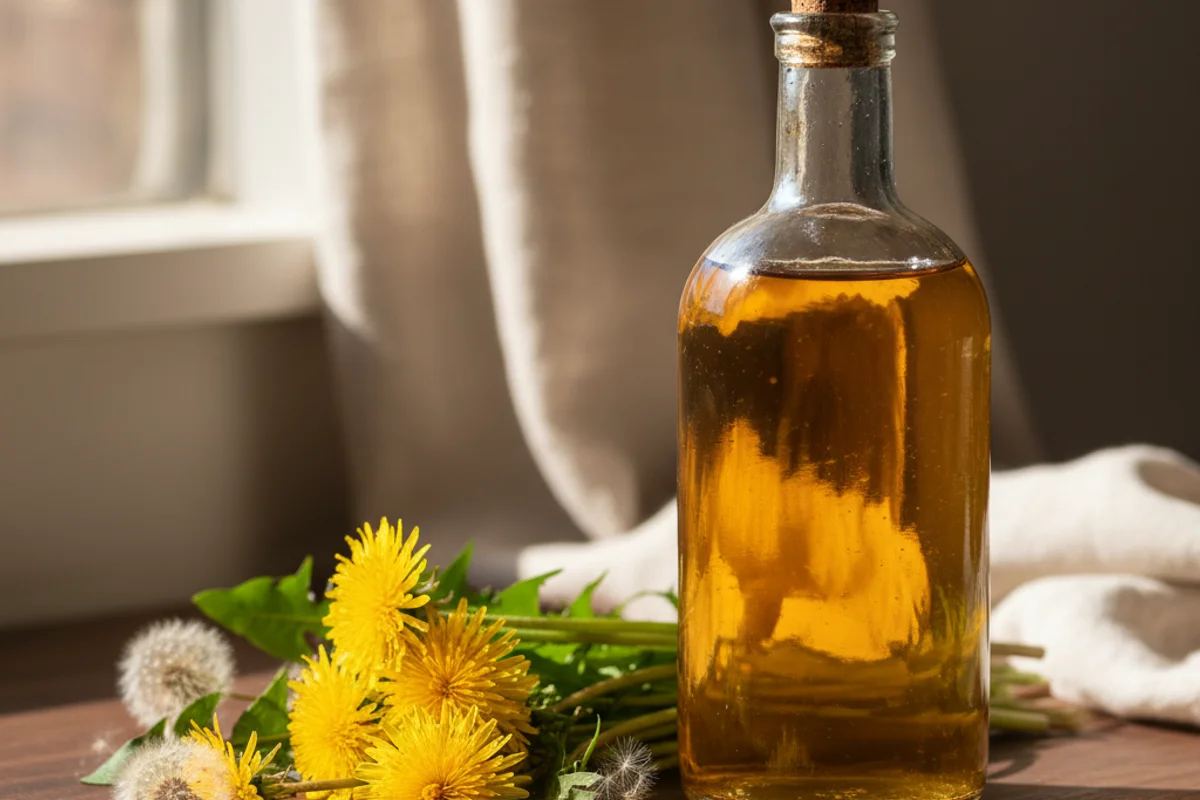
Dandelion wine is what happens when a lawn pest becomes a legitimate ingredient. The flowers carry a faint honey-like sweetness with just enough bitter edge to keep things interesting — think wildflower honey crossed with a dry white wine. The catch is timing: those bright yellow heads have about a two-week window in spring before they turn to fluff and blow away. Pick them on a dry, sunny morning when they’re fully open, and you’re halfway there. Patience does the rest. This is a slow wine that rewards the wait, developing a smooth, golden character over the better part of two years.
The beginner trap: Leaving too much green stem or sepal attached to the flowers introduces harsh bitterness that no amount of aging will fix — trim aggressively at the base of the petals.
Ingredients
- 4 pints dandelion flowers, petals only (fresh or frozen)
- 3½ lbs granulated sugar
- ½ oz acid blend (or 3 tbsp fresh lemon juice as a substitute)
- 1 tsp yeast nutrient
- 1 gallon water
- 1 packet wine yeast (Lalvin EC-1118 or any general-purpose wine yeast)
Method
- Wash the dandelion heads thoroughly and trim away all green stalks and sepals, keeping only the yellow petals.
- Bring the water to a full boil, then pour it over the flowers in your primary fermenter.
- Add the sugar, acid blend, and yeast nutrient. Stir until the sugar is fully dissolved.
- Cover the fermenter and let the mixture steep overnight, about 8–12 hours.
- Drain and strain the liquid through a fine mesh strainer or cheesecloth, pressing the petals gently to extract remaining liquid. Discard the spent petals.
- Return the liquid to the primary fermenter. Activate your yeast according to packet directions, then add it to the must.
- Cover loosely and let fermentation run until the vigorous bubbling slows down, usually 5–7 days.
- Rack the wine into a clean secondary fermenter (a 1-gallon glass jug works well) and seal with an airlock.
- Once the wine clears and bubbling stops completely, wait one week, then rack into another clean vessel. Top up to the neck with water or a similar wine if needed, and reattach the airlock.
- Allow two months for lees to settle, then rack again. Repeat this process every two months until no new sediment forms.
- Stabilize with potassium sorbate and potassium metabisulfite (follow package directions), top up, and reattach the airlock.
- Wait two weeks, then rack into bottles. Age at least one year; two years gives the best result.
Why this works
Dandelion petals contain trace amounts of sugars, flavonoids, and aromatic compounds, but not nearly enough on their own to build a full wine — that’s why we add granulated sugar as the primary fermentation fuel. The boiling water hot-steeps the petals overnight like a strong herbal tea, pulling out color and aroma without cooking the delicate volatile compounds into nothing. Acid blend corrects the naturally low acidity of dandelion flowers, giving yeast a more comfortable environment and giving your palate something to grab onto. The repeated racking isn’t busywork — each pass removes dead yeast cells that would otherwise break down and contribute off-flavors, letting the wine slowly clarify into something genuinely elegant.
Notes
Frozen dandelion petals (stripped before freezing) work well here and let you make this wine outside of spring season. If acid blend isn’t available at your local homebrew shop, 3 tablespoons of fresh lemon juice is a reasonable stand-in. If the finished wine tastes flat or one-dimensional at bottling, a small addition of acid blend post-stabilization can sharpen it up considerably.