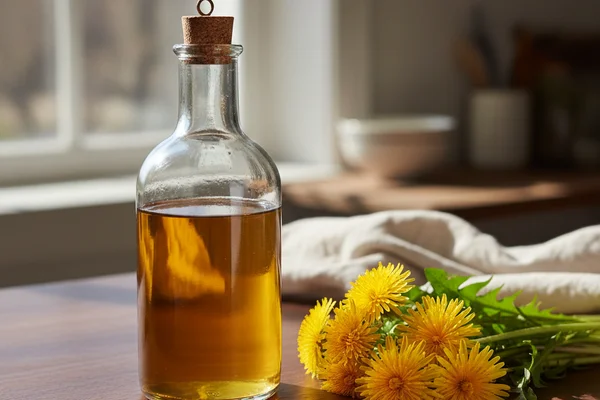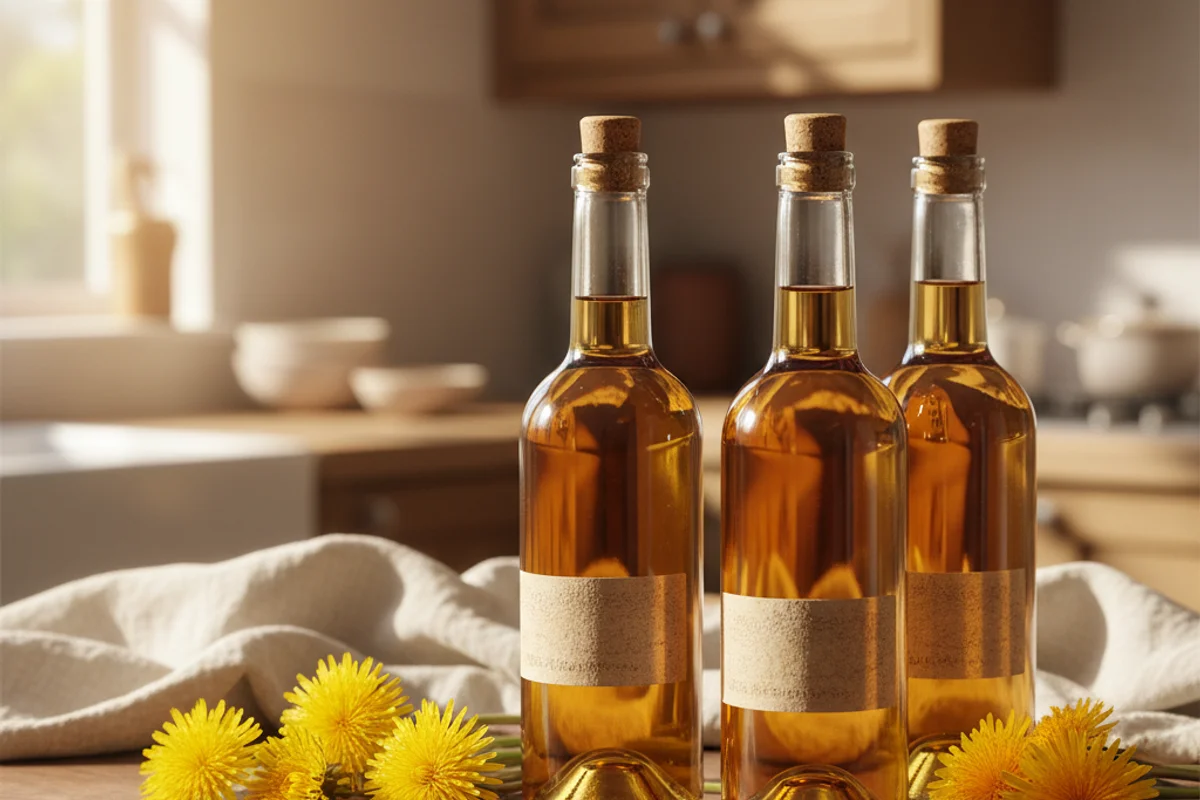
Dandelion Wine (27)
There’s a moment every spring when your lawn transforms from a maintenance problem into a winery. Dandelion wine is the original foraged wine — golden, floral, and faintly honey-like when it’s done right. The petals carry volatile aromatic compounds that steep beautifully into hot water, and citrus adds the acid backbone that keeps the wine from tasting flat and one-dimensional. This is a patient wine. It won’t rush, and neither should you.
The beginner trap: Leaving any green parts — sepals, stems, or the white base of the flower — attached to the petals; even a small amount of greenery will make your wine bitter and unpleasant.
Ingredients
- 2 gallons dandelion flower heads, green parts fully removed
- 3 lbs granulated sugar
- 3 lemons, peeled and thinly sliced (pith removed)
- 3 oranges, peeled and thinly sliced (pith removed)
- 1 tsp yeast nutrient
- 1 gallon water
- 1 packet wine yeast (Lalvin EC-1118 or any general-purpose wine yeast)
Method
- Wash the flower heads thoroughly and remove every bit of green — sepals, stems, and the bitter white base where the petals meet the stem.
- Bring the water to a full boil, then pour it directly over the cleaned flower heads in your primary fermenter.
- Cover the fermenter and let the flowers steep for 3 days at room temperature.
- Strain out the spent flowers and return the liquid to the primary fermenter; discard the solids.
- Using a vegetable peeler, remove the colored zest from the lemons and oranges in thin strips and add the zest to the fermenter.
- Cut away and discard all white pith from the peeled fruit, then slice the fruit directly into the fermenter.
- Add the sugar and yeast nutrient, then stir vigorously until the sugar is fully dissolved.
- Pitch the yeast, cover the fermenter loosely, and let it ferment for 3 weeks.
- Strain out the fruit solids, let the wine settle overnight, then rack the clear liquid into a clean secondary fermenter.
- Attach an airlock and set aside to age; rack into a fresh clean vessel every 3 months until the wine is completely clear, stable, and dropping no more sediment.
- Rack into bottles and store for 6–12 months before drinking.
Why this works
Hot water extracts the aromatic esters and flavonoids from dandelion petals without scorching them — a low-tech infusion that works the same way as brewing tea. Citrus zest adds terpenes (the same compounds that make orange peel smell bright and floral), while the sliced fruit brings natural acids that lower the pH just enough to keep spoilage organisms in check and give yeast a comfortable environment to work in. Sugar feeds fermentation and sets the final alcohol level. The long aging period matters: dandelion wine starts out rough and slightly vegetal, but time allows harsh compounds to precipitate out and the floral notes to come forward and mellow into something genuinely elegant.
Notes
Frozen dandelion heads work well here — freeze them spread out on a sheet pan, then bag them once solid; freezing even helps break down cell walls for better extraction. If you can’t find wine yeast, active dry bread yeast will ferment the wine, but the flavor and clarity won’t be as clean. This recipe produces roughly 1 gallon of finished wine after losses from racking.