Dandelion Wine (28)
There’s a window every spring — maybe two weeks long — when your lawn is covered in liquid gold and most people reach for the herbicide. Don’t. Dandelion petals carry a delicate, honey-like floral character that ferments into something surprisingly elegant: pale, aromatic, and dry with a citrus backbone that keeps it from tasting like a science experiment. This is old-school country winemaking at its best, and it rewards patience far more than effort.
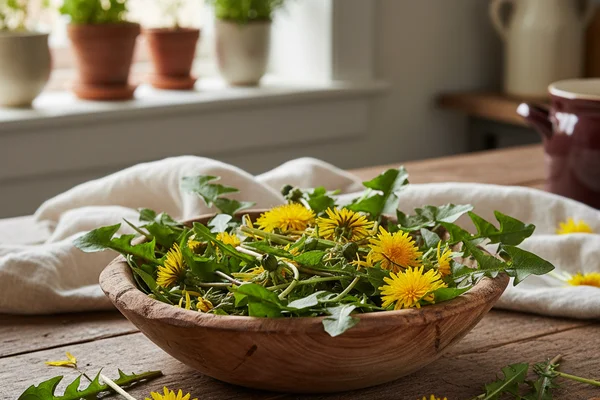
The beginner trap: Using the whole dandelion head — green sepals and all — instead of petals only; the green parts add a harsh, bitter bite that no amount of aging will fix.
Ingredients
- 7½ pints (roughly 1 gallon) water
- 2 lbs finely granulated white sugar
- 1 quart dandelion petals (green parts removed)
- ¾ lb golden raisins, finely chopped (regular raisins work fine)
- 3 lemons, juice and zest
- 3 oranges, juice and zest
- 1 tsp yeast nutrient
- 1 packet wine yeast (Lalvin 71B or EC-1118 are good picks)
Method
- Bring the water to a boil and pour it over the dandelion petals in your primary fermenter. Let them steep for 2 hours, then strain and press the petals, discarding the solids.
- Return the liquid to the stovetop and bring it to a low boil. Stir in the citrus juice and sugar until fully dissolved.
- Remove from heat and add the citrus zest and chopped raisins. Set aside and let the must cool to room temperature.
- Once cool, stir in the yeast nutrient and your activated wine yeast. Cover the fermenter loosely.
- Stir the must three times daily for 10–14 days to encourage fermentation and keep the raisins and zest submerged.
- Strain the must into a sanitized secondary fermenter (a 1-gallon glass jug works well) and fit an airlock.
- After 3 weeks, rack the wine into a clean secondary, top up to minimize headspace, and reattach the airlock.
- Once the wine clears, wait 30 days, then rack again — top up and refit the airlock. Repeat this racking every 3 months for 9 months total.
- Rack into bottles and age for another 6–12 months before drinking.
Why this works
Dandelion petals have almost no sugar and very little acid on their own, which is exactly why this recipe leans hard on sugar, raisins, and citrus. The raisins do double duty: they add fermentable sugars and contribute tannin-like body that gives the finished wine structure without turning it astringent. Citrus zest brings aromatic compounds and a small amount of pectin — which is also why patience matters here. Pectin can cloud a wine for weeks. Repeated racking removes the dead yeast and sediment that would otherwise keep the wine hazy and muddy-tasting, letting those delicate floral notes actually come through in the glass.
Notes
If fresh dandelions aren’t available, dried dandelion petals from a health food store or online can substitute — use about ½ cup dried in place of 1 quart fresh. For the yeast, any general-purpose wine or champagne yeast from a homebrew shop (or online) works; in a pinch, bread yeast will ferment but tends to produce off-flavors. The long aging schedule here is non-negotiable — open a bottle early and you’ll wonder why you bothered; wait the full time and you won’t regret it.