Dandelion Wine (29)
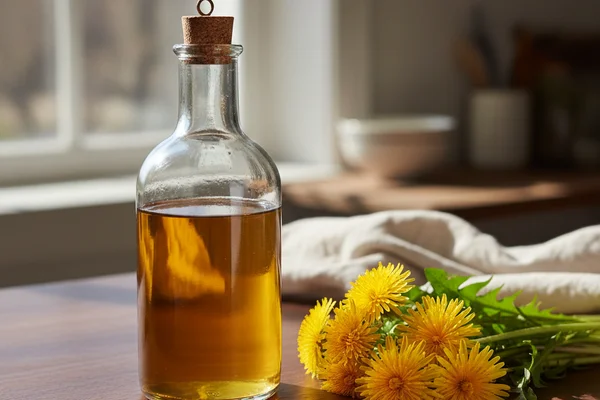
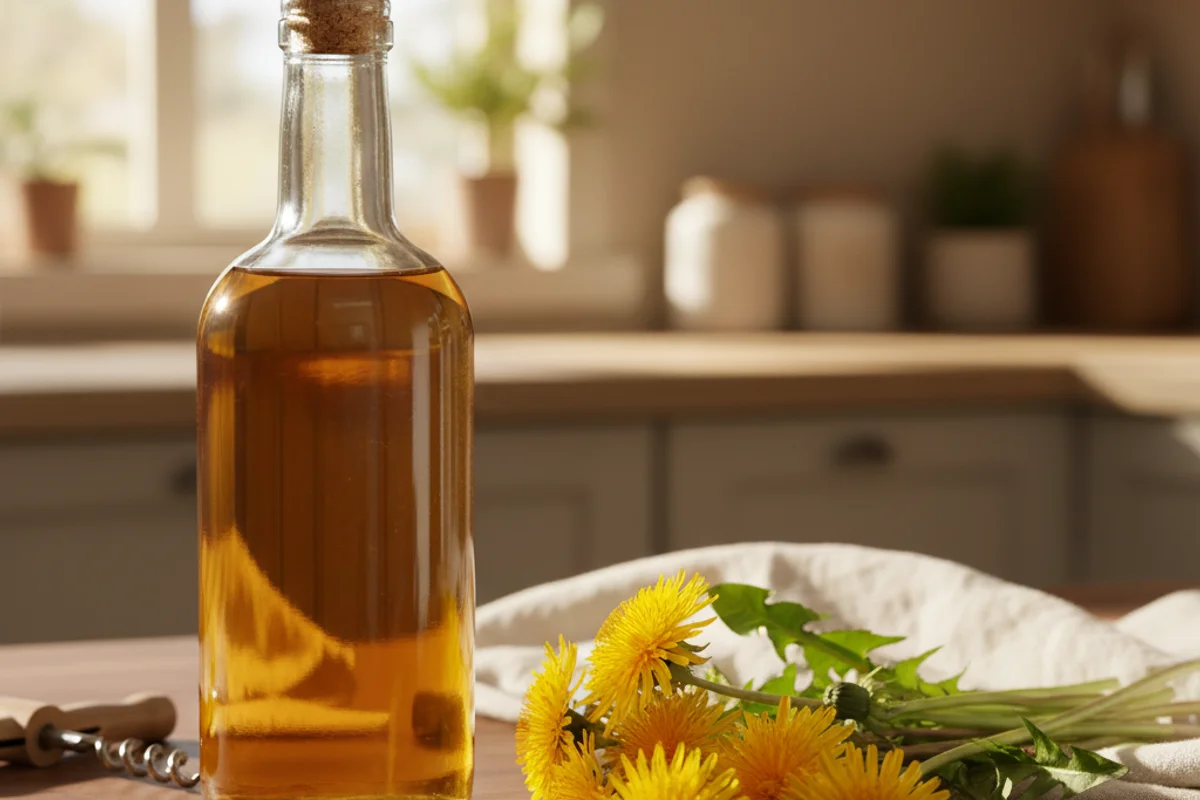
Dandelion wine is what happens when a weed decides to be beautiful. The petals carry a faint honey-like sweetness and a subtle earthiness that no grape can replicate. A splash of white grape concentrate rounds out the body, while lemon and orange zest add a citrus brightness that keeps the whole thing lively. Done right, this wine pours a pale gold and smells like a warm spring afternoon. Done wrong, it smells like a lawn. The difference is almost entirely in how carefully you pick and prep those petals.
The beginner trap: Leaving any green sepals or stem material attached to the petals — the bitter chlorophyll they contain will haunt every bottle.
Ingredients
- 9 cups dandelion petals (green parts removed, fresh or frozen)
- 1 can (11 oz) Welch’s 100% White Grape Juice frozen concentrate
- 1 lb 10 oz granulated sugar
- 2 lemons, juice and zest
- 2 oranges, juice and zest
- 1 tsp yeast nutrient
- ½ tsp pectic enzyme
- ¼ tsp wine tannin (or 1 cooled cup of plain brewed black tea)
- 6¼ pints (about 12½ cups) water
- 1 packet Côtes-du-Rhône or Hock wine yeast (Lalvin 71B is a solid grocery-store-friendly substitute)
Method
- Strip petals from all green material and set them aside. Bring the water to a full boil.
- Place the petals and citrus zest together in a nylon straining bag and tie it shut.
- Set the bag in your primary fermenter and pour the boiling water over it. Cover and let it steep, squeezing the bag several times a day for 3 days.
- After 3 days, pull the bag out and squeeze it firmly to recover all the liquid. Discard the spent petals and zest.
- Stir the sugar into the warm liquid until it dissolves completely.
- Add the lemon juice, orange juice, grape concentrate, yeast nutrient, pectic enzyme, and tannin. Stir well, cover, and let it rest for 10–12 hours.
- Activate your yeast according to packet directions, then stir it into the must. Cover the fermenter.
- Stir twice a day for 5 days, then transfer to a secondary fermenter (carboy) and seal with an airlock.
- Once the wine clears, rack it off the sediment into a clean vessel, add 1 crushed Campden tablet, top up to reduce headspace, and reattach the airlock.
- Rack again every 2 months for 6 months total — add a second Campden tablet at the middle racking and stabilize with potassium sorbate at the final racking.
- Wait one more month, then rack into bottles. Cellar at least 6 months before opening the first bottle, and another 6 before finishing the rest.
Why this works
Dandelion petals are nearly all aroma and almost no sugar, acid, or body on their own — they need support. The frozen white grape concentrate fills in the body and adds fermentable sugars without overpowering the floral character. Citrus zest brings volatile aromatic oils that survive fermentation and add complexity in the finished wine. The pectic enzyme breaks down pectin from the fruit, which prevents a hazy wine. Tannin — naturally low in flowers — gives the wine structure and helps it age gracefully. The long, slow racking schedule lets protein and yeast particles settle out over time, producing that clear, polished pour.
Notes
Frozen petals work well here — spread them on a baking sheet, freeze until solid, then bag them. If you can’t find wine tannin at a homebrew shop, steep a plain black tea bag in a cup of hot water, let it cool fully, and use that instead. If fermentation stalls, check that your must temperature is between 65–75°F and give the yeast a small boost with an extra pinch of yeast nutrient.