Dandelion Wine (5)
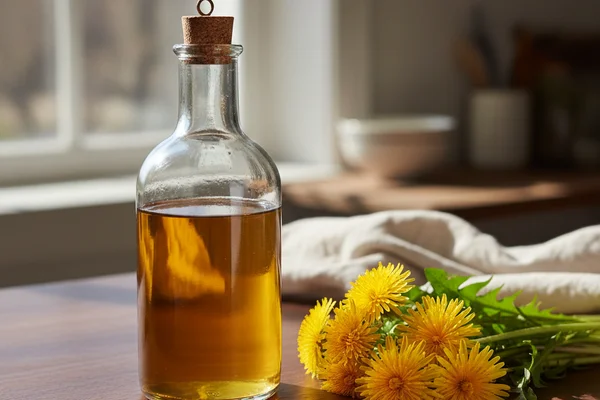
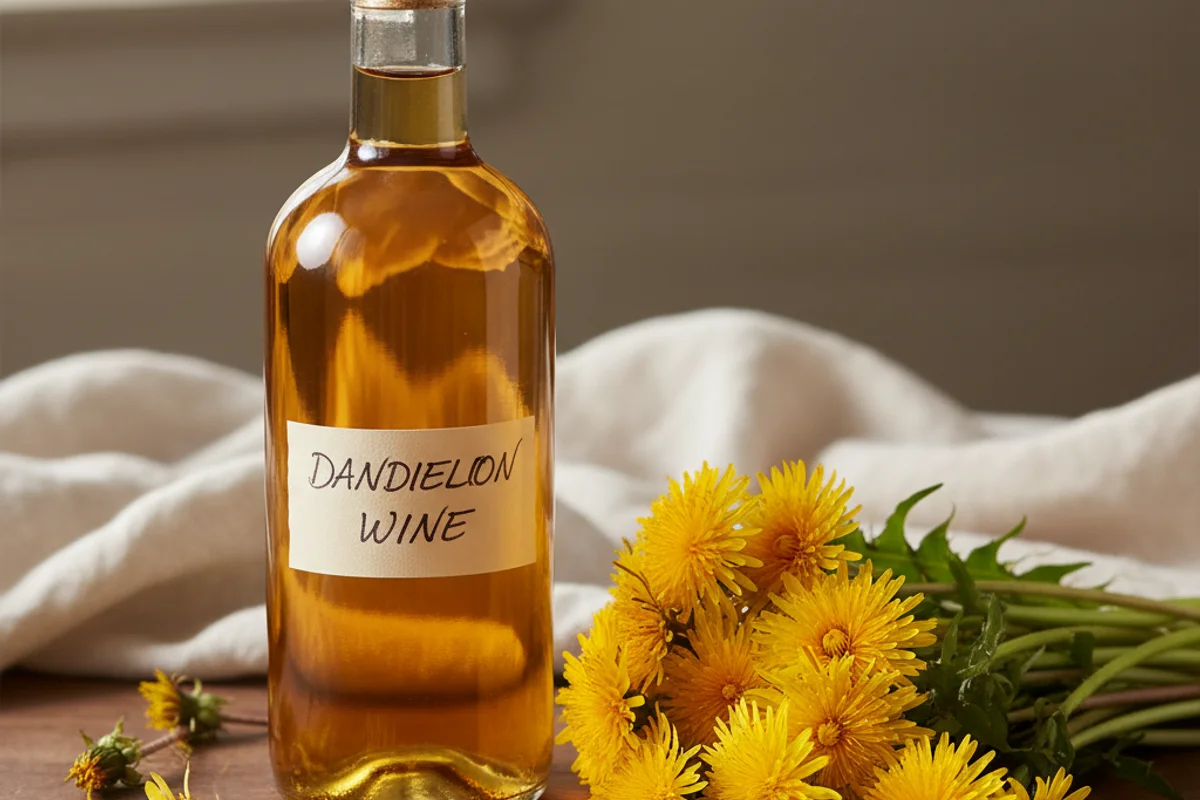
Dandelion wine is essentially liquid sunshine — and that’s not just poetry. Those bright yellow petals carry delicate floral and honey-like aromatics that, given time and the right supporting cast, transform into something genuinely complex in the glass. The citrus zest sharpens the nose, the golden raisins add body and a whisper of dried fruit, and a long cellar rest lets it all knit together into a wine that tastes nothing like a weed and everything like a warm afternoon in May.
The beginner trap: Leaving any green plant material — stems, leaves, or the bitter white base of the petals — in your must will wreck the flavor with a sharp, vegetal bitterness that no amount of aging can fix.
Ingredients
- 3 quarts dandelion flower petals, green parts removed (fresh or frozen)
- 1 lb golden raisins
- 2 lbs 7 oz granulated white sugar
- 2 lemons, juice and zest
- 1 orange, juice and zest
- 7 pints water, divided (1 pint reserved)
- 1 tsp yeast nutrient
- 1 packet all-purpose wine yeast (such as Lalvin EC-1118 or Red Star Montrachet)
Method
- Wash the flower petals thoroughly and remove every bit of green stalk and base — only the yellow petals go in.
- Set aside 1 pint of water, then bring the remaining 6 pints to a full boil.
- Place the petals in your primary fermenter and pour the boiling water over them; stir, cover, and let steep for up to 3 days, stirring once each day.
- Pour the petal mixture through a nylon straining bag into a large pot, squeezing the bag firmly to pull out all the liquid.
- Add the sugar and the citrus zest to the pot, then bring to a low boil and hold it there for one hour, stirring occasionally.
- Pour the hot liquid back into the primary fermenter, stir in the citrus juice, and cover loosely to cool.
- Once the must has cooled to room temperature (around 70°F), stir in the yeast nutrient and sprinkle in the yeast; cover and ferment for 3 days.
- Strain the liquid into a 1-gallon secondary fermenter (glass jug or carboy), add the golden raisins, and fit an airlock.
- Once the wine clears, rack it off the sediment, top up with the reserved pint of water (plus a little extra if needed to fill the neck), and refit the airlock.
- Rack every 2 months; bottle at 6–8 months; cellar for at least another 6 months before opening.
Why this works
Dandelion petals contain almost no sugar and very little acid on their own, so this recipe builds its backbone from three outside sources. The granulated sugar feeds fermentation and sets the potential alcohol. The citrus juice drops the pH into the range yeast prefer and adds the tartness the petals can’t provide. The golden raisins are the quiet hero here — they’re loaded with natural nutrients, trace minerals, and unfermentable solids that give the finished wine viscosity and a rounder mouthfeel without adding a heavy raisin flavor. Boiling the zest with the sugar extracts the aromatic oils from the peel and locks them into the must, which is why that step runs a full hour rather than just a quick simmer.
Notes
Frozen dandelion petals work well and are often easier to harvest in bulk — freeze on a baking sheet first, then bag them. If you can’t source golden raisins, regular sultanas from the baking aisle are a fine substitute. If fermentation seems sluggish after 48 hours, a second pinch of yeast nutrient usually gets things moving again.