DATE WINE
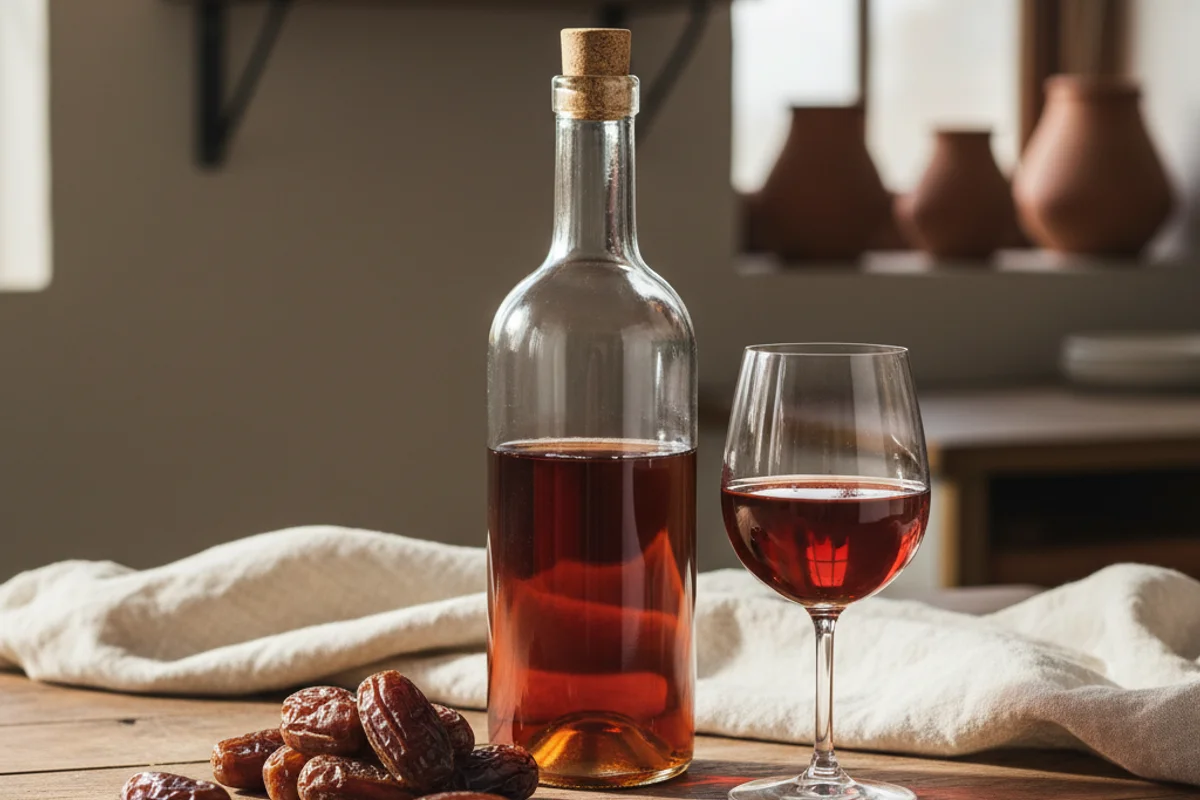
Dates are basically nature’s candy factory — pure sugar wrapped in chewy, caramel-rich flesh. Ferment them with citrus, a whisper of nutmeg, and barley-steeped water, and something quietly remarkable happens. The result starts life as a rough, sweet country wine and slowly transforms — over months, then years — into something rich, warm, and almost port-like. This is not a wine you make for next month’s dinner party. It’s a wine you make today so that future-you can drink something genuinely special.
The beginner trap: Tasting this wine young and deciding it’s not worth keeping — date wine needs at least two to three years in the bottle before its full character shows up.
Ingredients
- 1 lb pitted dates, chopped (fresh or packaged; Medjool or Deglet Noor both work)
- ½ lb pearl barley (regular grocery-store barley is fine)
- 1 orange, thinly sliced
- 1 lemon, thinly sliced
- 1 lb 10 oz granulated white sugar
- ½ whole nutmeg (do not grate — leave it whole)
- Water to make up 1 gallon total
- 1 tsp yeast nutrient
- 1 packet wine yeast (Lalvin EC-1118 or Red Star Côte des Blancs work well)
Method
- Place the chopped dates and citrus slices in a large pot and set aside.
- In a separate pot, boil the barley in 7 pints of water for 10 minutes, then strain the liquid directly over the dates and citrus — discard the spent barley.
- Add the half nutmeg to the pot, bring the mixture to a boil, then immediately drop the heat and simmer gently for 12 minutes.
- Strain the liquid into your primary fermenter, pressing the solids lightly to extract flavor; discard the solids.
- Add the sugar and yeast nutrient to the hot liquid and stir until fully dissolved.
- Top up to 1 gallon with cool water, cover the fermenter loosely, and let it cool to around 70°F (21°C).
- Add your activated wine yeast, stir, and ferment in the primary for 5 days, stirring once each day.
- Transfer the wine to a glass secondary fermenter, top up to minimize headspace, and fit an airlock.
- Once the wine begins to clear, rack it off the sediment and move it somewhere cooler (around 60°F/15°C is ideal).
- When the wine is fully clear and stable — no more bubbling, no new sediment forming — rack into bottles and seal.
- Store the bottles somewhere dark and cool, and do your best to forget about them for at least 2 years.
Why this works
Barley brings more than bulk here — it contributes starch-derived compounds that add body and a subtle grain character, almost like the malt backbone in a beer. When you boil barley in water, you extract beta-glucans (complex carbohydrates) and a small amount of fermentable sugars. The yeast won’t fully chew through all of these, so some remain as mouthfeel contributors in the finished wine. Meanwhile, the whole nutmeg — not grated — releases volatile aromatic compounds slowly during the simmer, giving you a warm spice note without the bitterness that comes from over-extracting the ground spice. The citrus adds acid and aromatic oils, which help balance the considerable sweetness from both the dates and the added sugar.
Notes
Medjool dates from the produce section give a richer, more complex flavor than the drier packaged varieties — worth the extra cost if you can find them. If whole nutmeg isn’t available, a 1-inch piece of a nutmeg pod from the bulk spice section works, or skip it entirely rather than using pre-ground (ground nutmeg turns bitter fast). This wine is technically drinkable at bottling, but patience is the real ingredient here — two to three years of aging will transform it dramatically.