DAY LILY WINE
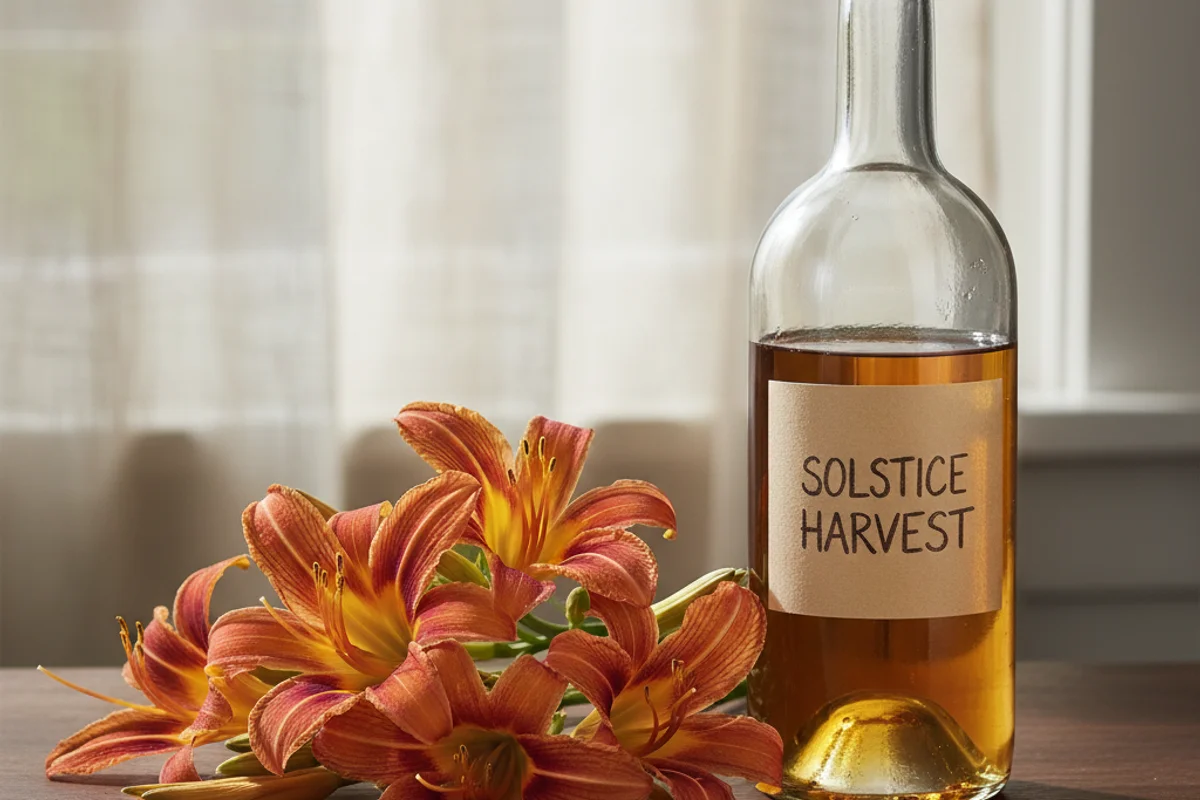
Day lily wine sits in a strange, beautiful corner of home winemaking — floral without being perfumy, delicate without being thin. The petals of Hemerocallis fulva, the common orange day lily you see growing wild along roadsides and fence lines across the eastern U.S., carry a subtle honeyed character that pairs surprisingly well with white grape juice concentrate. Keep the alcohol modest — around 12.5% ABV — and finish it slightly sweet, and you’ve got something worth chilling and sipping on a warm afternoon.
The beginner trap: Leaving any green stem material attached to the petals is a serious mistake — strip the petals clean before they go anywhere near your must.
Ingredients
- 2½ quarts day lily petals (Hemerocallis fulva only), lightly packed, green parts fully removed
- 1 can (11.5 oz) Welch’s 100% White Grape Juice frozen concentrate
- 6½ pints water, divided
- 1 lb 10 oz granulated sugar
- 2 tsp acid blend (available at homebrew shops; or substitute 1½ tsp lemon juice per tsp as a rough stand-in)
- ⅛ tsp powdered grape tannin (or 2 oz strongly brewed plain black tea)
- 1 tsp yeast nutrient
- 1 packet Champagne or white wine yeast, activated per package instructions
Method
- Harvest petals only from known-edible Hemerocallis fulva day lilies; rinse them well under cold water and confirm no green stem tissue remains.
- Place clean petals in a nylon straining bag, tie it shut, and set it in your primary fermenter.
- Bring 1 quart of the water to a boil, stir in all the sugar until fully dissolved, then immediately pour the hot syrup over the bag in the fermenter.
- Cover the fermenter and let it sit for 5 minutes to allow the hot liquid to extract flavor from the petals.
- Add the remaining water and the white grape juice concentrate to bring the temperature down and cool the must.
- Stir in the acid blend, grape tannin, and yeast nutrient; check that the must is below 75°F, then stir in your activated yeast.
- Cover loosely and keep in a warm spot (65–75°F) for 5 days, gently squeezing the petal bag once each day to encourage extraction.
- On day 6, lift the bag and let it drip drain fully into the fermenter; discard the spent petals.
- Transfer the liquid to a clean secondary fermenter (glass carboy or food-grade jug) and fit an airlock.
- Once the wine clears, rack it into a clean vessel, top up to minimize headspace, and refit the airlock.
- Repeat that rack-and-top-up step every 30 days for as long as any sediment — even a light dusting — continues to form.
- When the wine throws no new sediment for a full 30 days, rack into bottles and age at least 6 months before opening.
Why this works
Day lily petals have almost no natural sugar, acid, or tannin of their own — they’re essentially aromatic tissue with very little winemaking structure. That’s why this recipe leans on three helpers: sugar builds the alcohol and body, white grape juice concentrate provides a neutral fruity backbone without overpowering the floral character, and acid blend plus grape tannin supply the structure that keeps the finished wine from tasting flat and one-dimensional. The 5-day cold-contact maceration extracts volatile aromatic compounds from the petals without cooking off delicate top notes the way a longer hot extraction would. Keeping the final ABV at or below 12.5% is deliberate — higher alcohol actively suppresses your ability to smell and taste subtle floral esters.
Notes
Only use Hemerocallis fulva — the common wild orange day lily found growing in ditches and roadsides — not ornamental hybrid varieties, which have not been widely tested for edibility. If you can’t find acid blend at a local homebrew shop, it’s easy to order online; don’t skip it, as the acid balance matters a lot in a wine this light-bodied. Aim for a finishing gravity of 1.002–1.004 (slightly sweet) rather than fermenting bone dry, which tends to make floral wines taste thin.