Delaware
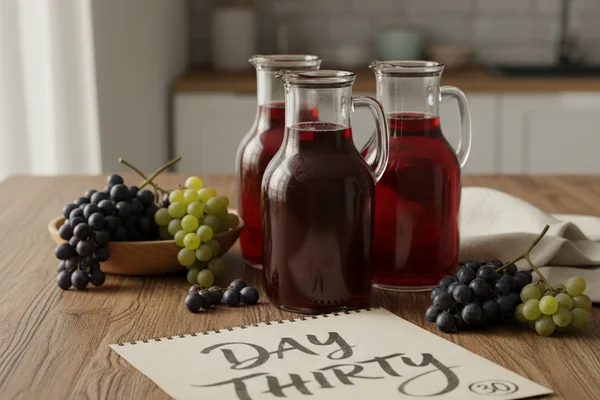
Delaware grapes occupy a quiet, underappreciated corner of American viticulture. These small, rosy-pink grapes are a native hybrid with a flavor that lands somewhere between a crisp white and a light rosé — delicate, slightly floral, with a gentle sweetness that doesn’t overwhelm. If you’ve never heard of them, you’re not alone. They rarely show up in supermarkets, but local vineyards and farmers markets in the Eastern U.S. often carry them in late summer, and they make a wine that’s genuinely worth the effort.
The beginner trap: Delaware grapes are low in acid relative to their sugar content, so skipping a pH and titratable acidity check before fermenting will almost certainly leave you with a flat, flabby wine.
Ingredients
- 4 lbs fresh Delaware grapes (or a light vinifera-hybrid blend if unavailable), stems removed
- 1½ to 2 lbs granulated white sugar (adjust to target 1.085–1.090 SG)
- 1½ tsp acid blend (tartaric, malic, citric mix — found at homebrew shops or online)
- ½ tsp pectic enzyme
- ¼ tsp potassium metabisulfite (or 1 Campden tablet), crushed
- ½ tsp yeast nutrient
- 1 packet wine yeast (Lalvin 71B or EC-1118)
- Water to make up 1 gallon total volume
Method
- Crush the grapes in a sanitized bucket, pressing the juice and pulp together. Stir in the Campden tablet or potassium metabisulfite, cover loosely, and let sit for 24 hours to suppress wild yeast and bacteria.
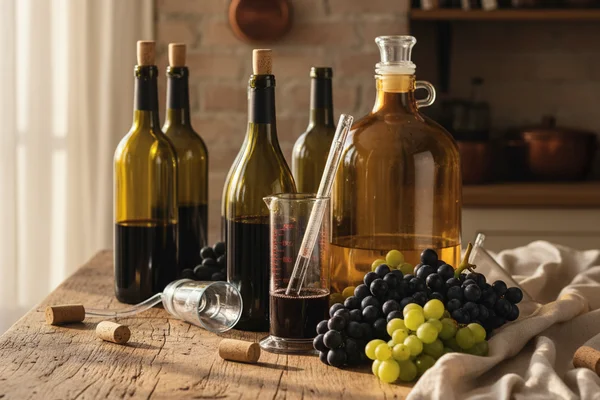
- Stir in the pectic enzyme, yeast nutrient, and acid blend. Test the specific gravity with a hydrometer; dissolve sugar in a small amount of warm water and stir it in gradually until you reach 1.085–1.090.
- Check and adjust pH to the 3.2–3.4 range using acid blend to add tartness or potassium bicarbonate to soften it. This step matters — don’t skip it.
- Sprinkle the yeast on top (or rehydrate per packet instructions) and cover the bucket with a cloth. Stir once daily for five to seven days while fermentation is active.
- Strain the pulp through a mesh bag or cheesecloth, pressing gently to extract juice. Transfer the liquid to a sanitized one-gallon glass jug fitted with an airlock.
- Rack (siphon) the wine off its sediment into a clean jug after about two weeks, then again at 30 days. Top up with a small amount of water or similar wine to minimize headspace.
- Once the wine is clear and bubbling has stopped — usually 60 to 90 days — rack one final time, sweeten to taste if desired, and bottle. Wait at least three months before opening.
Why this works
Delaware grapes are a Vitis labrusca hybrid, which means they carry more residual pectin than most European wine grapes. Pectic enzyme breaks that pectin down early, which is what lets the wine clear properly later without going hazy. The 71B yeast strain is a smart match here because it metabolically softens malic acid through partial malolactic conversion during fermentation — that’s why wines fermented with it taste rounder and less sharp without needing a separate malolactic fermentation step. Keeping sulfite levels appropriate at the start protects those delicate floral aromatics from oxidizing before they ever make it into the bottle.
Notes
If fresh Delaware grapes aren’t available in your area, frozen Concord grapes are the most accessible substitute at grocery stores, though the flavor will be noticeably more “grape juice” in character. For a closer match, look for Catawba or Niagara grapes at local orchards or farmers markets. If your finished wine tastes flat despite adding acid blend, a small squeeze of fresh lemon juice stirred in before bottling can brighten it up in a pinch.