DRAGONFRUIT WINE
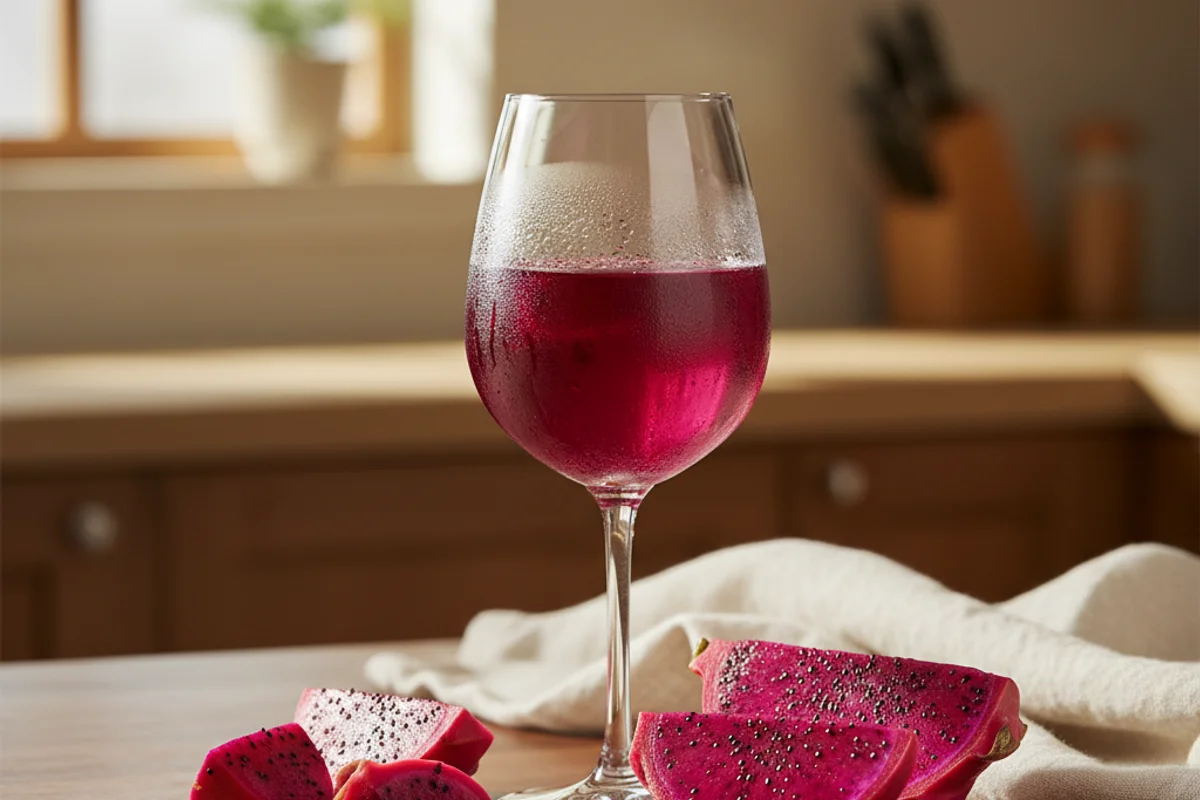
Dragonfruit looks like it was designed by someone who had never seen a fruit before — hot pink skin, green scales, and flesh that’s either snow white or deep magenta depending on the variety. The flavor is mild and lightly sweet, somewhere between a kiwi and a pear, with a subtle floral note. That restraint is actually an asset in winemaking. It produces a delicate, clean wine with a gorgeous blush color (if you use the red-fleshed type) that rewards patience and careful handling far more than heavy-handed additions ever could.
The beginner trap: Skipping the pectic enzyme step — dragonfruit is pectin-rich, and without it your wine will stay stubbornly hazy no matter how long you wait.
Ingredients
- 6 lbs ripe dragonfruit, fresh or frozen, trimmed and coarsely chopped
- 1¾ lbs granulated white sugar
- 6 pints (12 cups) water
- 1½ tsp acid blend (find it at any homebrew shop, or substitute 1 tsp citric acid)
- 1 tsp pectic enzyme
- 1 tsp yeast nutrient
- 1 Campden tablet, crushed
- 1 packet wine yeast (Lalvin 71B or EC-1118 work well)
Method
- Bring the water to a full boil. While it heats, trim any leafy ends from the fruit, wash it well, and chop it coarsely — leave the skin on for color, or peel it for a lighter wine.
- Place the chopped fruit, sugar, acid blend, and yeast nutrient into your sanitized primary fermenter. Pour the boiling water over everything and stir until the sugar fully dissolves.
- Cover the fermenter with a clean cloth and let it cool to room temperature. Add the crushed Campden tablet, stir well, re-cover, and leave it alone for 6–8 hours.
- Add the pectic enzyme, stir, cover again, and wait another 6–8 hours before moving on.
- Activate your yeast according to the packet instructions, then pitch it into the must. Stir the fermenter once daily for 7 days.
- After 7 days, strain the must through a sanitized nylon straining bag, squeezing the pulp firmly to extract as much juice as possible.
- Transfer the liquid to a sanitized secondary fermenter (glass carboy or food-grade jug), top up to the shoulder with water if needed, and fit an airlock.
- Rack the wine into a clean vessel every 30 days, topping up each time, until it runs clear and produces no new sediment over a full 30-day period.
- Stabilize the wine (potassium sorbate plus a fresh Campden tablet), sweeten to taste if desired, and wait 3 weeks to confirm fermentation does not restart.
- Rack into bottles. Age at least 6 months — a year will reward you even more.
Why this works
Dragonfruit contains glucose, fructose, and sucrose, which gives yeast plenty to work with, but the overall sugar content of the raw fruit is low enough that we need added sugar to reach a drinkable final alcohol level. The pectic enzyme is the real hero here: it breaks down the pectin chains that hold the fruit’s cell walls together, releasing more juice and — critically — preventing a permanent pectin haze in the finished wine. Campden tablets (sodium or potassium metabisulfite) release sulfur dioxide gas, which knocks out wild yeast and bacteria before your chosen wine yeast takes over. The 6–8 hour wait between adding Campden and pitching yeast gives that SO₂ time to dissipate enough that it won’t kill your cultured yeast along with the unwanted microbes.
Notes
Frozen dragonfruit works excellently here and is often easier to find than fresh — thaw it completely and use all the accumulated juice. Red-fleshed varieties (sometimes labeled “red pitaya”) will give a striking pink wine; white-fleshed varieties produce a nearly clear, straw-colored result. If you can’t find acid blend, a teaspoon of citric acid from the grocery store baking aisle is a workable substitute.