Dried Banana Chip Wine
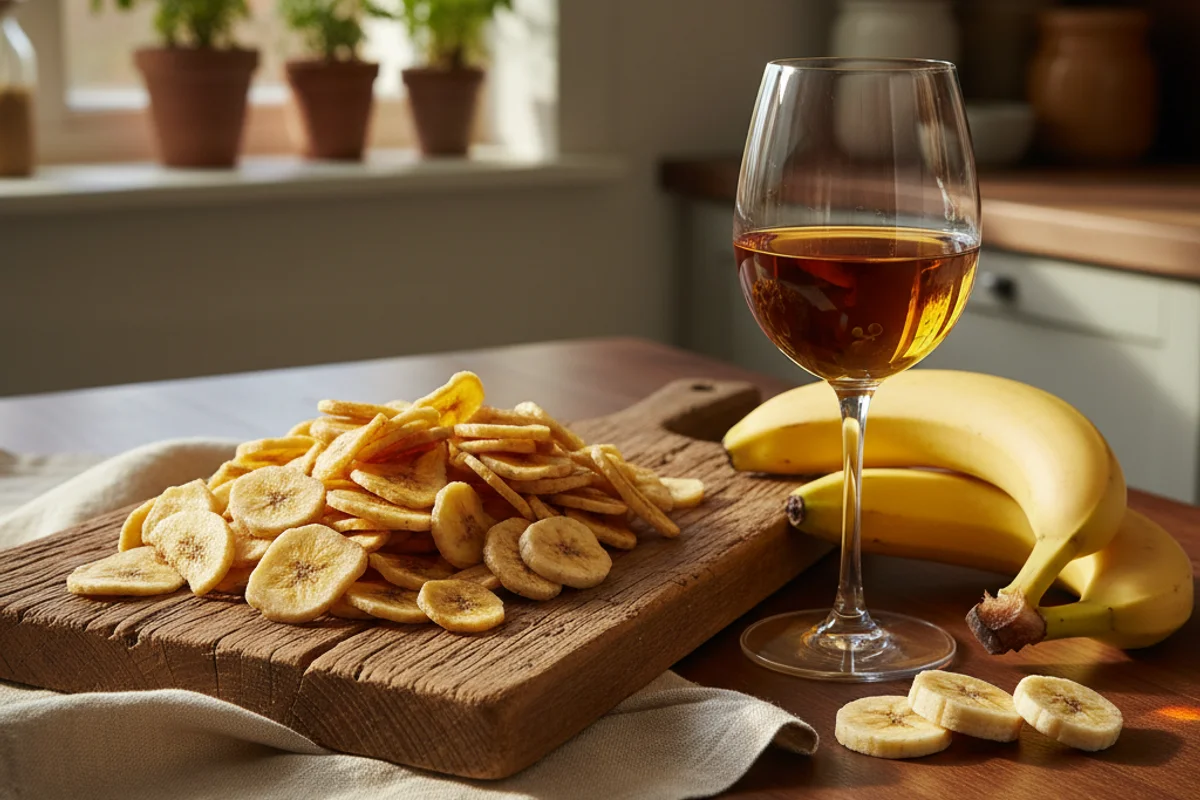
Bananas don’t announce themselves quietly. Dried, they concentrate every bit of that soft, caramel-edged sweetness into a shelf-stable chip you can find at any grocery store. Fermented with a neutral Niagara grape concentrate as a backbone, they produce a pale, smooth table wine with a subtle tropical warmth — nothing tropical-cocktail loud, just a quiet, grown-up richness that pairs surprisingly well with grilled chicken or mild fish. The catch? Patience. This wine needs nearly a year in the bottle before it stops tasting like a work in progress and starts tasting like a plan that worked.
The beginner trap: Skipping the label check on your banana chips — some brands add soy oil, which floats to the surface and looks alarming, so buy plain dehydrated chips with no added fats or sweeteners.
Ingredients
- 10 oz dried banana chips (plain, no added oil or honey)
- 1 can (12 oz) frozen Niagara white grape juice concentrate, thawed
- 1 gallon warm water
- 2 lbs granulated white sugar (adjust to reach SG 1.093–1.095)
- 1 Campden tablet, crushed
- ½ tsp yeast nutrient
- 3 tsp acid blend
- 1 packet Montrachet yeast (or other dry wine yeast)
Method
- Place banana chips inside a nylon straining bag and tie it closed, then set it in your primary fermenter.
- Combine warm water, grape concentrate, sugar, crushed Campden tablet, yeast nutrient, and acid blend in the primary; stir until sugar fully dissolves.
- Check the specific gravity with a hydrometer — it should read 1.093–1.095; add a little more sugar if needed and stir again.
- Let the must cool to room temperature, then sprinkle the yeast evenly over the surface; do not stir.
- Once a cap of banana solids forms at the top, stir the must once daily for 5–7 days.
- Lift out the straining bag, let it drain without squeezing, then discard the spent chips.
- Rack the must into a 1-gallon secondary, top up to the shoulder with water if needed, and fit an airlock; wait 3 weeks.
- Rack again into a clean secondary, top up, refit the airlock, and wait 3 months.
- Rack a final time into a clean vessel or bottling bucket; target a final gravity of 0.995 or lower before bottling.
- Bottle and age at least 10 months before opening.
Why this works
Dried banana chips are already partially caramelized from the dehydration process, which deepens the flavor compared to fresh fruit. Because bananas are low in natural acid and tannin, the acid blend and grape concentrate do the structural work — they give the finished wine enough backbone to age without going flat and flabby. Montrachet yeast ferments reliably to near-dryness (FG around 0.995), which is exactly what you want here; residual sweetness on top of banana’s natural fruitiness tips the wine from pleasant into cloying. The long bottle-aging allows the banana esters, which are volatile and sharp when young, to mellow and integrate with the grape and acid notes.
Notes
If your grocery store only carries banana chips with added oil or honey, check the bulk foods section or a natural foods store for plain dried bananas. Frozen banana slices (thawed and drained) can substitute for the chips at roughly 1.5 lbs, though the flavor will be milder. If Niagara concentrate is unavailable, a plain white grape juice concentrate (not orange or tropical blend) is the closest stand-in.