DRIED CHERRY WINE
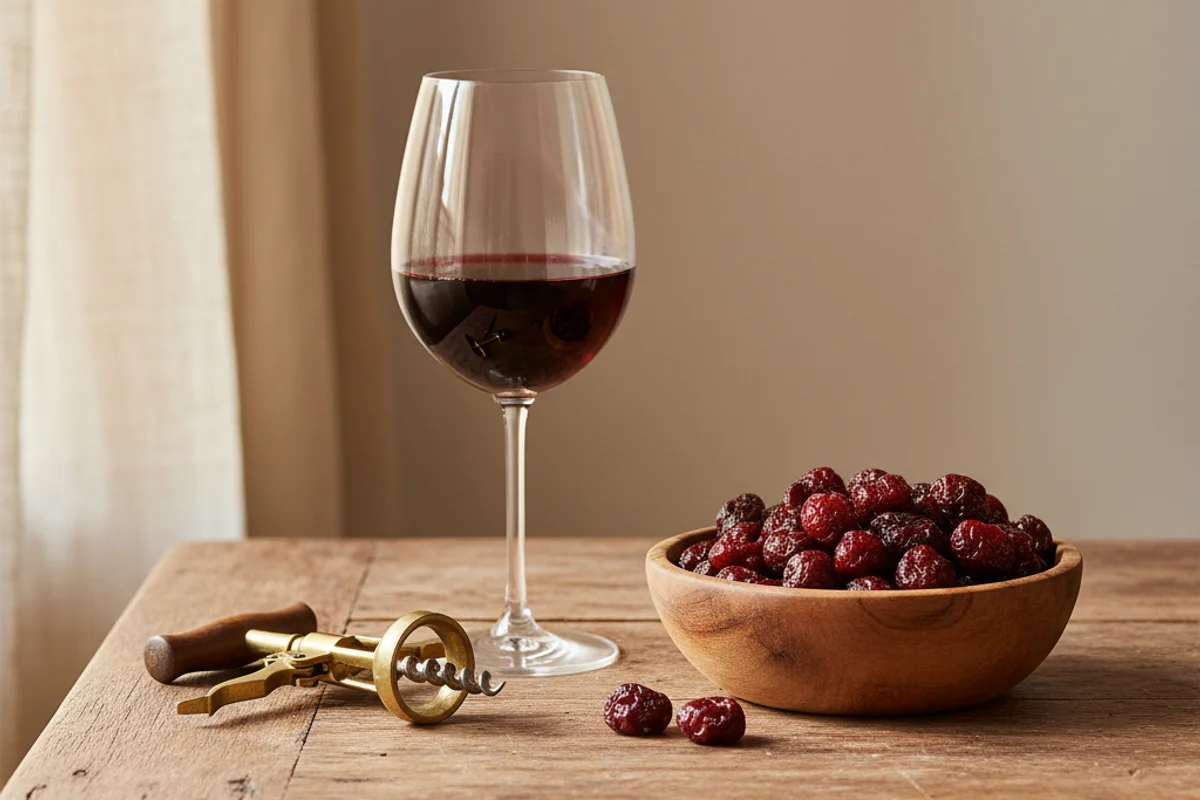
Dried cherries are a pantry workhorse — but most people reach for them only at the cheese board. Turns out they make a compelling wine: concentrated fruit flavor, deep garnet color, and a richness that fresh cherries take weeks of aging to develop on their own. The catch? Nearly all dried cherries you find at the grocery store are sweet varieties, and sweet cherries are naturally low in the tart malic acid that gives wine its backbone. Get the acid right, and this wine can genuinely surprise you.
The beginner trap: Skipping or under-dosing the malic acid — sweet cherries alone produce a flat, cloying wine with no brightness, and no amount of aging fixes a structural acid deficit.
Ingredients
- 1 lb dried sweet cherries (unsweetened, no added oil)
- 1 can (11 oz) frozen white grape juice concentrate (Welch’s 100% works well)
- 1½ lb granulated white sugar (target starting gravity: 1.090)
- 1 tsp malic acid
- ½ tsp pectic enzyme
- ¼ tsp wine tannin (or 1 strong cup of unsweetened black tea, cooled)
- 1 tsp yeast nutrient
- 6½ pts (about 3.25 quarts) water, divided
- 1 packet Montrachet or Champagne wine yeast
Method
- Combine cherries with 2 quarts of water in a large pot and soak for 24 hours.
- Bring the soaking water and cherries to a boil, then reduce heat and simmer for 8 minutes.
- Strain out the cherries and press them to extract as much liquid as possible; discard the solids.
- Stir the sugar into the hot cherry liquid until fully dissolved, then cover and let cool to room temperature.
- Add the grape juice concentrate, malic acid, pectic enzyme, tannin, and yeast nutrient; stir well, cover, and wait 12 hours.
- Activate your yeast according to packet directions, add it to the must, and cover loosely.
- Stir the must once daily until the specific gravity drops to 1.010.
- Transfer to a secondary fermenter (glass carboy or jug), attach an airlock, and let ferment to dryness.
- Once fermentation stops, rack off the sediment, top up with water or similar wine to minimize headspace, and reattach the airlock.
- Rack again every 60 days for 6 months, topping up each time.
- Stabilize with potassium sorbate and potassium metabisulfite, then sweeten to taste if desired; wait 3 more weeks before bottling.
- Age in bottle for at least 6–12 months before opening — patience is the ingredient this recipe demands most.
Why this works
Dried fruit is essentially fresh fruit with the water removed, which means the sugars, acids, and flavor compounds are all packed in tighter. Rehydrating and then simmering the cherries pulls those compounds back into solution and also softens the fruit’s cell walls, releasing more color and flavor. Pectic enzyme breaks down pectin — a natural fruit fiber — that would otherwise leave your finished wine hazy no matter how long you wait. The white grape juice concentrate adds fermentable sugar, body, and a mild grape backbone without competing with the cherry flavor. Malic acid is the same acid found naturally in tart cherries and apples; adding it here compensates for what sweet cherries lack and keeps the finished wine from tasting one-dimensional.
Notes
If you can find dried tart (sour) cherries — sometimes labeled “Montmorency” — use them instead and reduce the malic acid to ½ tsp. Dried cherries labeled “sweetened” or packed in syrup will throw off your sugar math; check the label and stick to unsweetened. If your finished wine comes out hazy after several rackings, a dose of bentonite or a commercial wine fining agent will clear it up.