EDELWEISS GRAPE WINE
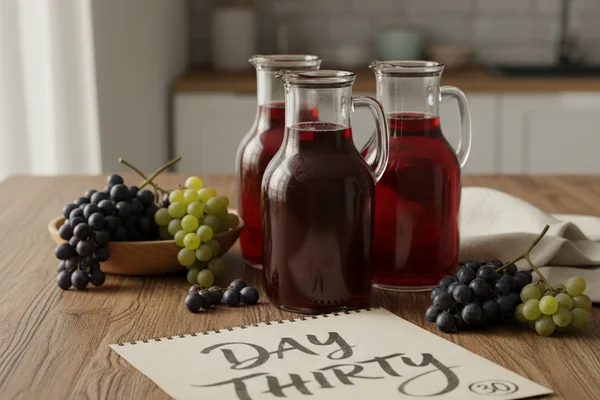
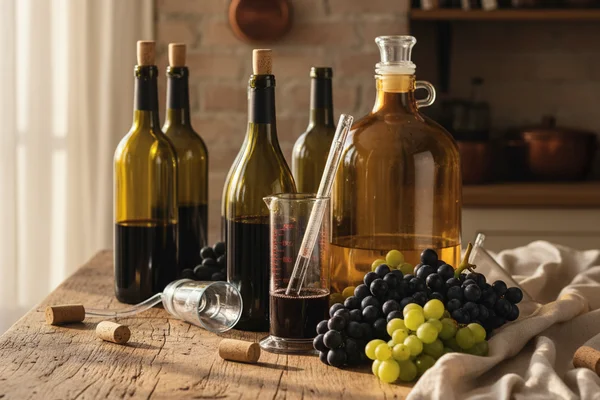
Edelweiss is a cold-hardy Minnesota hybrid that ripens weeks ahead of Concord and packs its pale gold berries with sugar and juice. Think Niagara with better manners. In the glass, it leans toward a semi-dry Riesling style — floral, lightly fruity, with enough acidity to keep things interesting. Because the grapes are naturally high in sugar, you may need almost no chaptalization at all. Get the timing right at harvest and you have the raw material for a genuinely elegant white table wine. Leave the grapes on the vine too long, though, and that delicate flavor turns loud fast.
The beginner trap: Skipping the cold-settling step after pressing causes a cloudy, pectin-heavy must that fights you all the way through to bottling.
Ingredients
- 60–70 lbs Edelweiss grapes, fully ripe (fresh; frozen works if you can source them)
- 1 tsp pectic enzyme
- ¾ tsp potassium metabisulfite (campden powder), divided across rackings
- 3 tsp yeast nutrient
- 1 packet wine yeast — Steinberg, Assmannshausen, or any Riesling-style yeast (Lalvin 71B is a solid grocery-store-friendly substitute)
Makes approximately 5 gallons.
Method
- Sort through the clusters and remove any damaged, moldy, or unripe berries. Crush and destem the grapes.
- Stir pectic enzyme thoroughly into the crushed fruit. Cover and let the enzyme work for 2 hours.
- Press the crushed grapes and move the juice into your primary fermentation vessel.
- Stir in ¼ tsp potassium metabisulfite, cover the vessel, and place it in a refrigerator or cool spot for 8 hours to let solids settle out.
- Check your specific gravity and acid level. Target a starting gravity no higher than 1.095; add sugar only if the must falls short naturally.
- Stir in the yeast nutrient, then gently add your pre-activated yeast starter so it floats near the surface — stir shallowly here.
- Cover the primary. After 4 hours, stir deeply to mix yeast into the must, then re-cover.
- Ferment in the primary until gravity drops to 1.010–1.015.
- Stabilize the must, then rack into a clean secondary vessel and fit an airlock. Move it somewhere cool.
- Allow fermentation to finish. Target a final gravity of 0.998–1.004.
- Rack every 30–45 days until the wine is stable and clear, adding ¼ tsp potassium metabisulfite every other racking (plan for at least three additions total).
- If the wine is still hazy after the third racking, fine with bentonite and wait another month before racking again.
- Sweeten to taste if desired, then bottle. Wait at least 3 months before opening your first bottle.
Why this works
Cold-settling the juice right after pressing is the key move here. When you chill fresh grape must for several hours, heavy solids — grape pulp fragments, tartrate crystals, and protein clumps — fall to the bottom before fermentation ever starts. You rack off this sediment and hand your yeast a cleaner, more manageable juice. Pectic enzyme backs this up by breaking down pectin chains that would otherwise trap particles in suspension and produce a haze that no amount of patience will fix on its own. Together, these two steps give the naturally delicate Edelweiss aromatics room to shine without interference from the murky background noise of a poorly clarified must.
Notes
Frozen Edelweiss grapes are hard to find commercially — your best bet is a local vineyard in the Upper Midwest or a home-grower’s surplus. If you cannot source Edelweiss at all, Niagara grapes are the closest widely available substitute and follow the same process. Bentonite for fining is sold at homebrew shops; plain unflavored gelatin (one packet dissolved per the package directions) can serve as a backup fining agent in a pinch.