EGGPLANT WINE
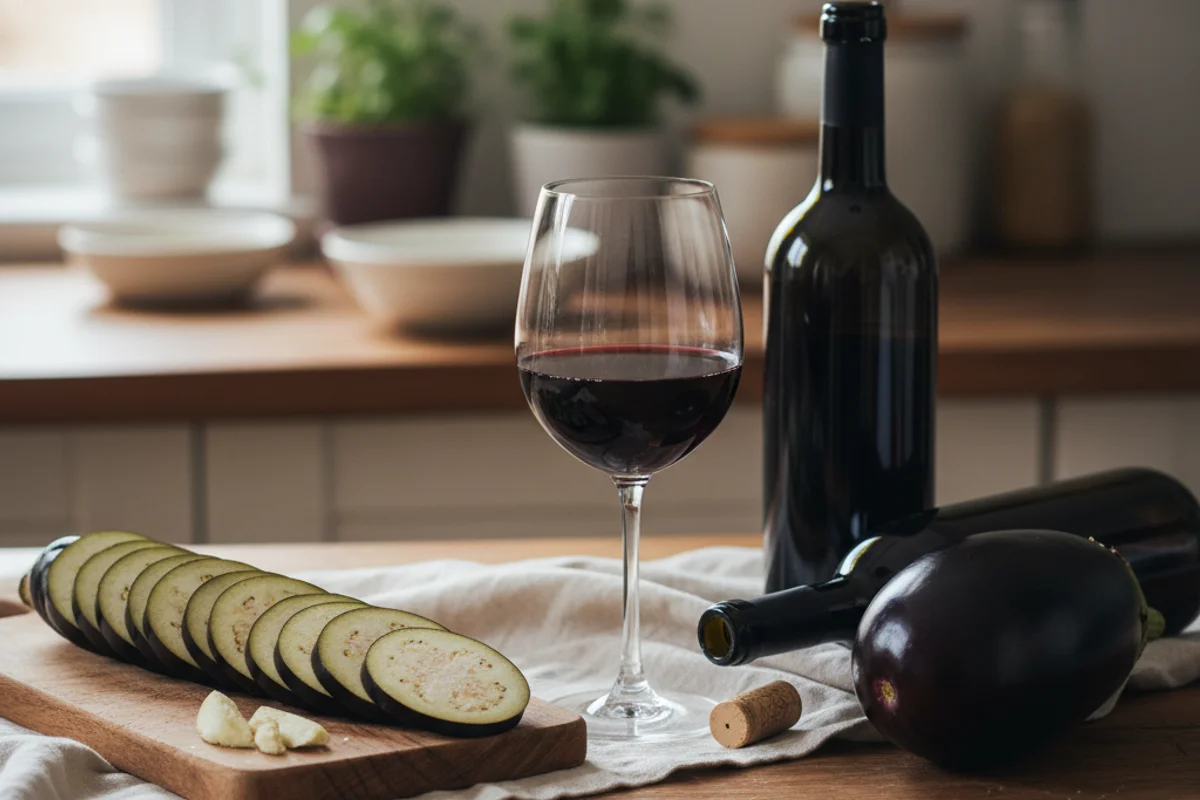
Eggplant — that deep purple, glossy vegetable you probably associate with pasta — has a quiet secret life as a winemaking ingredient. When handled right, it produces a light, reasonably dry white-style wine with a mild, almost neutral character that takes well to aging. The key variable is ripeness: a fully ripe eggplant yields clean, smooth flavor, while an underripe one brings a harsh, bitter woodiness that no amount of patience will fix. Think of it as the country cousin of Chablis — understated, dry, and genuinely surprising.
The beginner trap: Using underripe eggplant is the most common mistake — if the fruit isn’t fully ripe, the wine will taste bitter and woody no matter how long you age it.
Ingredients
- 4 lbs eggplant, fully ripe, thinly sliced (skin on or off — your call)
- 2 lbs granulated white sugar
- ½ oz citric acid (or the juice of 3–4 lemons as a grocery-store substitute)
- ¼ tsp wine tannin (or the contents of 1 plain black tea bag, steeped and cooled)
- 1 tsp yeast nutrient
- 1 packet Chablis wine yeast (or any dry white wine yeast such as Lalvin 71B)
- Water to make 1 gallon
Method
- Bring 1 gallon of water to a full boil on the stove.
- While the water heats, slice the eggplant thin — about ¼ inch — and place the slices in your sanitized primary fermenter along with the sugar.
- Pour the boiling water over the eggplant and sugar, then stir until the sugar fully dissolves.
- Let the mixture cool to room temperature (around 70°F), then add the citric acid, tannin, and yeast nutrient.
- Sprinkle in the yeast, stir gently, and cover the fermenter with a clean cloth secured with a rubber band.
- Ferment at room temperature for 3 days, stirring once daily.
- Strain out the solids and transfer the liquid to a sanitized 1-gallon glass jug (secondary fermenter), then fit it with an airlock.
- Rack the wine into a fresh sanitized jug every 30 days until it runs clear and drops no new sediment over a full 30-day period.
- Stabilize with potassium sorbate and potassium metabisulfite, then rack into bottles. Age at least 6 months before opening.
Why this works
Eggplant is low in natural sugar and acid, which is exactly why this recipe adds both. The citric acid drops the pH into the range where yeast thrive and spoilage bacteria struggle. The added tannin — naturally scarce in eggplant flesh — gives the wine structure and helps proteins clump together and fall out during aging, which is a big part of why the wine eventually goes from murky to clear. The repeated racking removes those settled solids before they can break down and release off-flavors. The result is a slow, steady process that rewards patience: this wine genuinely gets better the longer you leave it alone.
Notes
If you can’t find wine tannin at a homebrew shop, steep one plain black tea bag in a cup of hot water for 5 minutes, let it cool, and use that liquid as your tannin source. Avoid flavored or herbal teas. Any dry white wine yeast works here — Lalvin EC-1118 or 71B are easy to find online or at homebrew retailers.