ELDERBERRY ROSÉ WINE
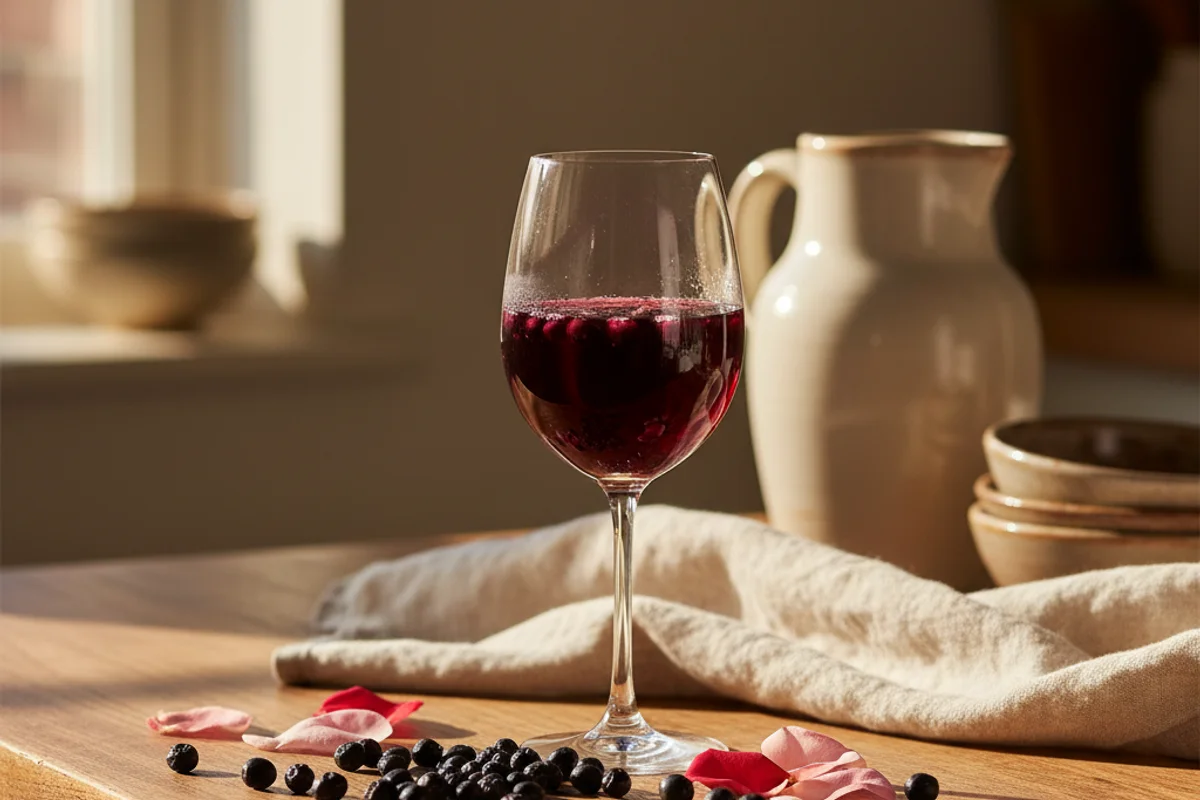
Elderberries punch above their weight — deep color, earthy funk, and enough tannin to make a Bordeaux blush. This recipe softens that intensity by pulling in ripe bananas for body and golden raisins for a subtle sweetness, landing somewhere between a fruit-forward rosé and a serious country wine. The result is genuinely elegant: soft garnet in the glass, berry on the nose, and a smooth finish that only shows up if you have the patience to leave it alone for a full year.
The beginner trap: Drinking this wine too early — it tastes harsh and unbalanced at six months, so bottle it and forget it exists for a full year.
Ingredients
- 2 lbs fresh or frozen elderberries
- 1 lb fully ripe bananas (the more spots, the better)
- 1 lb golden raisins or sultanas, finely minced
- 1¾ lbs granulated sugar
- 1 tsp yeast nutrient
- 1 tsp pectic enzyme
- ½ tsp citric acid
- 1 packet Lalvin RC212 wine yeast (or any Burgundy-style red wine yeast)
- Water to make up roughly 1 gallon total
Method
- Wash the elderberries and remove any damaged or unripe ones, then place them in your primary fermenter.
- Bring 1 quart of water to a boil, pour it over the berries, and let them soak for 20 minutes.
- Crush the soaked berries and strain through a fine mesh bag or cheesecloth, squeezing firmly to pull out all the juice.
- Stir the minced golden raisins into the elderberry juice, then pour in a second quart of freshly boiled water and cover the fermenter.
- Bring a third quart of water to a boil in a saucepan, then peel, slice, and add the bananas; cover and boil for 25 minutes.
- Skim any foam off the banana water, strain out the fruit solids, and add the liquid to the fermenter.
- Bring 1 pint of water to a boil, dissolve the sugar completely in it, then pour the sugar syrup into the fermenter and cover.
- Once the must cools to room temperature, stir in the citric acid, yeast nutrient, and pectic enzyme; cover and wait 12 hours.
- Activate your yeast according to the packet instructions, add it to the must, cover the fermenter, and stir twice a day for 3 days.
- Strain out the solids, transfer the wine to a glass secondary fermenter (carboy), top up with water if needed to minimize headspace, and fit an airlock.
- Rack into a clean vessel every 60 days until the wine is fully clear and no new sediment forms over a 30-day period.
- Stabilize with potassium sorbate and potassium metabisulfite, bottle dry, and age for a full year before opening.
Why this works
Elderberries are loaded with anthocyanins — the pigment molecules that give this wine its rosy color — but they also carry heavy tannins and pectin that make young wine taste bitter and look cloudy. Boiling the bananas extracts their starches and pectins in a way that adds silky body without strong flavor, essentially acting as a natural mouthfeel booster. The pectic enzyme breaks down remaining fruit pectin so the wine can clear properly. Golden raisins contribute fermentable sugars plus small amounts of glycerol precursors, which round out the texture. Together, these three fruits create a structure that aging can actually smooth into something worth drinking.
Notes
Frozen elderberries work just as well as fresh — freezing ruptures the cell walls and actually makes juice extraction easier. If you can’t find elderberries at a farmers market, look for them frozen at specialty grocery stores or online homebrew suppliers. Lalvin RC212 is sold at most homebrew shops, but any red wine yeast labeled for Burgundy or Pinot Noir styles will give similar results.