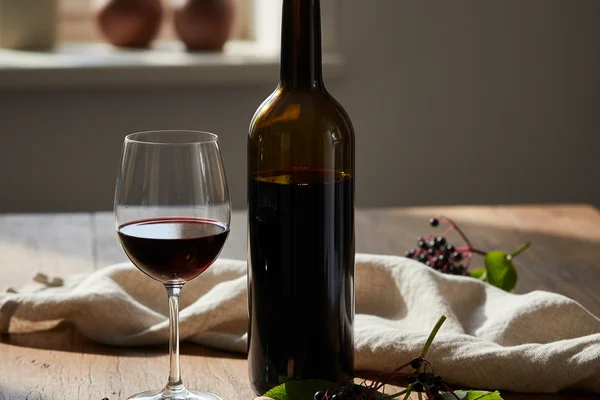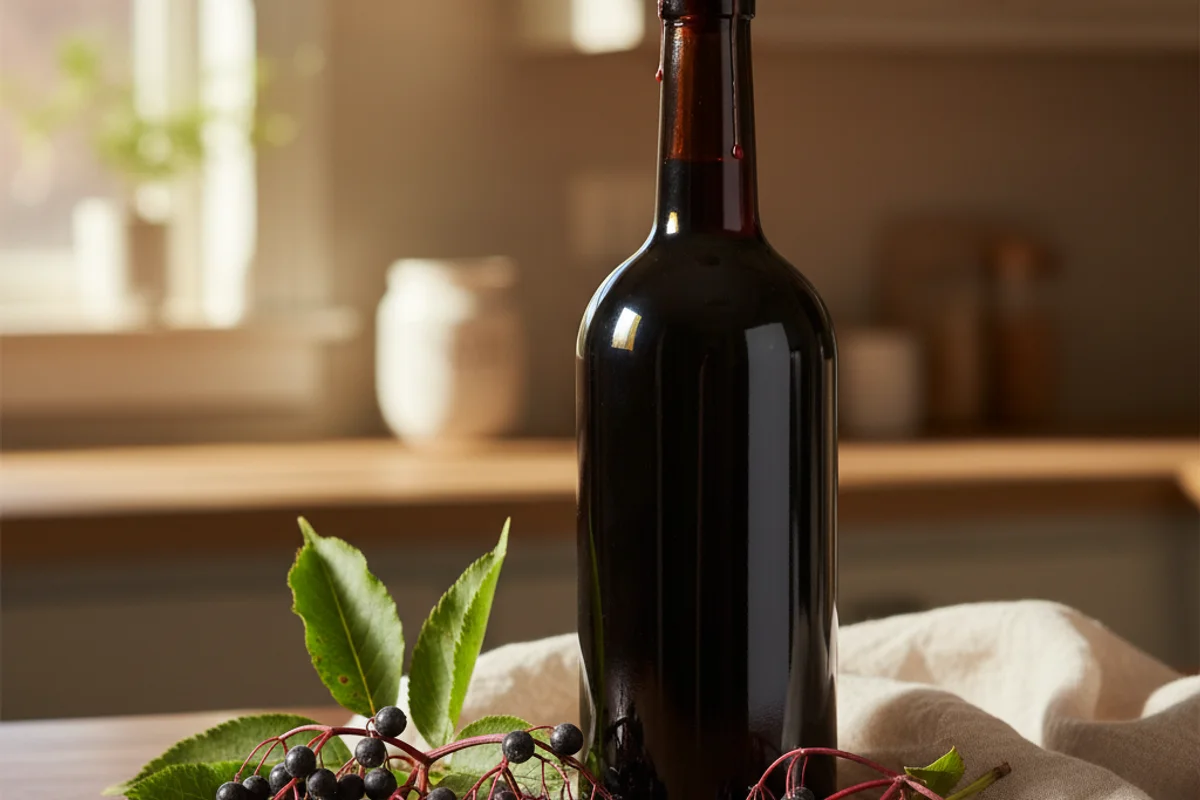
Elderberry Wine (1)
Elderberry wine is what happens when a humble roadside berry decides to punch way above its weight class. Done right, it pours a deep, near-opaque purple and delivers a flavor that lands somewhere between blackberry jam and dark plum, with a tannic backbone that actually benefits from time in the bottle. This is not a quick-turnaround wine — it asks for patience measured in months, not weeks. Give it that patience and you’ll be rewarded with something that genuinely surprises people when you tell them you made it yourself.
The beginner trap: Squeezing the berry bag during the final drain — it looks efficient, but it forces bitter, harsh compounds into your wine that no amount of aging will fully fix.
Ingredients
- 3 lbs fresh or frozen elderberries, washed and destemmed
- 2¼ lbs granulated white sugar
- 3½ quarts water
- 2 tsp acid blend (or substitute 2 tsp lemon juice per tsp of acid blend as a rough stand-in)
- 1 tsp yeast nutrient
- ½ tsp pectic enzyme
- 1 Campden tablet, crushed
- 1 packet Montrachet wine yeast (or any dry red wine yeast)
Method
- Bring the water to a full boil and stir in the sugar until completely dissolved. Remove from heat.
- Place the destemmed elderberries into a nylon straining bag, tie it closed, and set it in your primary fermenter.
- Put on rubber gloves and mash the berries inside the bag, then pour the hot sugar-water over the top.
- Cover the fermenter and let it cool to lukewarm (around 70–75°F).
- Add the acid blend, yeast nutrient, and crushed Campden tablet. Stir well, then re-cover.
- After 12 hours, stir in the pectic enzyme. Re-cover and wait another 12 hours.
- Sprinkle in the yeast, cover, and stir the must once daily — gently squeezing the bag each time to pull color and flavor from the berries. Keep your gloves on; elderberries stain aggressively.
- After 14 days of primary fermentation, lift the bag and let it drip drain completely into the fermenter. Do not squeeze.
- Combine all the liquid and let it settle overnight, then rack into a glass secondary fermenter and fit an airlock.
- Store the fermenter somewhere dark — light degrades the color fast.
- After two months, rack again, top up to reduce headspace, and refit the airlock. Repeat this process twice more at two-month intervals.
- Stabilize the wine (potassium sorbate plus a fresh Campden tablet), then wait 10–30 days.
- Rack if sediment has formed, sweeten to taste if desired, then bottle. Store bottles in the dark for at least one year before opening.
Why this works
Elderberries are loaded with anthocyanins — the same pigment compounds that give blueberries and red cabbage their deep color. Those pigments are pH-sensitive and light-sensitive, which is why this recipe keeps the fermenter and bottles in the dark throughout. The pectic enzyme is doing quiet but essential work: elderberries contain pectin, and without something to break it down, your finished wine can end up hazy no matter how long you wait. Adding the enzyme 12 hours after the Campden tablet is deliberate — sulfites from the tablet need time to off-gas slightly before the enzyme goes in, because high sulfite levels can knock the enzyme out before it does its job.
Notes
Frozen elderberries work extremely well here — freezing ruptures the cell walls and actually improves color and juice extraction. If you can’t find elderberries fresh or frozen at a local market, check Eastern European grocery stores or online retailers. Never use raw elderberries straight from the wild without identifying them with certainty; common elderberry (Sambucus nigra) is what you want — other species can cause stomach upset.