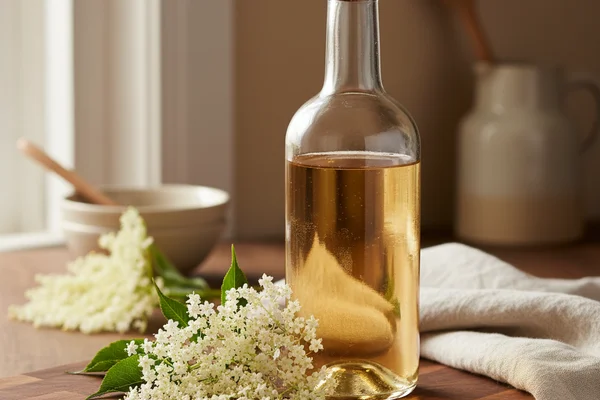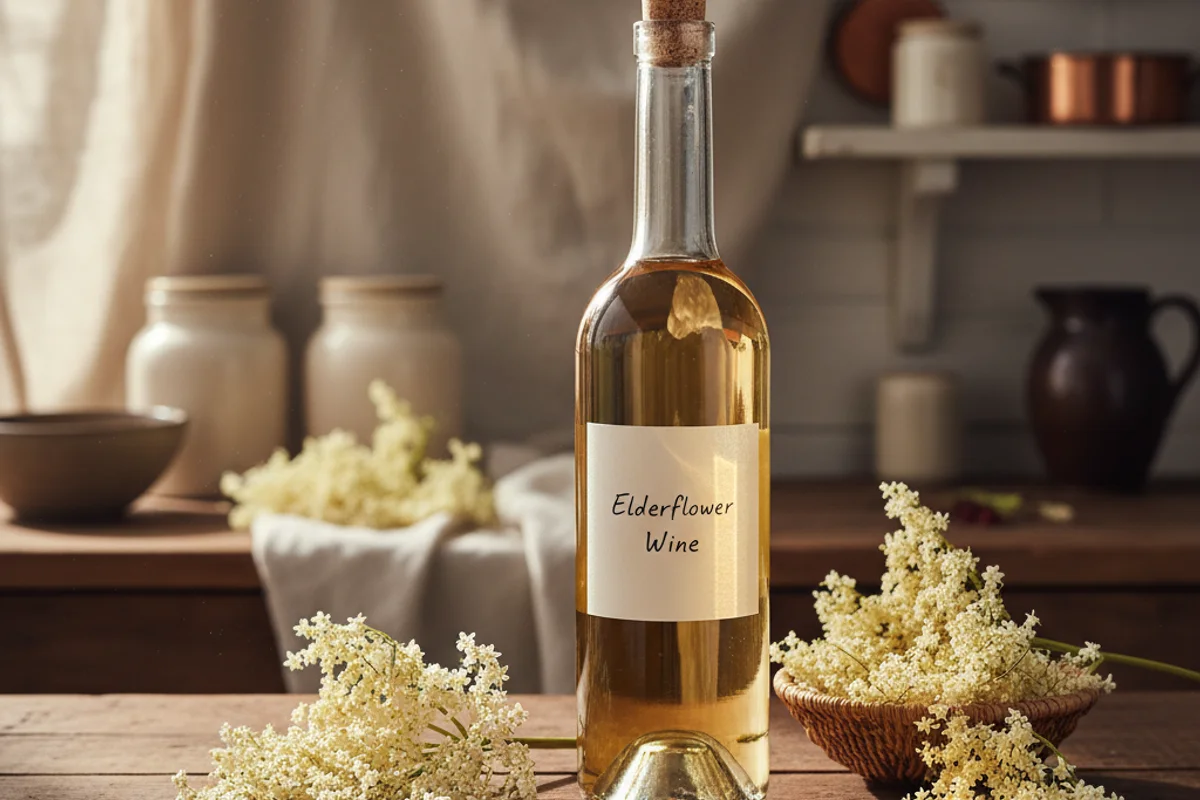
ELDERFLOWER (DRIED) WINE
Elderflowers carry a soft, honeyed scent with a hint of muscat — the kind of floral note that makes you stop and actually smell the glass. Drying the blossoms locks that perfume in place so you can make this wine long after the brief spring bloom has passed. The result is lighter and a touch more subtle than a fresh-flower batch, but it still delivers that delicate, aromatic character that sets elderflower wine apart from anything you can buy at the store. Think dry, pale, and floral — somewhere between a crisp white wine and a bottle of captured springtime.
The beginner trap: Using too many dried flowers is the fastest way to ruin this wine — the flavor compounds in elderflowers are powerful, and even a small overage turns the wine bitter and almost medicinal.
Ingredients
- 1 oz dried elderflowers
- 11 oz frozen white grape juice concentrate, thawed
- 1½ lbs granulated white sugar
- 1½ tsp acid blend (or 1 tsp lemon juice powder as a grocery-store substitute)
- ⅛ tsp grape tannin (or 1 unsweetened black tea bag, steeped and removed)
- 1 Campden tablet, crushed
- 6 pints (3 quarts) water
- 1 tsp yeast nutrient
- 1 packet Hock, Sauterne, or Champagne wine yeast
Method
- Thaw the grape juice concentrate and bring the water to a full boil. While the water heats, inspect the dried flowers and rinse them briefly to remove any dust or debris.
- Place the flowers, sugar, and grape juice concentrate into your primary fermenter. Pour the boiling water over everything and stir until the sugar fully dissolves.
- Cover the fermenter with a clean cloth and let it cool to room temperature, which takes a few hours.
- Once cool, stir in the acid blend, tannin, crushed Campden tablet, and yeast nutrient. Cover again and leave it alone for at least 12 hours.
- Sprinkle in the yeast, stir gently, and cover. Ferment for six days at room temperature, stirring once daily.
- Strain out the flowers and transfer the liquid to a clean secondary fermenter (a 1-gallon glass jug works well). Fit an airlock.
- When the specific gravity drops to 1.005, rack the wine into a clean vessel, top it up with water to minimize headspace, and refit the airlock.
- Once the wine clears, wait 30–45 days, then rack again, top up, and refit the airlock.
- After three more months, stabilize the wine with a crushed Campden tablet and ½ tsp potassium sorbate, then sweeten to taste if desired. Wait 10 days, then rack into bottles.
- Age at least six months before opening a bottle.
Why this works
Elderflowers get their signature scent from volatile aromatic compounds — mostly linalool and other terpenes — the same family of molecules responsible for the muscat character in certain grapes. Drying concentrates these compounds but also drives off some of the lighter volatiles, which is why dried flowers produce a slightly softer aroma than fresh ones. The frozen white grape juice concentrate plays an important structural role: it adds fermentable sugar, body, and mild acidity, giving the yeast a stable environment and giving the finished wine some backbone to support those delicate floral notes. The long aging period lets harsh young flavors mellow and allows the aromatics to fully integrate.
Notes
Dried elderflowers are available from homebrew shops and online retailers; some health food stores carry them as an herbal tea ingredient. If your finished wine tastes overly floral or slightly bitter, extended aging often softens it — resist the urge to bottle early. Potassium sorbate is the standard stabilizer before back-sweetening and is available at any homebrew supply store.