ELDERFLOWER WINE (1)
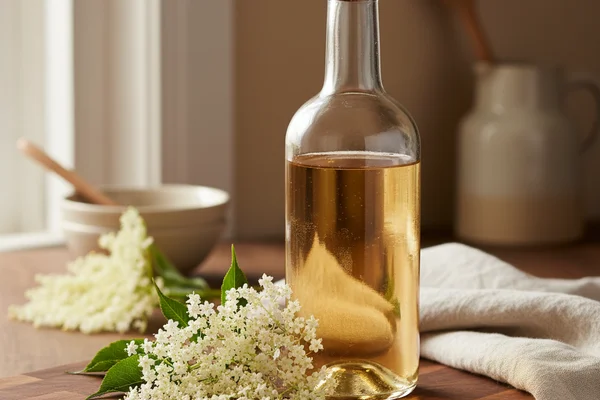
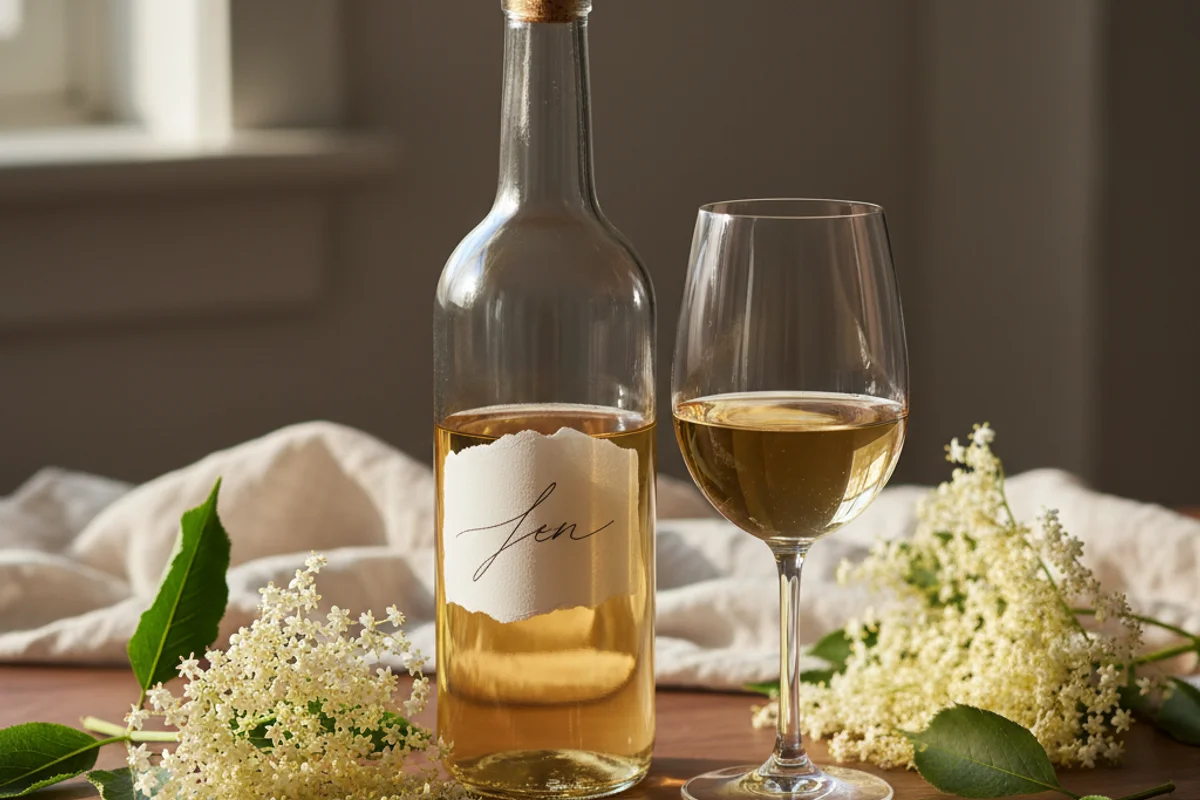
Elderflower wine is one of those rare things that smells better than it has any right to. The blossoms carry a floral, almost lychee-like perfume that transfers straight into the glass — light, dry, and delicate when done right. You’re working with a narrow seasonal window (late spring to early summer), so when the clusters hit full bloom and the scent is almost intoxicating, that’s your cue. Pick fast, work clean, and you’ll have a wine worth the wait.
The beginner trap: Leaving any green stems or stalks in with the flowers will push bitter, grassy flavors into the wine that no amount of aging will fix.
Ingredients
- 1½ pints fresh elderflower heads (flowers only, stems removed)
- 2 lbs granulated white sugar
- 7 pints water
- 1½ tsp acid blend (or the juice of 2 lemons as a grocery-store substitute)
- 1 tsp yeast nutrient
- 1 Campden tablet, crushed
- 1 packet wine yeast (Lalvin 71B or EC-1118 work well)
Method
- Bring the water to a full boil.
- While the water heats, strip the flowers from their stalks and rinse them gently to remove any insects or debris.
- Place the flowers and sugar together in your primary fermenter, then pour the boiling water over them. Stir until the sugar fully dissolves.
- Cover the fermenter with a clean cloth and let it cool to room temperature — this takes a few hours.
- Once cool, stir in the acid blend, crushed Campden tablet, and yeast nutrient. Recover and let it sit for 24 hours.
- Add the wine yeast, stir, and cover again. Ferment for six days, stirring once daily.
- Strain out all the flowers through a fine mesh strainer or cheesecloth, then transfer the liquid to a glass secondary fermenter and fit an airlock.
- When the specific gravity reaches 1.005, rack the wine into a clean vessel, top up to minimize headspace, and refit the airlock.
- After three more months, stabilize with a Campden tablet and potassium sorbate, then sweeten to your taste if desired.
- Wait ten days, then rack into bottles. Age at least six months before opening.
Why this works
Boiling water does two jobs here: it dissolves the sugar evenly and it drives off some of the more volatile compounds from the flowers, mellowing the raw floral punch into something wine-like and refined. The Campden tablet added at the 24-hour mark knocks out wild yeast and bacteria without killing the wine yeast you’ll pitch the next day — that timing gap is important. Acid blend balances the must because elderflowers contribute almost no natural acidity on their own, and without it the finished wine tastes flat and soft in a bad way. The long bottle-aging period lets CO₂ fully off-gas and allows the delicate aroma compounds to settle into a coherent, clean flavor.
Notes
If you can’t find acid blend at a homebrew shop, fresh lemon juice works — start with about 3 tablespoons and adjust. Elderflowers don’t freeze as gracefully as berries do, but if you must, freeze them in a single layer first and expect a slight loss of aroma. Potassium sorbate (½ tsp) is your stabilizer of choice before back-sweetening; don’t skip it or you risk refermentation in the bottle.