FALL GRAPE WINE Makes 1 Gallon
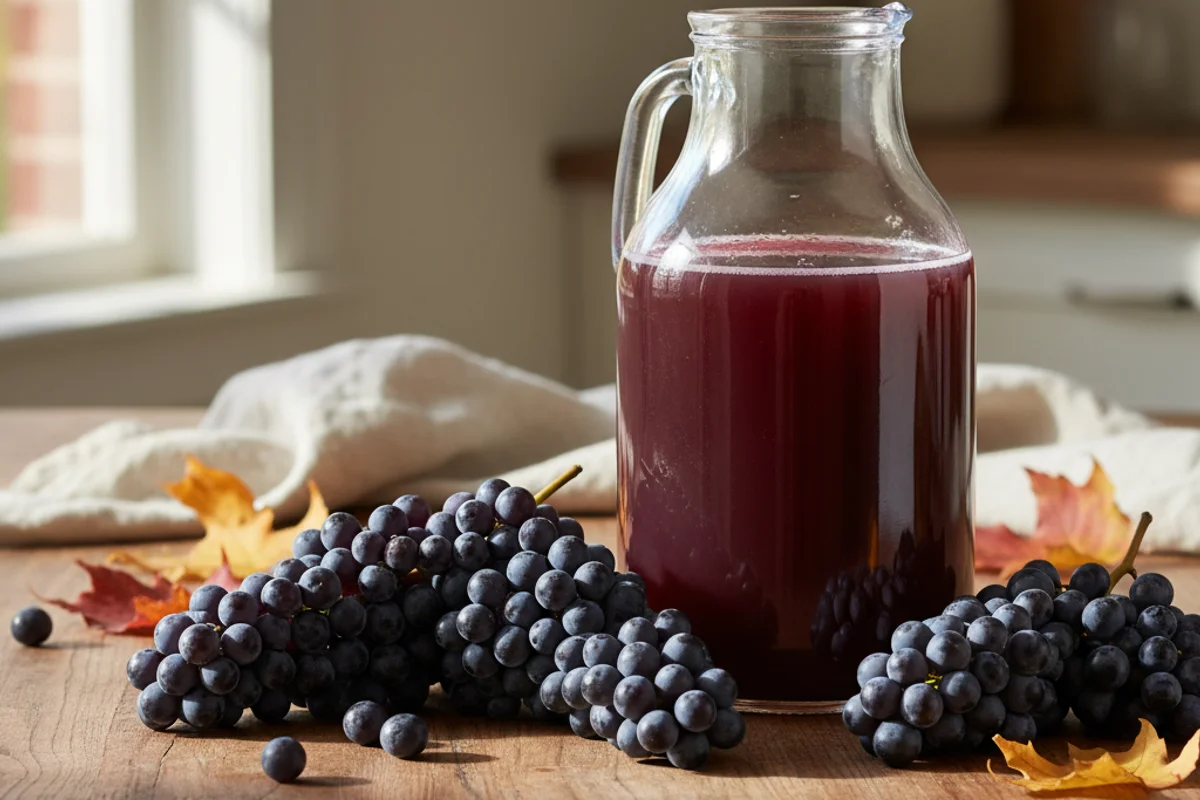
There’s a reason winemakers chase frost grapes in November instead of September. These small, dark clusters — tight-skinned and mouth-puckering before a freeze — undergo a dramatic chemical shift once cold temperatures hit. Starches convert to sugars, harsh acids mellow, and what was barely edible becomes genuinely delicious. The result in the glass is a medium-bodied red with a rustic, wild edge: earthy, a little tannic, and unmistakably its own thing. This is not a polished Cabernet. It’s something older and more honest than that.
The beginner trap: Picking the grapes before the first hard frost — they’ll taste sharp and thin, and no amount of added sugar will fix the flavor.
Ingredients
- 13–15 lbs ripe fall grapes (frost grapes, Vitis riparia, or any late-harvest wild or cultivated dark grape), destemmed
- 1/3–1/2 lb (about 3/4 cup) granulated white sugar, adjusted to hit target gravity
- 1 Campden tablet, finely crushed
- 3/4 tsp pectic enzyme
- 1 tsp yeast nutrient
- 1 packet Lalvin 71B yeast (also sold as 71B-1122; Red Star Côte des Blancs is a reasonable substitute)
Method
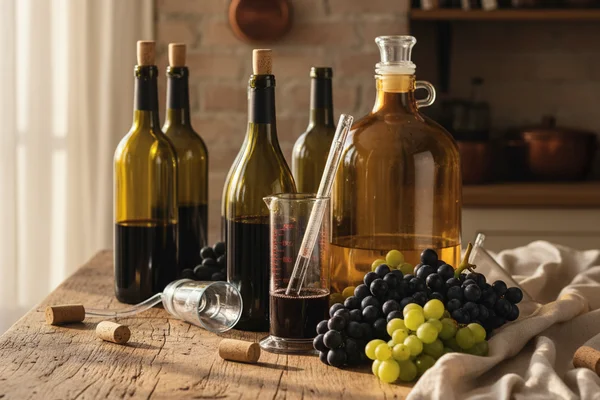
- Destem and crush the grapes by hand or with a potato masher, then load them into a sanitized nylon mesh straining bag and tie it shut. Place the bag in your primary fermenter (a food-safe bucket works fine).
- Squeeze the bag firmly until you have enough free-run juice to fill a hydrometer test tube. Take a gravity reading.
- Calculate how much sugar you need to bring the specific gravity up to 1.088. Add the sugar directly to the juice in the fermenter and stir until fully dissolved.
- Add the crushed Campden tablet and stir it in well. Cover the fermenter loosely with a clean cloth and leave it alone for 10 hours.
- Add the pectic enzyme, stir well, recover the fermenter, and wait another 10 hours.
- Activate the yeast according to the packet instructions, then add it to the fermenter. Cover loosely and squeeze the bag twice a day to push juice through the grape skins.
- Keep squeezing twice daily for 5–7 days, until visible bubbling slows down significantly.
- Remove the straining bag, let it drain fully, then press it firmly to capture all remaining juice. Discard the spent skins and seeds.
- Transfer the juice to a sanitized 1-gallon glass jug (secondary fermenter), top up to the shoulder with water or extra juice if needed, and fit an airlock.
- After 30 days, rack the wine off the sediment into a clean jug, top up, and refit the airlock.
- Rack again after another 30 days, then stabilize with a fresh Campden tablet and, if desired, a wine stabilizer (potassium sorbate).
- Taste and sweeten if you like — if you do sweeten, wait 30 more days before bottling. If you skip sweetening, wait 10–14 days and rack into bottles. Age at least 3–6 months before drinking.
Why this works
The 10-hour rest after adding the Campden tablet is not filler time — it’s chemistry. Sulfur dioxide from the tablet suppresses wild yeast and bacteria that live on grape skins, clearing the field for your chosen yeast to dominate. The follow-up wait after adding pectic enzyme matters too: pectic enzyme breaks down pectin in the grape pulp, which releases more juice and prevents a permanent haze in the finished wine. The 71B yeast strain is a particularly smart choice here because it metabolizes some malic acid — the sharp, green-apple acid common in wild grapes — softening the overall flavor profile without requiring a separate malolactic fermentation step.
Notes
If you can’t find wild frost grapes, Concord grapes (widely available at farmers markets and some grocery stores in fall) are the most accessible substitute and produce a similarly bold, rustic wine. Frozen Concord grapes work well too — freezing actually mimics the frost effect, rupturing cell walls and making juice extraction easier; thaw completely before crushing. For a smoother, lighter wine, drop the grape load to around 7–8 lbs and adjust your sugar addition to still hit 1.088.