FEEDING YOUR YEAST
Think of your wine yeast as a kitchen crew that just flew in from overseas — jet-lagged, possibly heat-stressed, and about to walk into a high-pressure environment. Toss them straight into a vat of acidic, sulfite-laced must and you are gambling with the most important biological event in your entire winemaking process. Give them a proper warm-up first, feed them right, and they will reward you with a fast, clean, complete fermentation. Shortcut that process and you may spend weeks chasing a stuck fermentation that could have been avoided in an afternoon.
The beginner trap: Sprinkling dry yeast directly onto the must without making a starter first — especially risky with fruit wines, which can contain compounds that damage dry yeast cells before they even have a chance to rehydrate.
Ingredients
- 1 packet (5 g) active dry wine yeast (ADY), such as Lalvin EC-1118 or Red Star Premier Blanc
- 1 cup tap water or spring water, heated to 100–105°F (do not use distilled water)
- ¼ cup + ¼ cup + ½ cup fruit juice or strained must, room temperature — apple, grape, or orange juice from the grocery store all work
- 1 tsp yeast nutrient (available at homebrew shops; contains diammonium phosphate, or DAP, plus vitamins and trace minerals)
- Optional: ½ tsp yeast energizer, for sluggish or stuck fermentations (contains B vitamins including riboflavin and thiamine)
Method
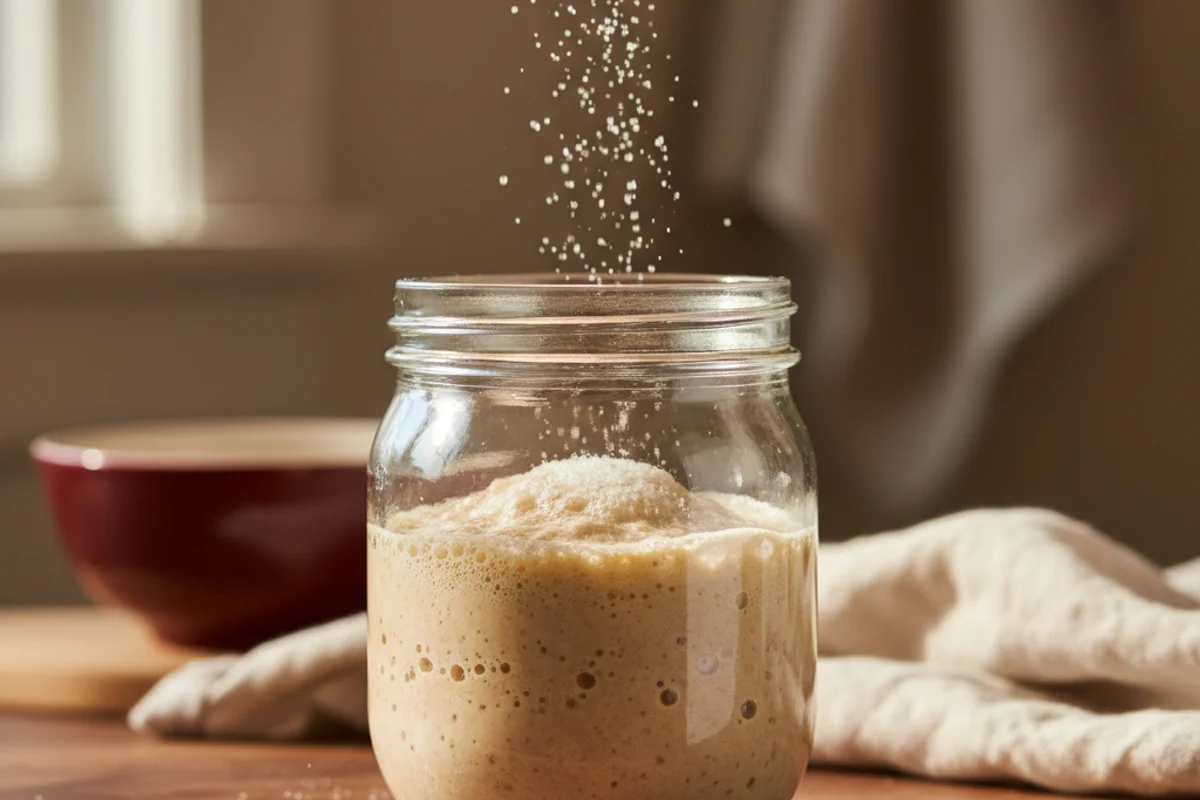
- Measure 1 cup of tap water at 100–105°F into a clean jar or measuring cup. Sprinkle the dry yeast over the surface, stir gently once, and cover loosely with plastic wrap or a clean cloth.
- Let the yeast rehydrate undisturbed for 30 minutes, then check for signs of life — a creamy foam or yeasty smell means it is working. Leave it covered for another 3.5 hours total from the start.
- While the yeast rehydrates, set your juice or strained must near the starter so both liquids drift toward the same temperature. They should be within 10°F of each other before you proceed.
- Dissolve the yeast nutrient in the first ¼ cup of juice, then stir that mixture into the starter. Cover and set in a warm spot (70–75°F).
- After 4 hours, check for active bubbling or foam, then stir in the second ¼ cup of juice. Cover and leave alone for another 4 hours.
- Add the final ½ cup of juice to maximize the yeast population. After 4 more hours the colony is roughly 64 times larger than when it started — now it is ready to pitch into your must.
- When moving the must from your primary fermenter to secondary, stir the lees vigorously back into suspension first, then transfer quickly so the living yeast travel with the must — do not leave them behind in the bottom of the bucket.
Why this works
A dry yeast cell is basically a dormant sponge. For the first few seconds it contacts any liquid, it absorbs whatever is around it indiscriminately — including pesticide residues, excess sulfites, and other compounds it would normally block out once fully hydrated. Rehydrating in plain warm water first gives the cell wall time to wake up and rebuild its selective membrane. Each feeding of juice then signals the yeast to shift from survival mode into active reproduction. Nitrogen (from DAP in yeast nutrient) is the key trigger — yeast need nitrogen to build new cells far more than they need sugar. Sugar is jet fuel; nitrogen is the engine itself. Skipping nutrients in a fruit must is like asking a crew to build a house with no lumber.
Notes
Frozen fruit musts work well with this method — thaw completely and strain before using as the juice addition in your starter. If you have no commercial yeast nutrient on hand, a small amount of malt extract (about ½ tsp) plus a few drops of lemon juice is a passable emergency substitute, but commercial nutrient is cheap and worth keeping stocked. If your fermentation stalls after transfer to secondary, dissolve ½ tsp yeast energizer in ¼ cup of must and ½ cup of 75°F water, add a pinch of fresh yeast, let it bloom for 12 hours, then feed it another ¼ cup of must before adding the whole solution back to your fermenter.