FENNEL WINES
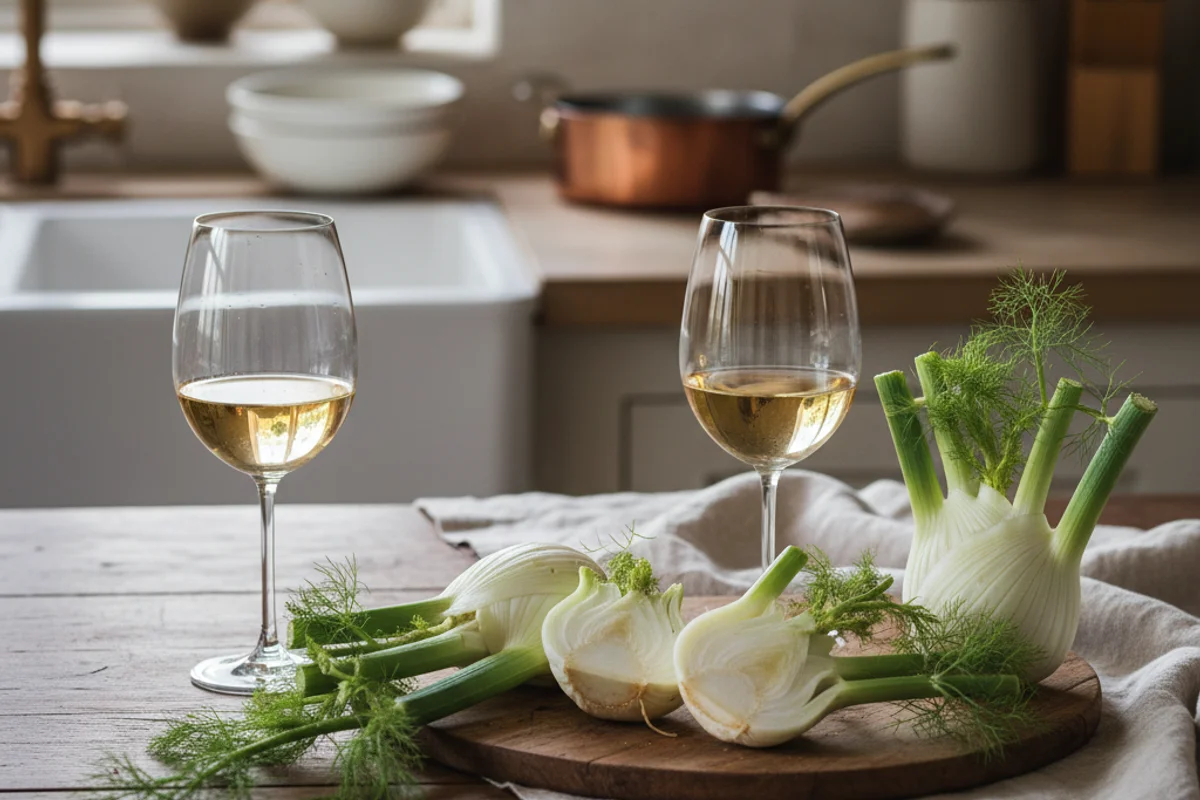
Fennel is the herb that can’t make up its mind — part vegetable, part spice, all licorice-forward attitude. Used carefully in winemaking, it adds a clean, herbal brightness that plays well with earthy beets, crisp apples, or neutral grape juice. Use too little and it disappears into the background. Use too much and you’ve made something that tastes like a candy shop accident. These three recipes give you three very different wines from the same herb, ranging from a slow-burn beet wine that needs two years of patience to a quick grape-juice build you can knock out in a few months.
The beginner trap: Adding too much fennel — even a small excess — can push the flavor into medicinal or overwhelmingly anise territory, so measure carefully and resist the urge to “just add a bit more.”
Recipe 1 — Fennel-Beet Wine
Ingredients
- 1½–2 oz fresh fennel (stalks or fronds)
- 3 lbs fresh beets
- 2 lbs granulated white sugar
- Juice of 3 lemons
- ¼ tsp grape tannin (or 1 cold-brewed black tea bag, steeped and strained)
- 1 tsp yeast nutrient
- 7½ pts (about 15 cups) water, divided
- 1 packet Montrachet wine yeast (or any general-purpose wine yeast)
Method
- Scrub the beets well and slice them thin, then place them in a pot with 6 pts of water and boil until fully tender.
- Strain the beet water over the sugar, lemon juice, tannin, and yeast nutrient in your primary fermenter; stir until the sugar fully dissolves.
- Place the fennel in a muslin bag or a knotted piece of cheesecloth, add to a pot with the remaining 1½ pts of water, and bring to a boil; remove from heat, cover, and steep 10 minutes.
- Lift and squeeze the bag to extract all the flavor, then discard the fennel; add the fennel water to the beet liquid in the primary.
- Cover the primary loosely (a cloth held with a rubber band works fine) and let it cool to room temperature.
- Rehydrate and activate your yeast per packet instructions, then stir it in and fit an airlock.
- When active fermentation slows, top up the vessel and reseal the airlock.
- Rack every 60 days until the wine runs clear, then rack once more, stabilize, and sweeten to taste if desired.
- Wait 10 days after stabilizing, then rack into bottles; age at least 2 years before drinking.
Recipe 2 — Fennel-Apple Wine
Ingredients
- 1½ oz fresh fennel leaves (fronds)
- 2 lbs apples, any variety (cored and chopped; frozen pre-chopped apple works)
- 2 lbs granulated white sugar
- 1½ tsp citric acid (or juice of 2 lemons as a substitute)
- 1 Campden tablet, crushed
- ½ tsp pectic enzyme
- 1 tsp yeast nutrient
- 7½ pts (about 15 cups) water
- 1 packet Champagne wine yeast (or any dry wine yeast)
Method
- Wash, core, and chop the apples; stir the sugar into the water in your primary until fully dissolved.
- Add the fennel leaves, chopped apples, crushed Campden tablet, citric acid, and yeast nutrient to the sugar water; cover and rest 12 hours.
- Stir in the pectic enzyme, cover again, and wait another 12 hours.
- Add activated yeast; once fermentation picks up vigorously, ferment 3 days, stirring twice daily.
- Strain the liquid into a secondary fermenter; pick the fennel leaves from the apple pulp and discard them.
- Press the apple pulp to collect remaining juice and add that juice to the secondary; discard the pulp.
- Fit the airlock; top up when fermentation quiets down.
- Rack after 30 days, then again at 60 days, then once more 60 days after that, topping up and refitting the airlock each time.
- Stabilize; sweeten only if you prefer a slightly off-dry style; wait 30 more days, then bottle.
Recipe 3 — Fennel–White Grape Wine (Quickest Route)
Ingredients
- 1½ oz fresh fennel leaves (fronds)
- 2 cans (11.5 oz each) frozen white grape juice concentrate, thawed (Welch’s 100% White Grape is the go-to grocery-store pick)
- 1½ lbs granulated white sugar
- ½ tsp citric acid (or juice of 1 lemon)
- ½ tsp pectic enzyme
- 1 tsp yeast nutrient
- Water to make 1 gallon total
- 1 packet Champagne wine yeast (or any dry white wine yeast)
Method
- Boil 2 cups of water, add the fennel leaves, and steep covered for 10–15 minutes; strain the liquid into your primary fermenter and discard the leaves.
- Add the grape juice concentrate, sugar, citric acid, pectic enzyme, and yeast nutrient; add water to reach 1 gallon total; stir well, cover, and rest 12 hours.
- Add activated yeast, cover, and stir daily; once the specific gravity drops to 1.010, transfer to a secondary fermenter and fit an airlock.
- Rack every 30 days until the wine clears, topping up and refitting the airlock each time.
- Stabilize; sweeten only if you strongly prefer a sweeter style; wait 30 days, then rack into bottles.
Why this works
Fennel’s signature flavor comes from a compound called anethole — the same molecule that gives anise and licorice their characteristic punch. Anethole is fat-soluble but also extracts into hot water, which is why a brief steep or boil pulls out flavor efficiently without requiring a long cold maceration. The key word is brief: extended contact with heat or liquid continues to pull out harsher, more bitter plant compounds alongside the pleasant aromatics. That’s the science behind the 10–15 minute steep limit in these recipes. In the beet version, the earthy geosmin compounds in the beets need extended aging to break down, which is why that wine demands two years before it softens into something genuinely enjoyable.
Notes
- Fresh fennel from the grocery store (the bulb with fronds attached) works perfectly; use the feathery fronds and thin stalks rather than the dense bulb itself.
- If fresh fennel isn’t available, dried fennel seed can substitute — use about 1 tsp of lightly crushed seeds in a muslin bag — but the flavor will be sharper and more concentrated, so err on the low side.
- Frozen chopped apples (no sugar added) are a solid substitute for fresh in Recipe 2; thaw completely and squeeze out juice before adding.