FIDDLEHEAD FERN WINE
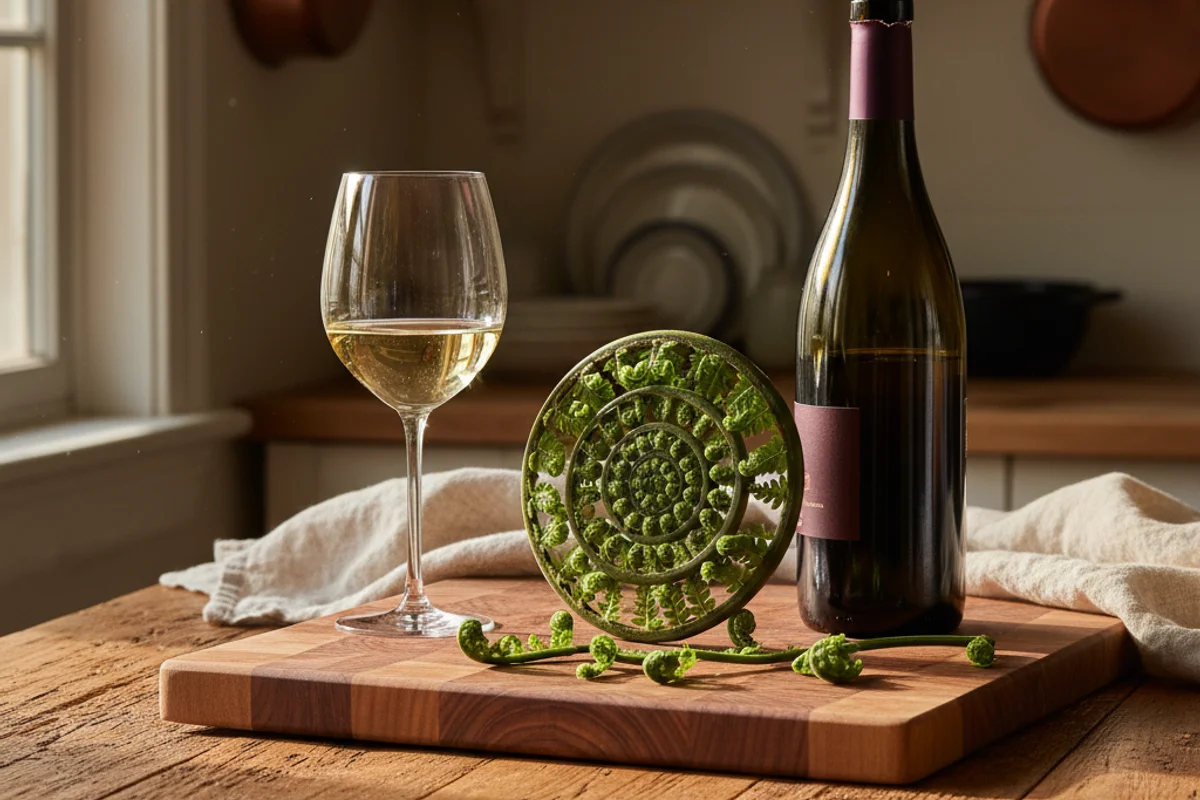
Every spring, the forest floor sends up tight little green spirals that look like the scroll of a violin — fiddlehead ferns. They taste somewhere between asparagus and green beans, with an earthy, grassy edge that carries surprisingly well into a finished wine. This is a vegetable wine in the truest sense: you simmer the ferns, pull them out, and ferment the deeply flavored liquid they leave behind. The result is a dry, pale, gently savory wine that pairs beautifully with spring meals — and doubles as a great conversation starter.
The beginner trap: Using toxic look-alike ferns — only ostrich, lady, and bracken ferns are safe; if your fiddleheads lack the distinctive U-shaped groove running along the inner stem, do not use them.
Ingredients
- 2½ lbs fiddlehead ferns, fresh or frozen, cleaned and any papery scales or fuzz rubbed off
- 2 lbs (about 4½ cups) white granulated sugar
- 7 pints (3.5 quarts) water
- 2 tsp acid blend (available at homebrew shops; or substitute 1½ tsp citric acid)
- 1 tsp yeast nutrient
- 1 packet wine yeast (Lalvin 71B or EC-1118 work well)
Method
- Bring the water to a full boil in a large pot, then add the cleaned fiddleheads. Reduce the heat immediately to a gentle simmer and hold it there for 45 minutes — do not let it return to a rolling boil.
- Strain out the ferns and set them aside to eat however you like. Add the sugar to the hot liquid and stir until it dissolves completely.
- Cover the pot loosely with a clean cloth and let the liquid cool to room temperature (below 75°F).
- Pour the cooled liquid into your primary fermenter. Add the acid blend and yeast nutrient, then stir well.
- Prepare your yeast starter according to the packet instructions, then pitch it into the primary. Cover with a cloth or loose lid and leave it for three days at room temperature.
- Transfer the liquid to a clean secondary fermenter (glass carboy or similar), top up with water if needed to minimize headspace, and fit an airlock.
- Let fermentation run to dryness, then rack into a clean vessel, top up, and refit the airlock. Repeat this racking every 30 days until the wine is clear and no new sediment forms over a full 30-day period.
- Stabilize with potassium sorbate and potassium metabisulfite, sweeten to taste if desired, then wait three weeks to confirm fermentation has not restarted before bottling.
Why this works
Fiddleheads contain chlorophyll, organic acids, and small amounts of aromatic compounds that extract readily into hot water — which is exactly what a 45-minute simmer delivers. Keeping the heat below a boil matters because a hard boil drives off volatile aromatics and can turn the liquid bitter. By pulling the solids out before fermentation, you avoid the tannic, astringent compounds locked in the plant fiber that would otherwise leach in over time. The sugar provides the fermentable base, and the acid blend brings the pH into the range where wine yeast thrives and spoilage organisms struggle. What you end up fermenting is essentially a clean, mineral vegetable tea — and yeast turns that into something genuinely interesting.
Notes
Frozen fiddleheads (sold at many specialty grocery stores and Asian markets) work well here; thaw and drain them before use. If you cannot find acid blend, lemon juice can work in a pinch — use about 3 tablespoons — but the results will be less consistent. This wine is delicate, so give it at least six months in the bottle before judging it; a year is better.