Garlic Wine
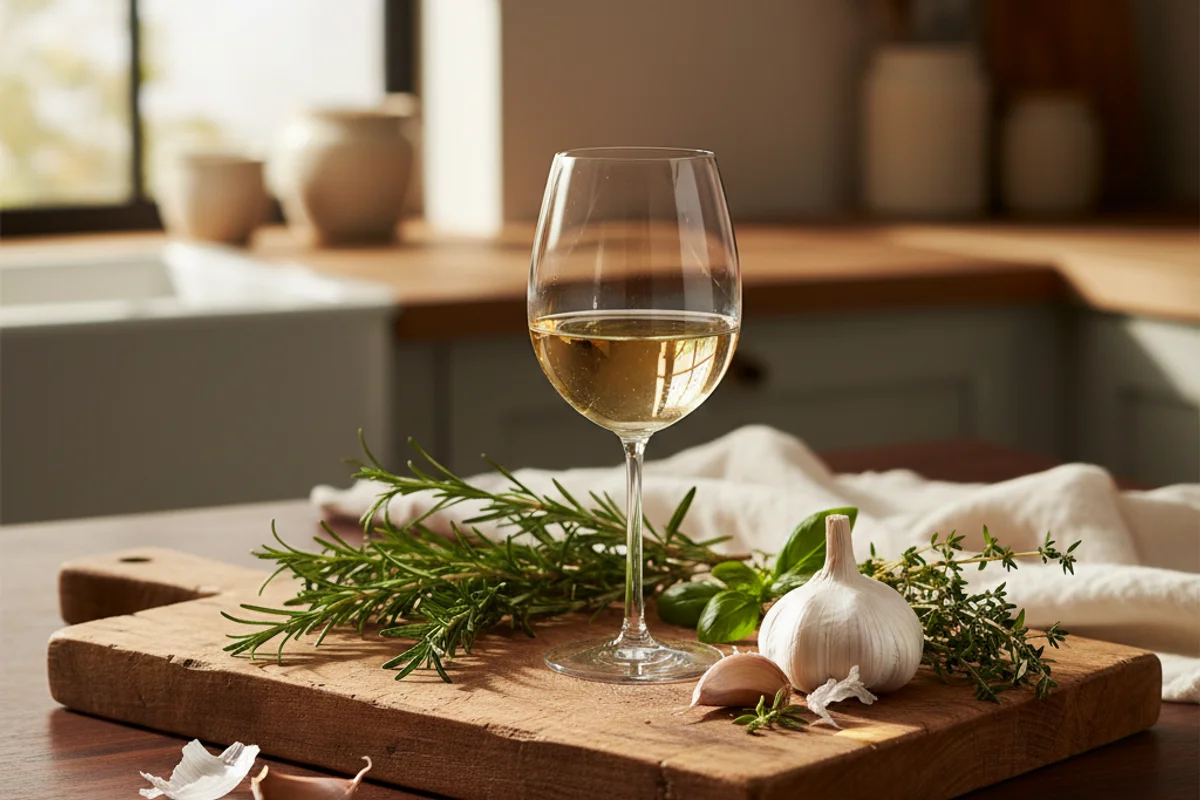
Think of this as liquid garlic confit in a bottle. The sharp, pungent bite you get from a raw clove mellows through fermentation into something savory, almost sweet, and deeply aromatic. This is not a sipping wine — it’s a secret weapon. Splash it into a pan sauce, deglaze a roast, or use it anywhere a recipe calls for both wine and garlic at once. The golden raisins quietly do the heavy lifting in the background, adding body and a faint sweetness that keeps the whole thing from tasting like a pickle.
The beginner trap: Skipping the rubber gloves when squeezing the pulp bag — your hands will smell like garlic for days, no matter how many times you wash them.
Ingredients
- 6 clusters elephant garlic (or 15 clusters regular garlic — both work fine)
- 1 lb (450 g) golden raisins, finely chopped or minced
- 1¾ lbs (795 g) granulated white sugar, divided
- 7 pints (3.3 L) water
- 1 tsp acid blend (find it at homebrew shops, or use 1 tsp lemon juice as a rough stand-in)
- 1 Campden tablet, crushed
- 1 tsp yeast nutrient
- 1 packet Champagne or Sauterne wine yeast
Method
- Separate and peel all garlic cloves, then slice them as thin as you can — budget up to an hour for this step.
- Finely chop or mince the raisins, combine them with the sliced garlic, place everything in a nylon straining bag, and tie the bag closed.
- Bring the water to a boil, then let it cool slightly before using it in your primary fermenter.
- Add 1 lb of the sugar, the acid blend, crushed Campden tablet, and yeast nutrient to the primary; stir well until the sugar dissolves, then submerge the straining bag.
- Cover the primary with a clean cloth and let it rest for 24 hours — the Campden tablet needs time to neutralize any wild microbes.
- Sprinkle the yeast over the surface of the must without stirring it in; within 1–2 days you’ll see activity, at which point you can stir.
- Ferment for 7 days, stirring twice daily to keep the pulp bag active and the must oxygenated.
- Wearing sterile rubber gloves, lift the bag and squeeze it firmly to extract as much juice as possible, then discard the pulp.
- Add the remaining ¾ lb of sugar, stir thoroughly to dissolve, transfer the liquid to your secondary fermenter, and fit an airlock.
- Rack after 30 days, then again every 3 weeks until the wine clears — aim for at least four rackings total.
- Once clear, wait 3 more weeks, stabilize with potassium sorbate and another crushed Campden tablet, wait 10 days, rack once more, and bottle with screw caps.
- If the wine still hasn’t cleared after 6 rackings, stabilize, add a fining agent (store-bought bentonite works), wait 14 days, then rack and bottle.
Why this works
Raw garlic is loaded with sulfur compounds — mostly allicin — that create the sharp, aggressive flavor everyone knows. When you slice the cloves thinly and ferment them slowly in a sugar-water solution, those compounds transform. Heat and time break allicin down into gentler, sweeter-smelling sulfides, the same chemistry that makes roasted garlic taste so different from raw. The yeast also metabolizes some of these compounds during fermentation, further softening the bite. Golden raisins aren’t just filler — they contain natural grape sugars and pectin that add viscosity and a subtle fruit character, giving the finished wine enough body to stand up in a hot pan without tasting watery.
Notes
Elephant garlic is milder and easier to peel, making it the better choice if you can find it at a grocery store or farmers market. Regular garlic produces a bolder, more assertive flavor — great if you cook bold food. This wine is ready to use straight out of the bottle; no aging required. Refrigerate after opening.