Gooseberries
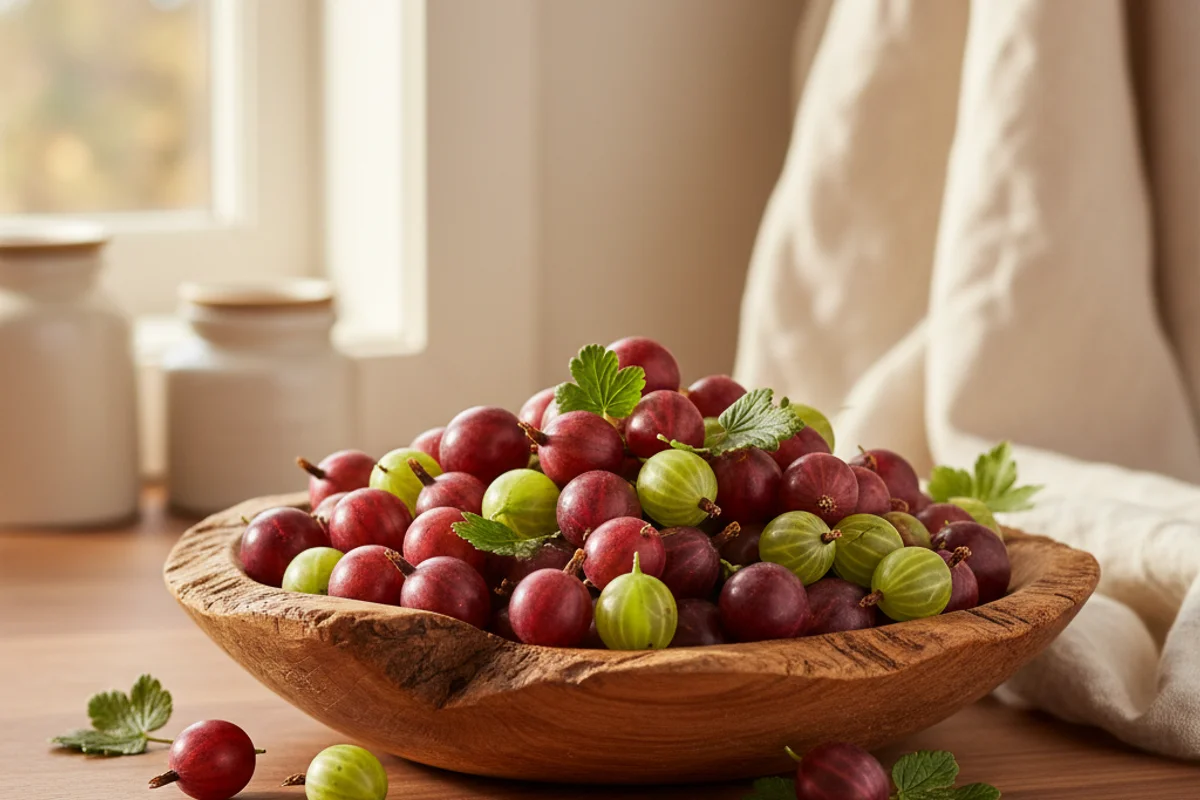
Gooseberries are the tart, thin-skinned little grenades of the berry world. Bite into a ripe one and you get a sharp citrus-like zing followed by a floral sweetness that very few fruits can match. That combination makes for a wine with serious backbone — bright acidity, a clean fruity nose, and enough character to hold up through a full year of aging. Fresh gooseberries can be hard to track down outside of summer farmers markets, but frozen ones work beautifully here.
The beginner trap: Squeezing the fruit bag when draining it — this forces bitter, hazy compounds into your must and will cloud the finished wine for months.
Ingredients
- 3 lbs ripe gooseberries, fresh or frozen, washed and stemmed
- 2½ lbs granulated white sugar
- 7 pints (3.5 quarts) water
- 1 Campden tablet, crushed
- ½ tsp pectic enzyme
- 1 tsp yeast nutrient
- 1 packet Champagne wine yeast (or any dry white wine yeast)
Method
- Combine sugar and water in a large pot and heat, stirring, until the sugar fully dissolves and the liquid just reaches a boil. Remove from heat.
- Place the washed, stemmed gooseberries into a nylon straining bag, tie it closed securely, and set it in the bottom of your primary fermenter. Mash the berries through the bag using a potato masher or a clean piece of hardwood.
- Pour the hot sugar-water over the bagged fruit, then cover the fermenter with a clean cloth and let it cool to room temperature.
- Once cooled, stir in the yeast nutrient and crushed Campden tablet until dissolved. Re-cover and let sit for 12 hours.
- Add the pectic enzyme, stir, re-cover, and wait another 12 hours.
- Prepare your yeast according to the packet instructions, then add the activated yeast to the must.
- Stir the must once daily for 7 days, keeping it covered between stirs.
- Lift the straining bag and let it drip drain into the fermenter — do not squeeze it. Cover and let the liquid settle overnight.
- Rack the cleared liquid into a sanitized secondary fermenter (a 1-gallon glass jug works well), top up with water if needed to minimize headspace, and fit an airlock.
- Rack into a clean vessel, top up, and refit the airlock every 30 days until the wine is clear and produces no new sediment over a full 30-day period.
- Stabilize the wine (use ½ tsp potassium sorbate plus a fresh Campden tablet), sweeten to taste if desired, wait 10 days, then rack into bottles.
- Age at least 12 months before opening — this wine rewards patience.
Why this works
Gooseberries are loaded with pectin, the same structural carbohydrate that makes jam gel. In wine, pectin creates a stubborn haze that no amount of racking will clear on its own. That’s where pectic enzyme earns its keep — it’s a pectinase, meaning it breaks the long pectin chains into smaller pieces that fall out of suspension. The 12-hour wait after adding the enzyme (before pitching yeast) gives it time to work in a low-alcohol environment, where it’s most effective. Alcohol above about 5% ABV starts to inhibit pectinase activity, so the order of additions really does matter here.
Notes
Frozen gooseberries work just as well as fresh and are often easier to find year-round in the freezer aisle or at international grocery stores. If you can’t find Campden tablets, look for potassium metabisulfite powder — use ¼ tsp in place of one tablet. For a rounder, slightly fuller wine, a splash of white grape juice concentrate (one small frozen can) can be added at step 3 alongside the sugar-water.