Grapefruit
Grapefruit occupies a strange corner of the fruit world — too tart to eat by the bowlful, too aromatic to ignore. That sharp, floral bitterness comes from a compound called naringin, and it turns out yeast loves working with it. The result is a wine that starts bone dry and citrus-forward, then softens over months in the bottle into something genuinely elegant. Think crisp white wine with a squeeze of sunshine. Done right, grapefruit wine can range from a lean, dry table wine all the way to a rich, sweet sipper — the same fruit, four completely different personalities.
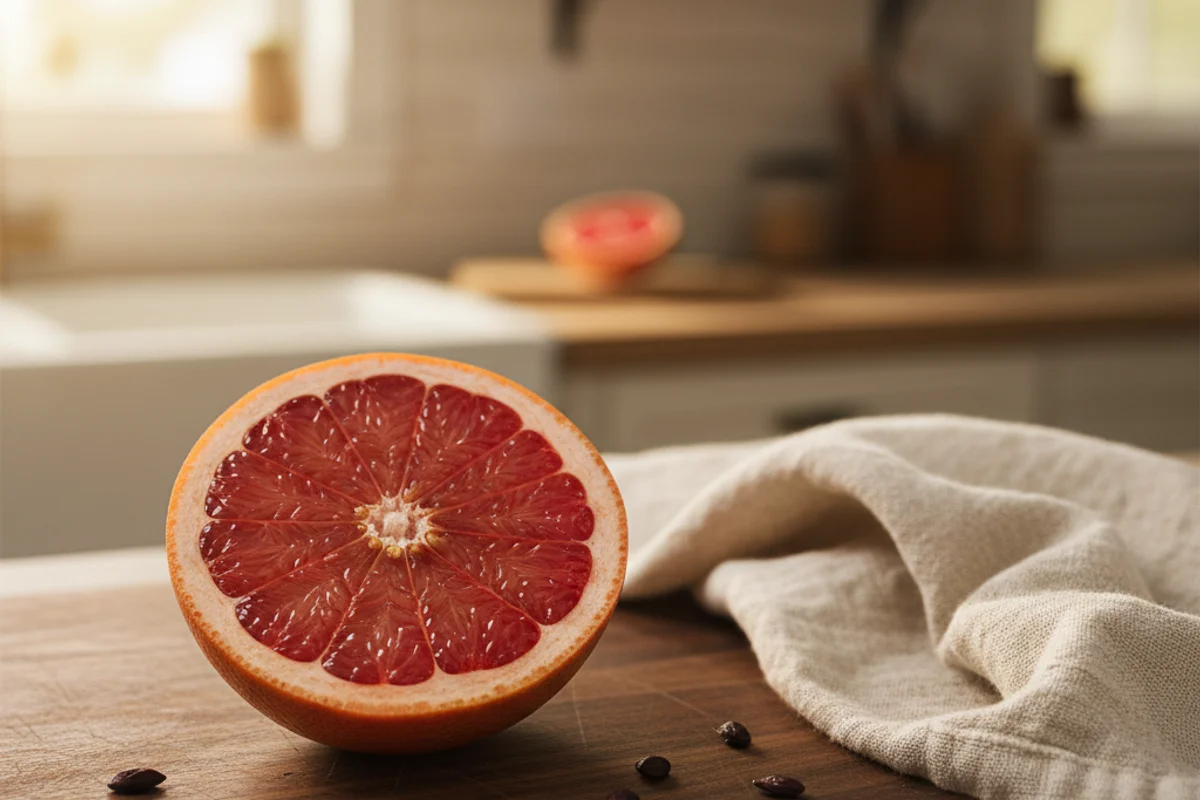
The beginner trap: Letting any white pith into the must — it will drive bitterness into the wine that no amount of aging can fix.
Ingredients
- 6 large grapefruit, scrubbed clean
- 2 lbs (900 g) granulated sugar, divided
- Water to make 1 gallon total
- ½ tsp pectic enzyme
- 1 Campden tablet, crushed
- 1 tsp yeast nutrient
- 1 packet wine yeast (Lalvin 71B or EC-1118 work well; any dry white wine yeast is fine)
Method
- Zest one grapefruit using a fine grater or vegetable peeler, taking only the colored outer layer — no white pith. Set the zest aside.
- Juice all six grapefruit and pour the juice into your primary fermenter. Add the zest, 1 lb of the sugar, the crushed Campden tablet, and yeast nutrient. Add enough water to reach one gallon total and stir until the sugar fully dissolves.
- Cover the fermenter with a clean cloth and let it sit for 12 hours.
- Add the pectic enzyme, stir gently, and cover again. Wait another 12 hours.
- Sprinkle in your yeast, stir, and cover. Fermentation should start within 24–48 hours.
- After two days of active fermentation, stir in the remaining 1 lb of sugar. Let the must ferment for two more days in the primary.
- Remove and discard the zest. Siphon the liquid into a clean 1-gallon secondary fermenter (glass jug works perfectly) and fit an airlock.
- Rack the wine into a clean vessel every 30 days, topping up with a small amount of water or similar wine each time to minimize headspace. Repeat for five rackings total.
- After the fifth racking, bottle the wine and store it somewhere cool and dark for at least 6 months before opening.
Why this works
Grapefruit juice is high in acid and contains naringin, the flavonoid responsible for that characteristic bitter edge. Pectic enzyme is non-negotiable here — grapefruit is loaded with pectin, and skipping it will leave you with a hazy wine that never clears. Splitting the sugar addition (half at the start, half after two days) keeps the initial sugar concentration from stressing the yeast, giving you a cleaner, more complete fermentation. The five-rack protocol slowly strips away spent yeast cells and other solids that would otherwise contribute off-flavors. Time in the bottle lets the remaining naringin mellow and integrate — there is no shortcut for that part.
Notes
Sauterne-style yeast (like Lalvin 71B) will leave a touch of residual fruitiness; EC-1118 (Champagne yeast) ferments drier and crisper — choose based on how you like your white wine. If fresh grapefruit are out of season or expensive, 100% pure grapefruit juice from the refrigerated section (not from concentrate) works as a substitute — use about 64 oz per gallon batch. For a semi-sweet version, dissolve ¼ cup sugar in a few tablespoons of hot water, let it cool, and stir it into the wine right before bottling after stabilizing with a crushed Campden tablet and ½ tsp potassium sorbate.