Highbush Cranberries
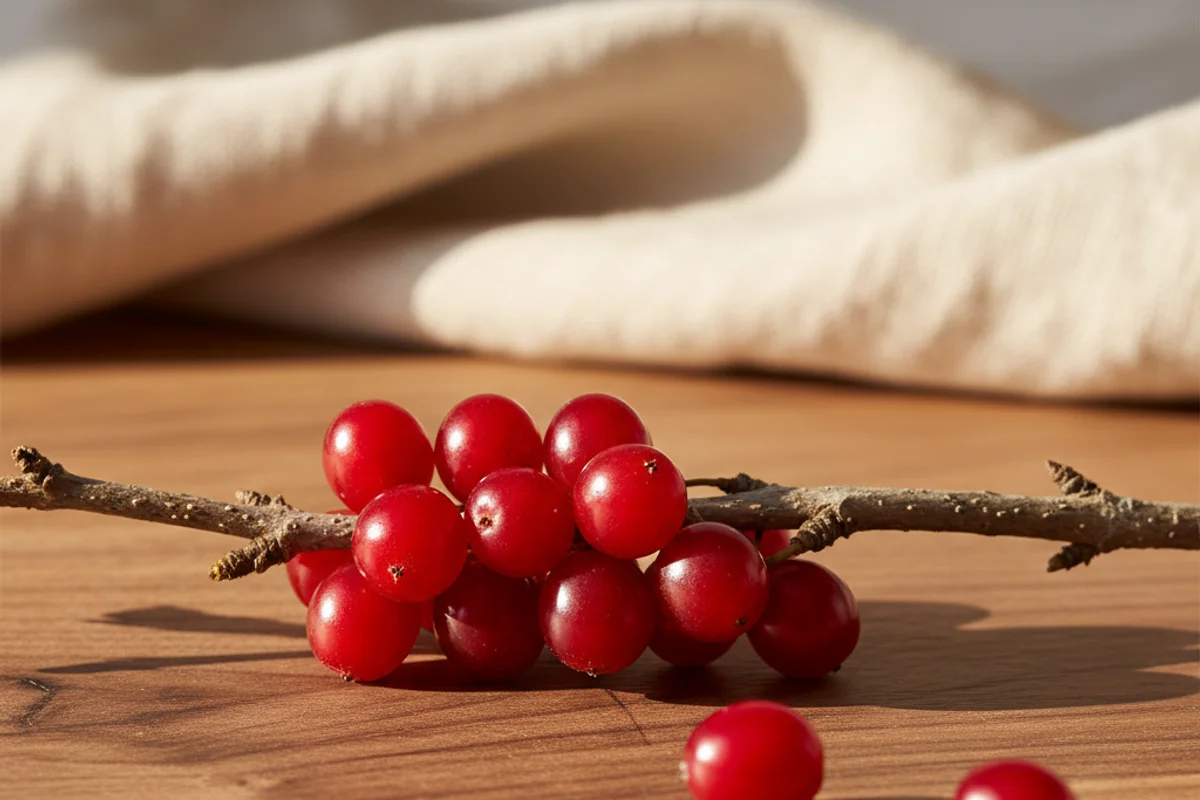
Don’t let the name fool you — highbush cranberries (Viburnum trilobum) aren’t true cranberries at all. They’re a shrubby native plant that produces small, jewel-red fruits with a sharp, almost funky tartness that softens beautifully when fermented. The resulting wine is bright and complex — tart up front, with a faint floral quality underneath. Think cranberry sauce crossed with something wilder. It earns a place among the best fruit wines you can make, full stop.
The beginner trap: Skipping the full 9-month aging period — this wine tastes harsh and unbalanced young, and patience is the only fix.
Ingredients
- 3 lbs highbush cranberries, fresh or frozen, coarsely chopped
- 1 lb golden raisins (sultanas), minced or finely chopped
- 2½ lbs granulated white sugar
- 7 pts (3.5 quarts) water
- ½ tsp pectic enzyme
- 1 tsp yeast nutrient
- 1 packet Champagne yeast (Red Star or Lalvin EC-1118 work well)
Method
- Wash and sort the cranberries, discarding any soft or damaged fruit. Coarsely chop them and place in your primary fermenter along with the minced raisins.
- Bring the water to a boil, then pour the sugar over the fruit and follow with the boiling water. Stir until the sugar fully dissolves.
- Let the must cool to room temperature (around 70°F), then stir in the pectic enzyme and yeast nutrient.
- Cover the fermenter with a clean cloth and let it sit undisturbed for 12 hours.
- Sprinkle in the Champagne yeast, recover with the cloth, and stir the must once daily for 14 days.
- After 14 days, pour the must through a nylon straining bag and squeeze firmly to extract all the juice. Transfer the liquid to a clean secondary fermenter and fit an airlock.
- Rack after 30 days, top up the vessel to minimize headspace, and refit the airlock. Allow fermentation to complete fully — the wine should finish dry.
- Rack the finished wine into bottles and age for a minimum of 9 months before opening.
Why this works
Highbush cranberries are loaded with pectin — the same stuff that makes jam gel. Left alone, pectin clouds your wine and locks up color and flavor compounds you actually want in the glass. Pectic enzyme breaks those pectin chains apart, which clears the wine and improves juice yield at pressing. Adding it before yeast (and after the must has cooled) matters: heat deactivates the enzyme, and active yeast creates a competitive environment. That 12-hour head start gives the enzyme time to do its job before fermentation kicks off. The golden raisins aren’t just filler — they add fermentable sugars, body, and trace nutrients that keep the yeast happy through a long, slow fermentation.
Notes
Frozen highbush cranberries work just as well as fresh — freezing actually helps break down cell walls, which improves juice extraction. If you can’t find highbush cranberries locally, check Eastern European or Scandinavian specialty grocers, or order frozen from online foraging suppliers. Standard grocery-store cranberries (Vaccinium macrocarpon) are a different fruit and will produce a noticeably different wine, though still a good one.