JERUSALEM ARTICHOKE WINE
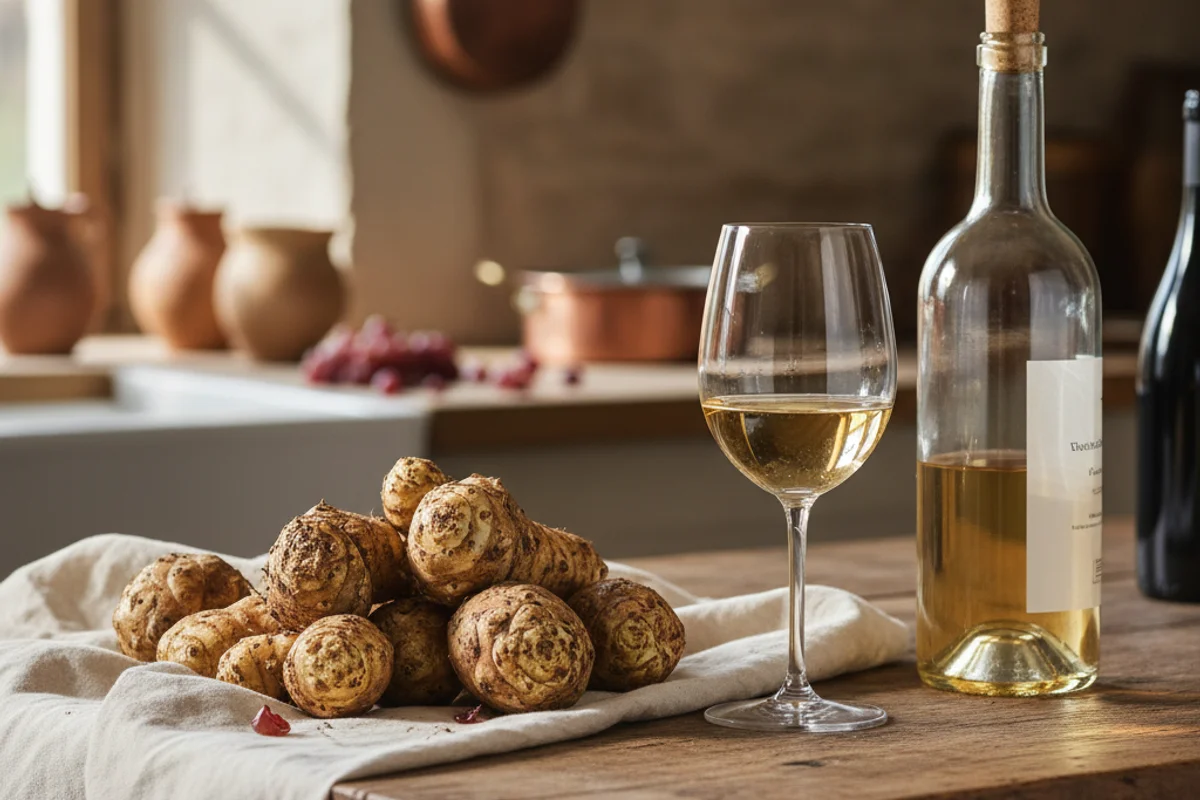
Jerusalem artichokes have nothing to do with Jerusalem, and they’re not artichokes. They’re the starchy underground tubers of a wild North American sunflower, and they taste somewhere between a water chestnut and a potato with a faint nuttiness underneath. That subtlety is exactly what makes them interesting as a wine base. Boiling the unpeeled tubers pulls out their mild, earthy sweetness, and brown sugar, citrus zest, and fresh ginger build on top of that foundation to produce a wine that’s dry, aromatic, and genuinely surprising.
The beginner trap: Skipping pectic enzyme — Jerusalem artichokes are loaded with pectin, and without it your wine will stay permanently hazy no matter how long you wait.
Ingredients
- 5–6 lbs Jerusalem artichoke tubers, scrubbed but unpeeled (sunchokes at the grocery store work perfectly)
- 2 lbs brown sugar, light or dark
- 2 lemons, zest (no white pith) and juice
- 2 oranges, zest (no white pith) and juice
- ½ oz fresh ginger root, thinly sliced (about a 1-inch knob)
- ½ tsp pectic enzyme
- 1 tsp yeast nutrient
- 1 packet wine yeast (a neutral white-wine strain such as Lalvin 71B works well)
- Water to make 1 gallon
Method
- Scrub the tubers well and place them in a large pot with about 7 pints of water. Boil until fully tender, then remove the tubers and set them aside for eating — the cooking water is what you need.
- Add the brown sugar, citrus zest, citrus juice, and sliced ginger to the hot cooking water. Bring back to a boil, then reduce the heat and simmer for 15–20 minutes, stirring until the sugar fully dissolves.
- Remove from heat and strain the liquid into your primary fermenter. Cover with a clean cloth and let it cool completely to room temperature (below 75°F).
- Stir in the pectic enzyme and yeast nutrient. Re-cover and leave undisturbed for 12 hours.
- Prepare your wine yeast according to the packet instructions, then add it to the must. Ferment for 7 days, stirring the must once each day.
- Siphon the wine into a 1-gallon secondary fermenter (glass jug or carboy), attach an airlock, and let fermentation finish on its own — usually 3–5 weeks.
- Rack off the sediment after 60 days, top up to the neck with water or a neutral wine, and reattach the airlock.
- Rack again once the wine clears, then again every 2 months until the wine is fully stable and bright.
- Stabilize with potassium sorbate and potassium metabisulfite, sweeten to taste if desired, and wait 14 days to confirm fermentation has not restarted. Rack into bottles.
Why this works
Jerusalem artichokes store energy as inulin rather than starch. Inulin is a chain of fructose molecules, and it does not break down into simple sugars the way potato starch does — which means the tubers themselves contribute almost nothing fermentable to the must. What they do contribute is flavor and body, extracted by boiling. The brown sugar supplies all the fermentable sugar, while the citrus zest adds terpene aromatics and the acid balance the must needs to ferment cleanly. Pectic enzyme breaks apart the pectin that leaches out of the tubers during cooking; without it, those long carbohydrate chains scatter light and keep the wine cloudy indefinitely.
Notes
If you can’t find Jerusalem artichokes (sunchokes) at a grocery store or farmers market, parsnips make a reasonable substitute with a slightly sweeter, more floral result. Fresh ginger can be swapped for ½ tsp of ground ginger in a pinch, though the fresh version gives a cleaner bite. If your finished wine tastes flat, a small addition of acid blend (¼ tsp at a time) can bring the citrus brightness back into balance.