JOSTABERRY WINE
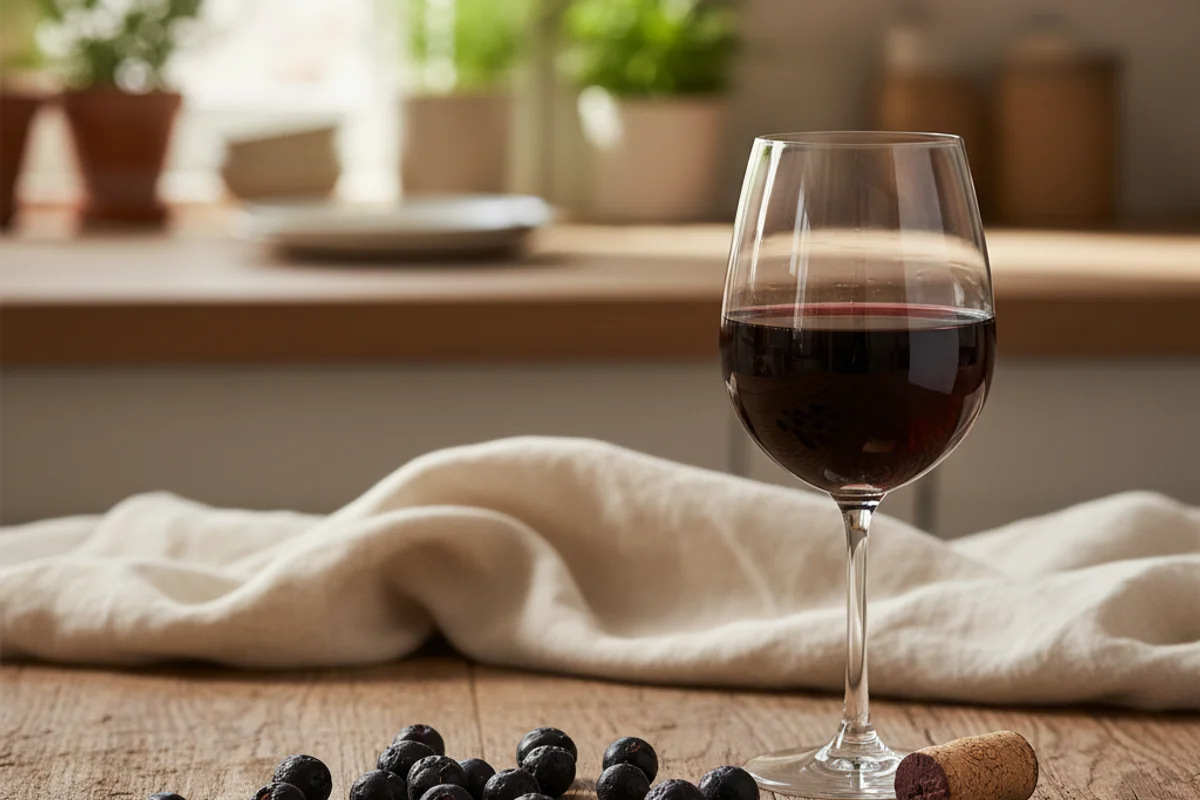
Imagine a black currant and a gooseberry had a kid — one that inherited the currant’s deep, jammy intensity but dialed it back just enough to let some brightness through. That’s a jostaberry. Cross-bred in Europe, nearly impossible to find at a grocery store, and absolutely worth hunting down at a farmers market or specialty nursery in season. The finished wine is dark, richly fruited, and complex in a way that earns its long aging time. Give it three or four years and you’ll understand why people bother.
The beginner trap: Winemakers rush this one — jostaberry wine tastes harsh and sharp at one year but transforms dramatically with two to four years of bottle aging, so patience isn’t optional here.
Ingredients
- 3 lbs ripe jostaberries, fresh or frozen, stems and debris removed
- 2 lbs granulated white sugar
- 7 pints (3.5 quarts) water
- 1/8 tsp grape tannin (or 1/4 cup strong-brewed black tea as a substitute)
- 1 tsp yeast nutrient
- 1 packet wine yeast (Lalvin 71B or EC-1118 work well)
Method
- If using fresh berries, remove all stems and leaf matter, discard any underripe fruit, and wash well. If using frozen, thaw completely. Either way, crush the berries thoroughly in your primary fermentation vessel.
- Bring the water to a boil, add the sugar, and stir until fully dissolved. Return briefly to a boil, then remove from heat.
- Pour the hot sugar water over the crushed berries and let the mixture cool to 70–75°F (room temperature, roughly).
- Once cooled, stir in the grape tannin, yeast nutrient, and wine yeast. Cover the vessel with a cloth or loose lid.
- Ferment in a warm spot for 5 to 7 days, stirring once daily to keep the fruit cap submerged and the must active.
- Pour the must through a fine mesh straining bag, pressing the pulp firmly to extract as much juice as possible. Discard the spent pulp.
- Transfer the juice into a clean secondary fermentation vessel (carboy or jug), fit an airlock, and leave undisturbed for two months.
- Rack the wine into a clean vessel, top it up to minimize headspace, refit the airlock, and wait another two months.
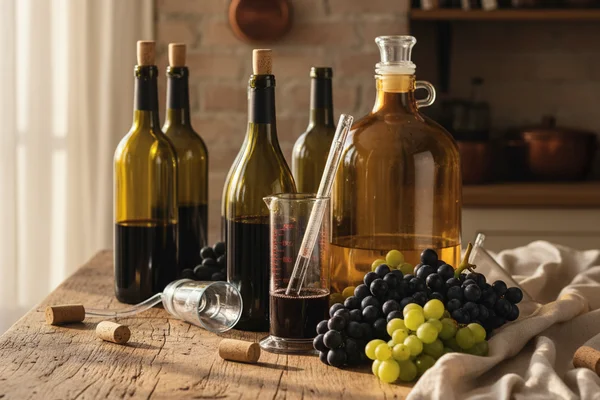
- Rack one final time after another two months, then bottle into dark glass bottles and store away from light.
Why this works
Jostaberries are naturally high in pectin, acids, and anthocyanins — the pigment compounds that give the wine its deep purple-red color. Hot sugar water poured over the crushed fruit does two things at once: it starts breaking down cell walls to release juice and flavor compounds, and it dissolves the sugar into a consistent must before fermentation even begins. The tannin addition matters here because jostaberries, unlike grapes, don’t have much tannin in their skins. Tannin acts as a structural backbone, giving the wine grip and helping it age without going flat and flabby. That’s why the long aging window exists — tannins and acids are slowly softening and integrating, and the reward for waiting is real.
Notes
Frozen jostaberries work just as well as fresh and are often easier to source — freezing also ruptures cell walls, which can improve juice extraction. If you can’t find grape tannin at a homebrew shop, a quarter cup of strong-brewed black tea stirred in at step 4 is a practical stand-in. Don’t skip the dark storage after bottling — light degrades anthocyanins fast, and this wine’s color is half the experience.