KIWI FRUIT WINES
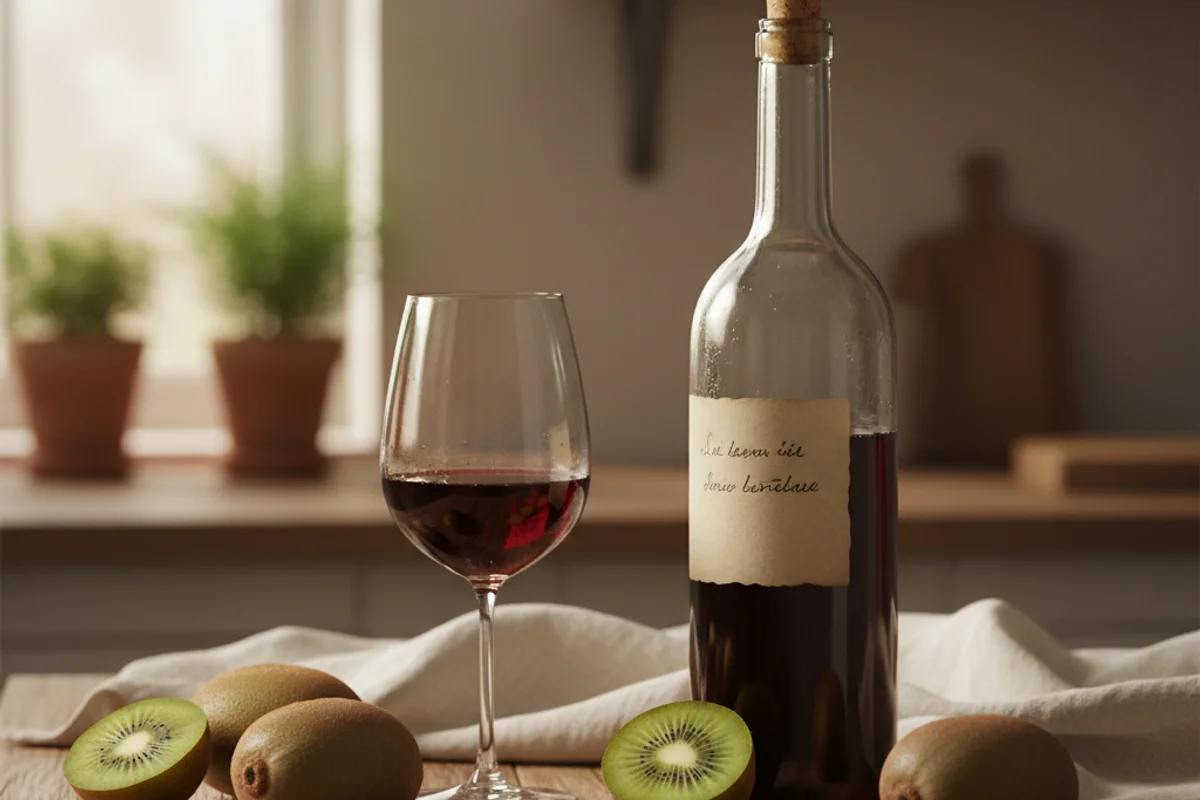
Kiwi fruit punch above their weight in the winemaking world. That bright, tangy flesh — somewhere between strawberry and citrus with a grassy backbone — translates into a pale, crisp white table wine that drinks almost like a dry Riesling. Green kiwi brings sharp acidity and a zesty finish. Golden kiwi is softer and rounder, closer to a tropical dessert fruit, and needs a little extra acid to stay lively in the glass. Both styles reward patience: six months of bottle aging smooths the rough edges and lets the fruit’s floral notes come forward.
The beginner trap: Squeezing the fruit bag to get more juice releases bitter compounds and excess tannin from the pulp — resist the urge and just let it drip drain.
Ingredients
Green Kiwi Wine (Recipe 1)
- 3–4 lbs fresh green kiwi fruit (fresh or frozen, peeled)
- 1¾ lbs granulated white sugar
- 7½ pts water (about 3¾ quarts)
- 1 tsp acid blend (or 1 tsp lemon juice powder as a substitute)
- ½ tsp pectic enzyme
- ⅛ tsp wine tannin (or 1 cooled cup of plain black tea)
- 1 tsp yeast nutrient
- 1 packet Lalvin 71B or EC-1118 (Champagne) wine yeast
Golden Kiwi Wine (Recipe 2)
- 3–4 lbs fresh golden kiwi fruit (fresh or frozen, peeled)
- 2 lbs granulated white sugar
- 7½ pts water (about 3¾ quarts)
- 1½ tsp acid blend (or 1½ tsp lemon juice powder)
- ½ tsp pectic enzyme
- ⅛ tsp wine tannin (or 1 cooled cup of plain black tea)
- 1 tsp yeast nutrient
- 1 packet Lalvin D-47 or EC-1118 (Champagne) wine yeast
Method
- Combine sugar and water in a large pot and bring to a boil, stirring until the sugar fully dissolves.
- While the water heats, peel the kiwi fruit thinly and chop it coarsely, then load it into a nylon mesh straining bag and tie it shut.
- Place the bag in your primary fermenter and crush the fruit inside the bag with your hands.
- Add the acid blend, tannin, and yeast nutrient to the fermenter, then pour the hot sugar water over the fruit bag.
- Cover the fermenter with a clean cloth and let everything cool to room temperature.
- For Recipe 2 (golden kiwi): Once cooled, check your specific gravity — it should read between 1.080 and 1.090; adjust with water or sugar as needed before moving on.
- Stir in the pectic enzyme, recover the fermenter, and wait 12 hours.
- Activate your yeast according to the packet instructions, add it to the fermenter, and cover again.
- Once daily for 7 days, lift and dunk the fruit bag several times — do not squeeze it — then stir the must.
- After 7 days, pull the fruit bag out and let it drip drain over the fermenter for about an hour; discard the spent pulp.
- When the specific gravity falls below 1.015, rack the wine into a glass secondary vessel (carboy) and fit an airlock.
- After 3 months, rack the wine into a clean vessel, top it up to minimize headspace, and refit the airlock; repeat this step after another 3 months.
- Once the wine is clear and dry, either bottle it directly or sweeten to taste: add potassium sorbate (stabilizer) first, back-sweeten to your liking, refit the airlock, and wait 10 days before bottling.
- Age bottled wine at least 6 more months, then serve lightly chilled.
Why this works
Kiwi fruit is loaded with pectin — the same stuff that makes jam gel. In a wine must, pectin creates a stubborn haze that will not clear on its own no matter how long you wait. Pectic enzyme (also sold as pectinase) breaks those long pectin chains apart at a molecular level, letting the particles clump together and fall out of suspension. The catch is that heat destroys the enzyme instantly, which is exactly why you wait until the must cools completely before adding it. The 12-hour rest before pitching yeast gives the enzyme time to do its job before alcohol levels climb — alcohol also slows enzymatic activity. That one-two sequence of cool must plus pre-fermentation enzyme contact is the difference between a brilliant, jewel-clear wine and a cloudy one.
Notes
Frozen kiwi works well here and is often cheaper than fresh — thaw it completely before loading it into the straining bag, as freezing breaks down cell walls and makes crushing easier. If you cannot find golden kiwi at your local grocery store, green kiwi with a small reduction in acid blend (down to 1 tsp) is a reasonable stand-in. A stuck or sluggish fermentation is usually a sign of low yeast nutrient; a small extra pinch on day two of fermentation often gets things moving again.