LEEK WINE
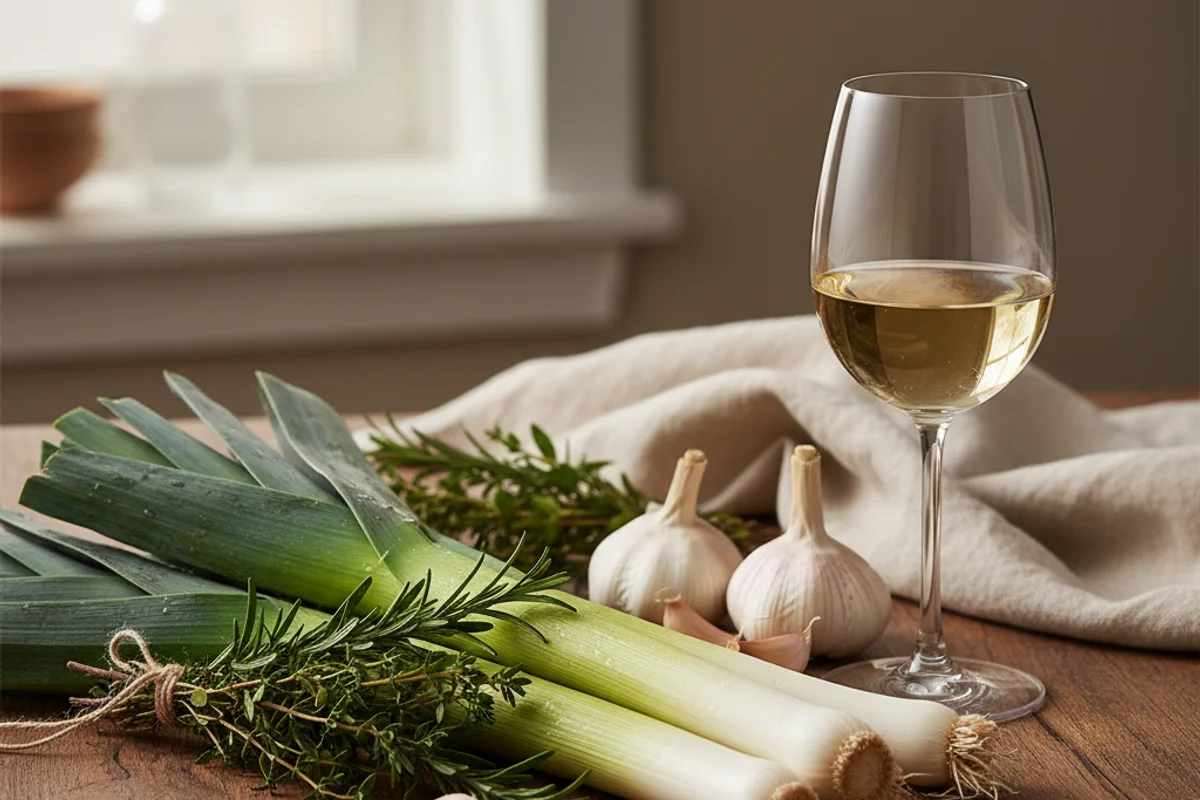
Leeks are the mild, sophisticated cousin of the onion — less aggressive, more complex, with a gentle sweetness that survives fermentation surprisingly well. The white stalk and tender inner core give up their subtle allium flavor slowly, producing a dry, savory wine with an herbal backbone that pairs beautifully with roasted vegetables, cream sauces, or anything you’d normally splash with a dry white. Think of it as a culinary wine that also earns a spot at the table.
The beginner trap: Skipping the 24-hour Campden tablet rest before adding yeast — wild bacteria on leeks can hijack your ferment before your chosen yeast ever gets started.
Ingredients
- 1¾ lbs (about 3¾ cups) granulated white sugar
- 4 large leeks
- 1 lb golden raisins, chopped or minced (fresh or frozen seedless grapes work as a substitute)
- 2 tsp acid blend (or 2 tsp lemon juice as a grocery-store stand-in)
- 1 tsp yeast nutrient
- ⅛ tsp wine tannin (or 1 cooled cup of plain black tea)
- 1 Campden tablet, crushed
- 1 gallon water, divided
- 1 packet Champagne yeast (Red Star Premier Blanc is widely available)
Method
- Bring 1 quart of water to a boil in a saucepan, stir in the sugar until fully dissolved, then remove from heat, cover, and let it cool to room temperature.
- Chop or mince the raisins and place them in a nylon mesh straining bag.
- Trim the roots from the leeks and slice them thinly from the root end upward, stopping when you reach the tough dark green leaves; add the sliced leeks to the straining bag with the raisins and tie it closed.
- Place the bag in your primary fermenter and pour in the cooled sugar water plus the remaining water.
- Add the acid blend, tannin, yeast nutrient, and crushed Campden tablet; stir well, then cover the fermenter with a clean cloth and leave it alone for 24 hours.
- After 24 hours, activate your yeast according to the packet instructions, then pitch it into the must.
- Ferment at room temperature, stirring daily, until the specific gravity (SG) drops to between 1.010 and 1.015.
- Lift out the straining bag and squeeze it gently to recover liquid, then discard the solids.
- Let the wine settle overnight, then rack it into a clean secondary fermenter and seal with an airlock.
- After 60 days, rack the wine again, top up to minimize headspace, and refit the airlock.
- After another 60 days, check the SG to confirm the wine is fully dry (below 1.000).
- To bottle dry, rack straight into bottles. To bottle off-dry or sweet, add a stabilizer (potassium sorbate plus Campden), sweeten to taste, wait 10 days, then rack into bottles.
Why this works
Leeks belong to the Allium family, which means they’re loaded with organosulfur compounds — the same chemistry that makes onions pungent. Raw, those compounds are sharp and harsh. But slicing the leeks thinly and fermenting them slowly allows those volatile sulfur notes to dissipate over time, leaving behind milder savory and sweet flavors. The golden raisins pull double duty: they add body through natural sugars and contribute a subtle fruity note that rounds out the wine’s earthy edge. The long 120-day secondary aging isn’t optional — it’s what lets those harder flavors mellow into something worth drinking.
Notes
If your finished wine has a faint onion-like smell, it just needs more time; rack it and wait another 30–60 days before worrying. Acid blend is sold at most homebrew shops, but lemon juice works in a pinch — use about 2 teaspoons per gallon. This wine is especially good as a cooking wine for potato leek soup or white pasta sauces.