Lemon Balm Wine
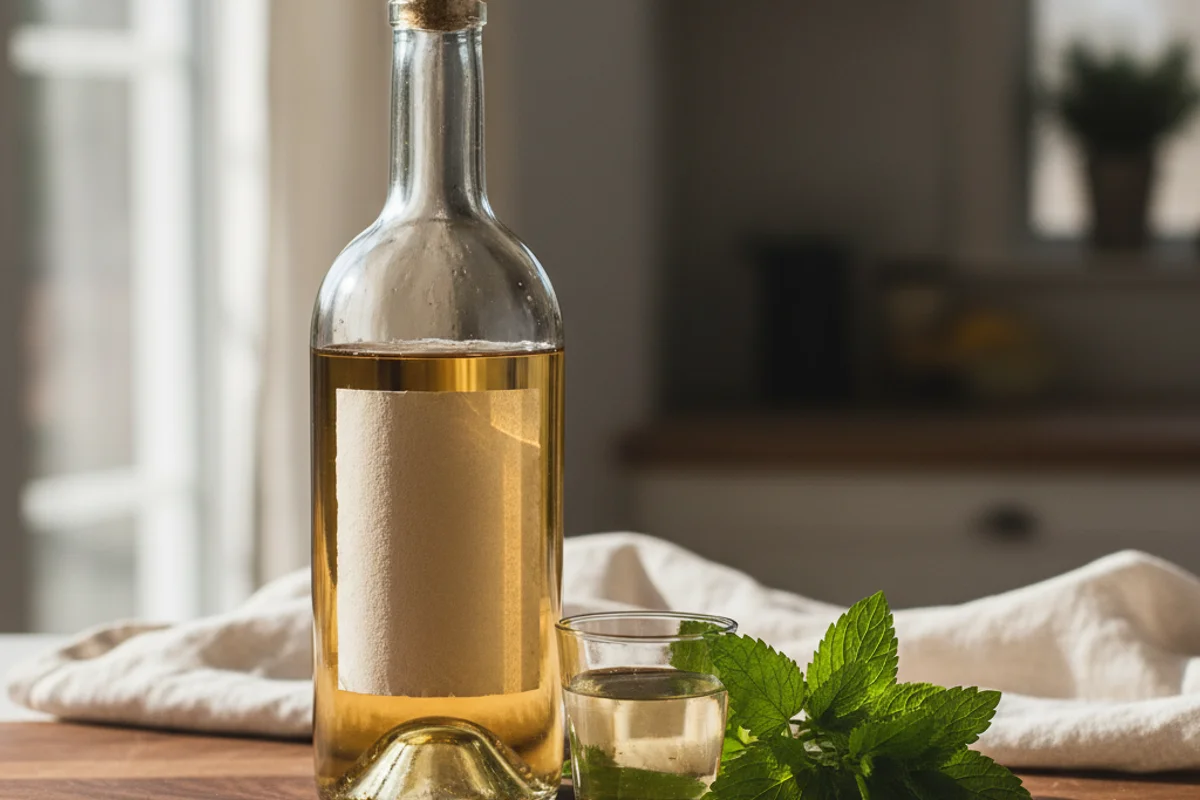
Lemon balm (Melissa officinalis) smells like a lemon drop someone left on a sunny windowsill — bright, clean, and faintly herbal. It’s not lemon juice, not lemon zest, not lemongrass. It’s its own thing: a soft, almost honeyed citrus character that holds up surprisingly well through fermentation. The finished wine lands somewhere between a dry herb wine and a crisp white — light-bodied, aromatic, and genuinely refreshing served cold. Grow it in a pot, find it at a farmers market, or check the herb section at a natural grocery store.
The beginner trap: Skipping the steeping step or boiling the herb too long — both kill the delicate volatile aromatics that make this wine worth making.
Ingredients
- 4–6 cups lemon balm leaves and stems, lightly packed, rinsed and coarsely chopped
- 1¾ to 2 lbs granulated white sugar
- 7 pints water, divided
- 1½ cups frozen white grape juice concentrate, thawed (frozen apple juice concentrate works equally well)
- 3 tsp acid blend, or the juice of 2 large lemons
- 1 tsp yeast nutrient
- ¼ tsp pectic enzyme
- ⅛ tsp grape tannin (or 2 tbsp strong unsweetened black tea as a substitute)
- 1 packet Champagne or Montrachet wine yeast
Method
- Place chopped lemon balm in a 2-quart saucepan. Add 1 quart of water, bring just to a boil, cover, and turn off the heat. Let it steep for 2 hours — do not simmer or boil further.
- While the herb steeps, bring the remaining water to a boil in a separate pot. Dissolve the sugar, tannin, and acid blend (or lemon juice) fully into it.
- Pour the hot sugar water into your primary fermenter and let it cool to room temperature.
- Strain out the lemon balm solids and add the herb-infused water to the primary fermenter. Discard the solids.
- Stir in the pectic enzyme, grape (or apple) juice concentrate, and yeast nutrient. Cover and let the must rest for 8–10 hours.
- Activate your yeast according to the packet directions, then add it to the must. Re-cover the fermenter.
- Stir the must once daily for 6 days, then transfer to a sealed secondary fermenter and fit with an airlock.
- After 30 days, rack the wine off the sediment into a clean vessel, top up to minimize headspace, and refit the airlock. Repeat once more after the wine clears.
- Stabilize the wine, then sweeten to taste if you’d like a touch of residual sweetness. Bulk age under airlock for at least 3 months — taste it, and if it still has rough edges, give it another 3 months.
- Rack into bottles and serve well chilled.
Why this works
Lemon balm’s aroma comes from volatile compounds — mainly citral, linalool, and geraniol — that evaporate fast under heat. That’s why you bring the water just to a boil and then immediately cut the heat: you’re doing a gentle extraction, not a hard boil. The pectic enzyme breaks down plant cell walls, releasing more flavor and preventing a cloudy haze in the finished wine. Frozen juice concentrate pulls double duty here — it adds fermentable sugar and a baseline of fruit character that gives the wine body it wouldn’t otherwise have from herb alone. Acid blend (or lemon juice) keeps the pH in the range where yeast thrive and spoilage bacteria don’t.
Notes
Frozen apple juice concentrate is a great swap for the white grape concentrate and actually complements lemon balm’s flavor very well. If you can’t find acid blend at a homebrew shop, the juice of 2 large lemons is a solid grocery-store substitute. Grape tannin can be replaced with 2 tablespoons of plain, strongly brewed black tea — add it with the sugar water.