LEMON WINES
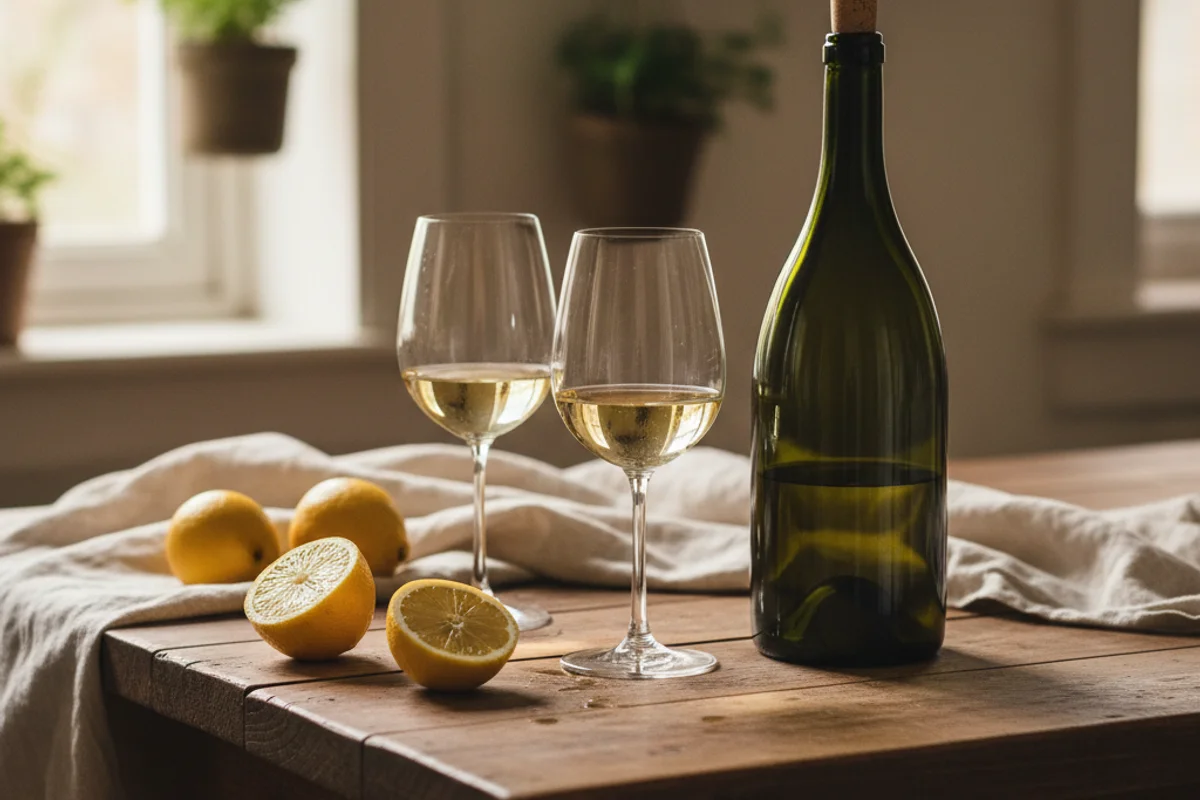
Lemon wine is a paradox in a glass. The fruit delivers an aggressive, mouth-puckering punch of citric acid that demands heavy dilution — but dilute too much and you’ve made lemon-scented water with an attitude problem. The solution is to anchor the wine with something that adds body and backbone. White grape juice concentrate does exactly that, rounding out the thin edges while letting that bright, sunny lemon character come through. Done right, lemon wine finishes clean, crisp, and surprisingly complex — the kind of thing you pour for guests who claim they don’t like homemade wine.
The beginner trap: Skipping the zest entirely and using only juice — you’ll get acid without aroma, and the finished wine will taste flat and one-dimensional.
Ingredients
(Makes 1 gallon — Recipe 1: Full-bodied style)
- 1 lb 14 oz granulated sugar
- 8 large lemons (zest from 3, juice from all 8)
- 1 can (10 oz) frozen white grape juice concentrate, thawed
- Water to bring total volume to 1 gallon
- ¼ tsp grape tannin (or 1 oz strongly brewed plain black tea)
- ¼ tsp pectic enzyme
- 1 tsp yeast nutrient
- 1 packet Champagne wine yeast (or any dry wine yeast)
Method
- Bring about half a gallon of water to a boil, then stir in the sugar until fully dissolved. Set aside to cool.
- Zest 3 of the lemons directly into your primary fermenter, then juice all 8 lemons and add the juice to the fermenter.
- Pour in the grape juice concentrate and the cooled sugar water. Top up with additional cool water to reach 1 gallon total volume.
- Stir in the grape tannin, yeast nutrient, and pectic enzyme. Cover the fermenter loosely and let it sit for 12 hours.
- After 12 hours, sprinkle in the yeast. Re-cover and ferment at room temperature, stirring once daily.
- After about 8 days (or when the specific gravity drops to 1.020), rack the wine into a 1-gallon glass secondary fermenter. Top up if needed and fit an airlock.
- Check the specific gravity every few weeks. When it reaches 1.000 (roughly 4–6 weeks), rack again into a clean vessel, top up, and refit the airlock.
- Age in the sealed secondary for 6 months, then rack into bottles. Age an additional 6 months before opening.
Why this works
Lemons are loaded with citric acid — so much that fermenting straight lemon juice would produce a wine too tart for most palates. Diluting fixes the acid problem but creates a new one: thin body and weak flavor. That’s where the white grape juice concentrate earns its place. It contributes fermentable sugars, natural grape tannins, and mouthfeel without overpowering the lemon. The pectic enzyme breaks down pectin in the lemon juice, which prevents a stubborn haze from forming in your finished wine. Zest supplies the volatile aromatic compounds (mainly limonene) that give lemon wine its recognizable nose — juice alone can’t do that job.
Notes
If fresh lemons aren’t available or are out of season, 100% bottled lemon juice works in a pinch — use about 1½ cups and reduce added water accordingly, but expect a slightly less aromatic result. Grape tannin powder is sold at homebrew shops; if you can’t find it, steep a plain black tea bag in hot water for 5 minutes and add 1 oz of that liquid instead. For a lighter, drier style with no grape concentrate, increase sugar to 2½ lbs and extend aging to at least one full year — patience is the main ingredient.