LETTUCE WINES
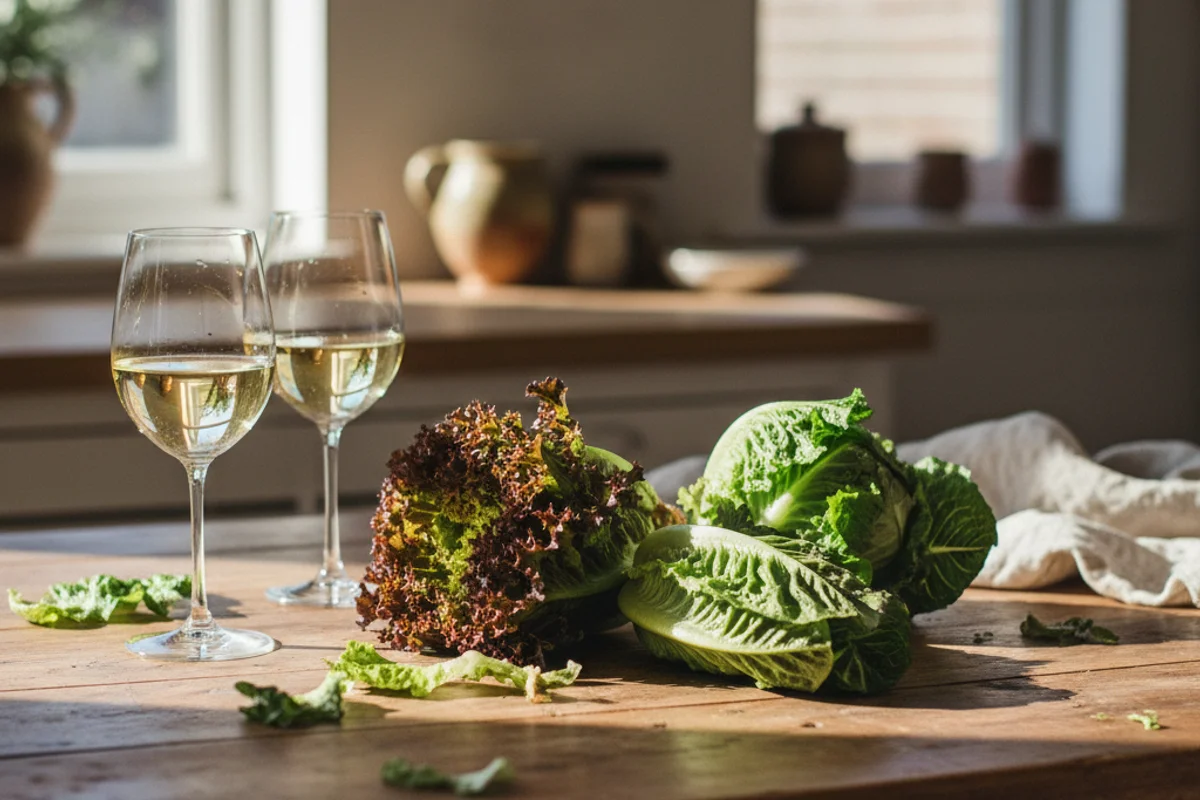
Lettuce wine sounds like a dare, but there’s real logic behind it. Lettuce brings a subtle, green, almost grassy character to the fermenting vessel — think of it as a neutral canvas rather than a star ingredient. Because lettuce has no natural sugar, acid, or tannin to speak of, you’re building the structure entirely from the supporting cast: citrus for acid, raisins or grape concentrate for body, and sugar for alcohol. The result is a light, delicate wine that rewards patience more than most country wines do.
The beginner trap: Skipping the full aging time — lettuce wine tastes thin and harsh young, but six months in the bottle transforms it.
Two Recipes
These are two distinct versions. Version 1 uses golden raisins for body and a slightly higher sugar load. Version 2 swaps the raisins for frozen white grape juice concentrate, which ferments a little faster and is drinkable sooner.
Ingredients — Version 1 (Raisin-Based)
- 2 lbs fresh lettuce (any variety; romaine or iceberg both work)
- ½ lb golden raisins, chopped or minced
- 2½ lbs granulated white sugar
- 1 medium orange
- 1 lemon
- ⅛ tsp wine tannin (grape tannin powder, available online or at homebrew shops)
- 1 tsp yeast nutrient
- 1 Campden tablet, crushed
- Water to make 1 gallon total
- 1 packet wine yeast (Lalvin EC-1118 or any general-purpose wine yeast)
Ingredients — Version 2 (Grape Concentrate-Based)
- 3 lbs fresh lettuce
- 1 can (11.5 oz) frozen white grape juice concentrate (Welch’s 100% white grape works perfectly)
- 2 lbs granulated white sugar
- 1 medium orange
- 1 lemon
- ⅛ tsp wine tannin
- 1 tsp yeast nutrient
- 1 Campden tablet, crushed
- Water to make 1 gallon total
- 1 packet wine yeast
Method
- Chop the lettuce and place it in a large pot with ½ gallon of water. Bring to a boil, then reduce heat and hold at a low boil, covered, for 30 minutes.
- Strain out and discard the lettuce solids, keeping the liquid on the heat.
- Add the sugar to the hot liquid and stir until fully dissolved.
- Version 1: Pour the hot liquid into your primary fermenter over the minced raisins and the zest of the orange and lemon. Version 2: Pour over just the citrus zest — no raisins.
- Juice the orange and lemon and add the juice to the primary fermenter.
- Version 2 only: Add the thawed grape juice concentrate now and stir to combine.
- Add the yeast nutrient and tannin and stir until dissolved.
- Add enough cool water to bring the total volume to 1 gallon, then cover and let cool to room temperature.
- Once the must is at room temperature, add the crushed Campden tablet, stir well, cover, and leave it alone for 24 hours.
- Activate your yeast according to the packet directions, then pitch it into the must and stir.
- Stir the must twice daily until the specific gravity drops to 1.030.
- Strain the liquid through a nylon straining bag into your secondary fermenter (a 1-gallon glass jug works great) and fit an airlock.
- After 30 days, rack the wine off the sediment into a clean vessel, top up to the shoulder with water or a same-style wine, and refit the airlock.
- Repeat step 13 after another 60 days.
- Wait 60 more days. If the wine has cleared, rack it into bottles. If it’s still hazy, refit the airlock and wait another 60 days before bottling.
- Version 1: Age at least 6 months before opening. Version 2: Can be tasted earlier but improves with age.
Why This Works
Lettuce is mostly water — roughly 95% — with trace minerals and a small amount of chlorophyll-based pigments. Boiling extracts what little flavor compounds exist while also sanitizing the liquid. Because lettuce contributes zero fermentable sugar, zero acid, and essentially zero tannin, every structural element has to come from somewhere else. Raisins and grape concentrate provide unfermented grape solids and natural grape acids (tartaric and malic) that give the wine body and a familiar wine-like backbone. Citrus juice supplies the tartness (citric acid) yeast need for a healthy ferment. Campden (sodium or potassium metabisulfite) knocks out wild yeast and bacteria before your chosen yeast takes over 24 hours later, giving it a clean runway.
Notes
If you can’t find wine tannin powder at a homebrew shop, steep one plain black tea bag in a half cup of hot water for 5 minutes and add that liquid to the must instead — it contributes a similar low level of tannin. For Version 2, any brand of 100% white grape juice concentrate from the grocery store freezer section works fine; avoid “grape drink” blends with added sweeteners. If your finished wine won’t clear after repeated waiting, a fining agent like Sparkolloid (follow package directions) will usually do the job.