Lovage Wine
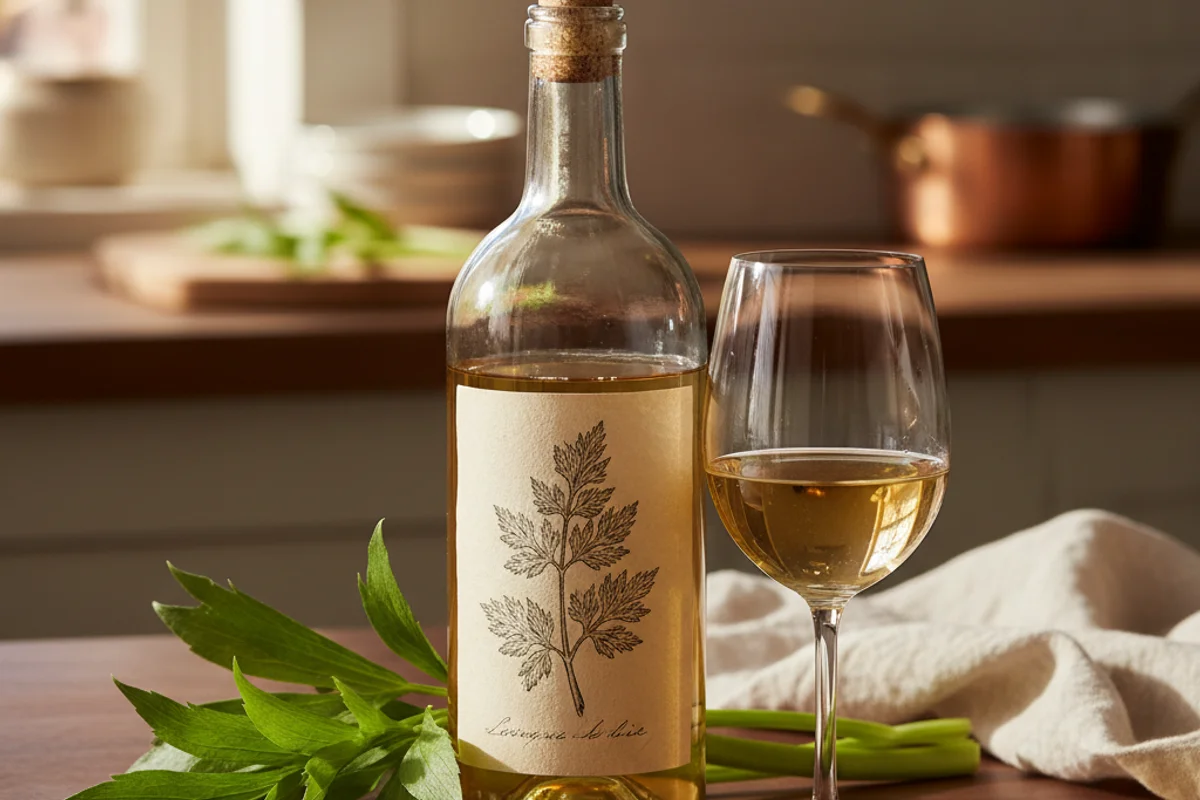
Think of lovage as celery’s bolder, more aromatic cousin — all anise and green with a faint medicinal bite. Once a staple of medieval herb gardens, it faded from kitchens but never fully disappeared. Turning it into wine means coaxing out those bright, sharp volatile compounds without letting them bulldoze everything else. The result is dry, herbal, and genuinely unusual — not a crowd-pleaser, but a conversation starter that rewards patience and a curious palate.
The beginner trap: Steeping the lovage too long or skipping the seed-cracking step will leave your wine either flat and thin or harshly bitter — crack the seeds and hold the steep to 12 hours.
Ingredients
- 1½ lbs fresh lovage leaves, washed
- 48 lovage seeds (about 4 dozen), cracked
- 2 lbs granulated white sugar
- 2 tsp acid blend (or 1½ tsp citric acid as a substitute)
- ¼ tsp wine tannin (or 1 cup strong unsweetened black tea)
- 7½ pints water, divided
- 1 Campden tablet, crushed
- 1 tsp yeast nutrient
- 1 packet Sauterne, Hock, or Champagne wine yeast
Method
- Bring 1 quart of the water to a boil and stir in the sugar until fully dissolved. Set aside.
- Crack the lovage seeds using a rolling pin — wrap them in a clean kitchen towel first to keep them contained.
- Place the washed leaves, cracked seeds, acid blend, tannin, crushed Campden tablet, and yeast nutrient into your primary fermenter.
- Combine the hot sugar water with the remaining cold water, then pour the whole mixture over the lovage in the primary.
- Cover the primary with a clean cloth and let it steep for at least 12 hours — no longer than overnight.
- Activate your yeast according to the packet instructions, then stir it into the must.
- Ferment for 5 days at room temperature, punching down the floating cap and stirring thoroughly twice each day.
- Strain out all the leaves and seeds, then transfer the liquid to a clean secondary fermenter and attach an airlock.
- Let it ferment to dryness, then rack into a fresh vessel, top up to reduce headspace, and reattach the airlock. Wait until the wine clears.
- Rack again into a clean secondary, add a stabilizer (potassium sorbate plus a fresh Campden tablet), then sweeten to taste if desired.
- Reattach the airlock and set aside for 2 months. If a light dusting of sediment forms, rack one more time and wait another month before bottling.
- Bottle, then store for at least 2 months before drinking — serve chilled.
Why this works
Lovage gets its punch from a compound called phthalides — the same family of molecules that give celery its distinctive smell — along with volatile terpenes concentrated in the seeds. Cracking the seeds opens the outer hull and lets those aromatics dissolve into the must during the steep. The 12-hour window is deliberate: long enough to extract flavor, short enough to avoid pulling excessive harsh tannins from the seed husks. Adding tannin separately keeps structure in the wine without bitterness. The extended bottle aging lets those sharp green notes soften and integrate into something that actually resembles a finished wine rather than an infusion.
Notes
Fresh lovage from a garden is ideal, but if you grow it in abundance, you can freeze the leaves in airtight bags and use them directly from frozen — just thaw and pat dry before use. Acid blend is available at any homebrew shop, but citric acid from the baking aisle works well here. If you can’t source lovage seeds, simply double the leaf quantity and reduce the steep time slightly to compensate.