LYCHEE WINE
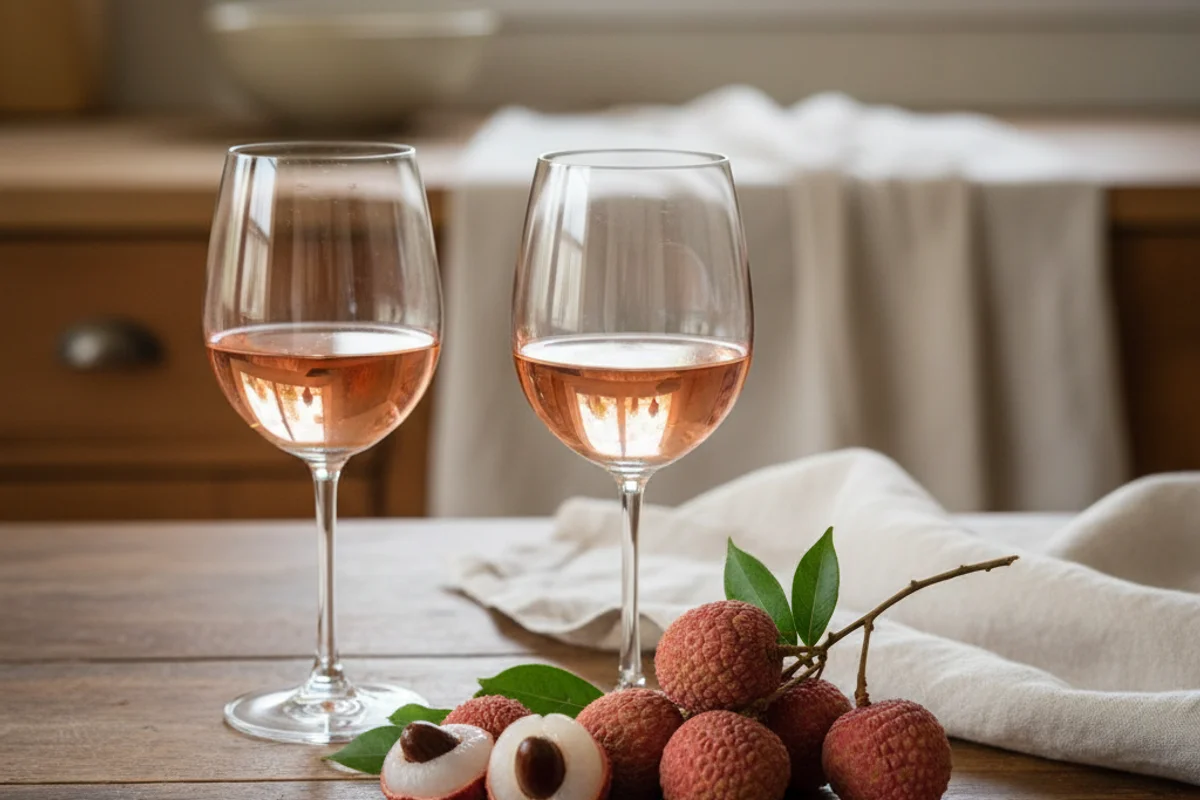
Crack open a fresh lychee and you get a perfume-forward, almost floral burst — somewhere between a ripe pear and a rose petal soaked in honey. That flavor profile translates beautifully into wine. Lychee has just enough natural sugar to contribute body, but not enough acid or tannin to hold its own in a ferment. That’s where you step in. The result, done right, is a pale, delicate white wine that works equally well bone-dry or lightly sweet. Think Riesling’s floral cousin, minus the grapes.
The beginner trap: Lychee fruit is low in both acid and tannin, so skipping or skimping on citric acid and tannin will leave your finished wine tasting flat and oddly shapeless.
Ingredients
- 5 lbs fresh lychees (or two 20 oz cans of lychees in syrup, drained — reduce added sugar by 8 oz if using canned)
- 1 lb 10 oz granulated white sugar
- ¼ oz citric acid (about 1½ teaspoons; bottled lemon juice won’t work as a reliable substitute here)
- ¼ tsp grape tannin powder (found at homebrew shops or online)
- 1 tsp yeast nutrient
- Water to make 1 gallon total
- 1 packet dry white wine yeast (Chablis-style or any crisp white wine yeast; Lalvin 71B or EC-1118 work well)
Method
- Bring about half the water to a boil. While it heats, peel and pit the lychees, then chop the flesh roughly.
- Place the chopped fruit and all the sugar into your primary fermenter. Pour the boiling water over both and stir until the sugar fully dissolves.
- Top up with cool water to reach 1 gallon total. Let the must cool to below 75°F before adding anything else.
- Stir in the citric acid, tannin, and yeast nutrient. Rehydrate your yeast according to the packet instructions, then add it to the must.
- Cover the fermenter with a clean cloth and secure it. Once fermentation is clearly active and vigorous, stir the must once daily for 5 days.
- Strain the liquid through a fine mesh strainer or nylon bag into your secondary fermenter (a 1-gallon glass jug works perfectly). Discard the spent pulp and fit an airlock.
- Rack into a clean vessel every 30 days until the wine runs clear, then continue racking every 30 days until a full 30-day period passes with zero sediment dropping.
- Stabilize with potassium sorbate and potassium metabisulfite, then sweeten to taste if desired. Wait 10 days, confirm no renewed fermentation, then rack into bottles.
Why this works
Lychee pulp is mostly water and simple sugars — fructose and glucose — which yeast consume quickly. The problem is that lychee brings almost no natural acidity (pH tends to run high) and virtually no tannin. Acid matters because it lowers the must’s pH, which protects against spoilage bacteria and keeps the wine tasting bright. Tannin provides structure and a slight astringency that balances the fruit’s sweetness. Adding citric acid and grape tannin powder before fermentation essentially builds the skeleton that lychee can’t build on its own. The extended racking schedule — waiting until zero sediment drops — ensures you’re not bottling a wine that still has dead yeast cells and proteins in suspension, which would otherwise make your final product hazy and potentially referment in the bottle.
Notes
Frozen lychees (sold in many Asian grocery stores year-round) are an excellent substitute for fresh — freeze-thaw cycles break down cell walls and actually improve juice extraction. If you use canned lychees in syrup, cut the added sugar noticeably, since the syrup contributes significant sweetness. Grape tannin powder is the easiest form to work with; if you can’t find it, a very strong cup of plain black tea (cooled) added in small amounts is a workable pinch-hit.