MANDARIN ORANGE WINE
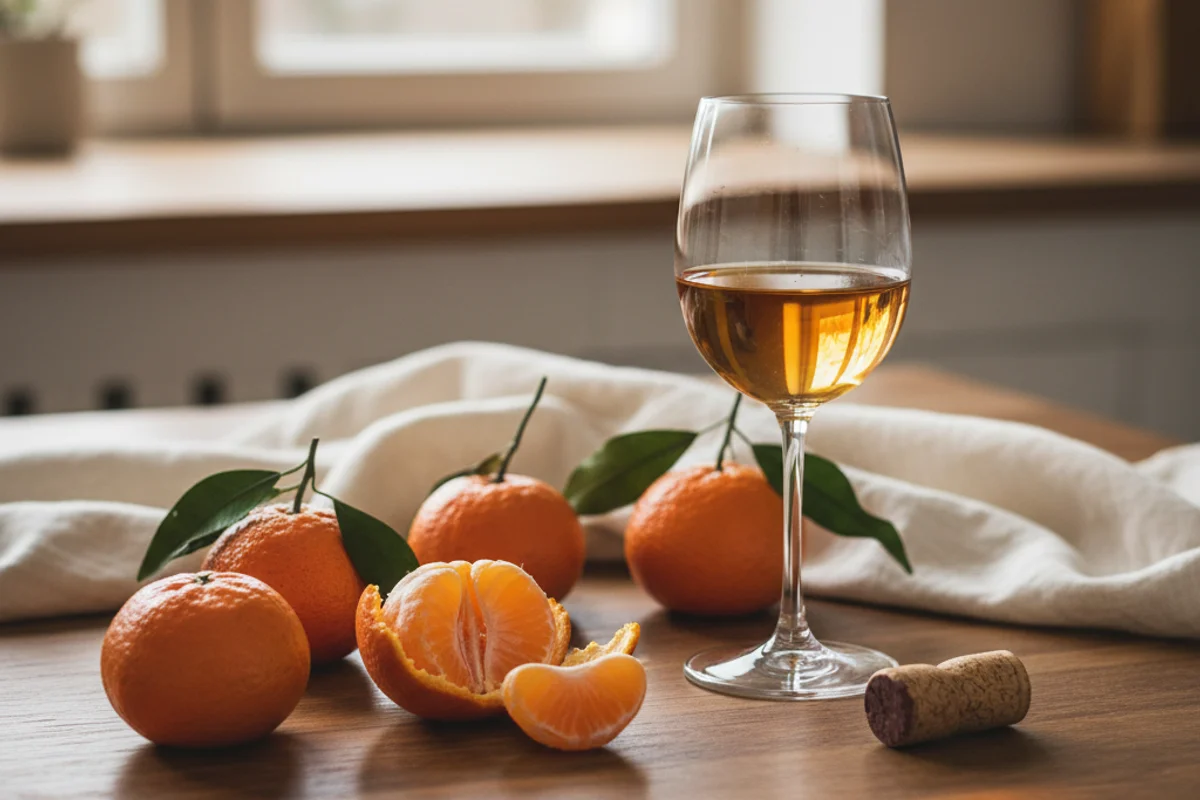
Think of mandarin oranges as the citrus world’s overachiever — sweeter than a navel orange, more fragrant than a clementine, and punching well above their weight in flavor. A single pint of fresh juice is enough to build a full gallon of wine with real personality. The finished product lands somewhere between a light white and a fruit wine: pale, aromatic, and refreshing with just a touch of residual sweetness to balance the natural acidity.
The beginner trap: Mandarin juice oxidizes fast — skip even a few minutes of air exposure before adding your Campden tablet and you’ll chase that browning flavor all the way to the bottle.
Ingredients
- 1 pint mandarin orange juice (fresh-squeezed or store-bought, not from concentrate)
- 2 lbs granulated white sugar
- 6½ pints water
- 1 tsp citric acid
- 1 tsp yeast nutrient
- ½ tsp pectic enzyme
- 1 Campden tablet, crushed
- 1 packet Chablis, Hock, or dry white wine yeast (Lalvin EC-1118 works as a grocery-store-friendly substitute)
Method
- Juice your mandarins (or measure out store-bought juice) and pour it into your primary fermenter along with the water, sugar, citric acid, and yeast nutrient. Stir thoroughly until the sugar fully dissolves.
- Crush the Campden tablet and stir it in immediately to protect the juice from oxidation. Cover the fermenter and let it rest for 12 hours.
- Add the pectic enzyme, stir well, recover, and wait another 12 hours.
- Activate your yeast according to the packet instructions, then pitch it into the must and cover the fermenter loosely.
- Stir the must once daily until vigorous bubbling slows down, then continue fermenting covered until the specific gravity drops to 1.010 or below.
- Rack into a clean secondary fermenter (a 1-gallon glass jug works great) and fit an airlock.
- Ferment to dryness, racking once or twice more as sediment builds up. Keep the airlock topped up with water so it never dries out.
- Once fermentation is complete, stabilize with a fresh Campden tablet and potassium sorbate, then bulk age for 4–6 months.
- Taste before bottling and back-sweeten lightly if desired — a little goes a long way here.
Why this works
Mandarin oranges carry two things that shape this recipe: citric acid and sucrose. The citric acid keeps the wine bright and gives yeast a healthy, low-pH environment to work in. The sucrose in the fruit (and the added sugar) feeds fermentation, but because we’re diluting one pint of juice into a full gallon, the yeast never get overwhelmed. Pectic enzyme breaks down the naturally occurring pectin in citrus juice — skip it and you risk a hazy wine that never clears no matter how long you wait. The Campden tablet at the very start does double duty: it knocks out wild yeast and bacteria, and it acts as an antioxidant to keep that fresh citrus color and aroma intact.
Notes
Frozen mandarin orange juice concentrate (thawed and diluted) works well here — use roughly ½ cup concentrate in place of the pint of fresh juice and adjust water accordingly. If you want a stronger fruit flavor, scale up to 1½–2 pints of juice per gallon and reduce the water by the same amount. Back-sweeten conservatively; this wine’s brightness is its best feature and excess sugar can flatten it quickly.