MANGO WINE
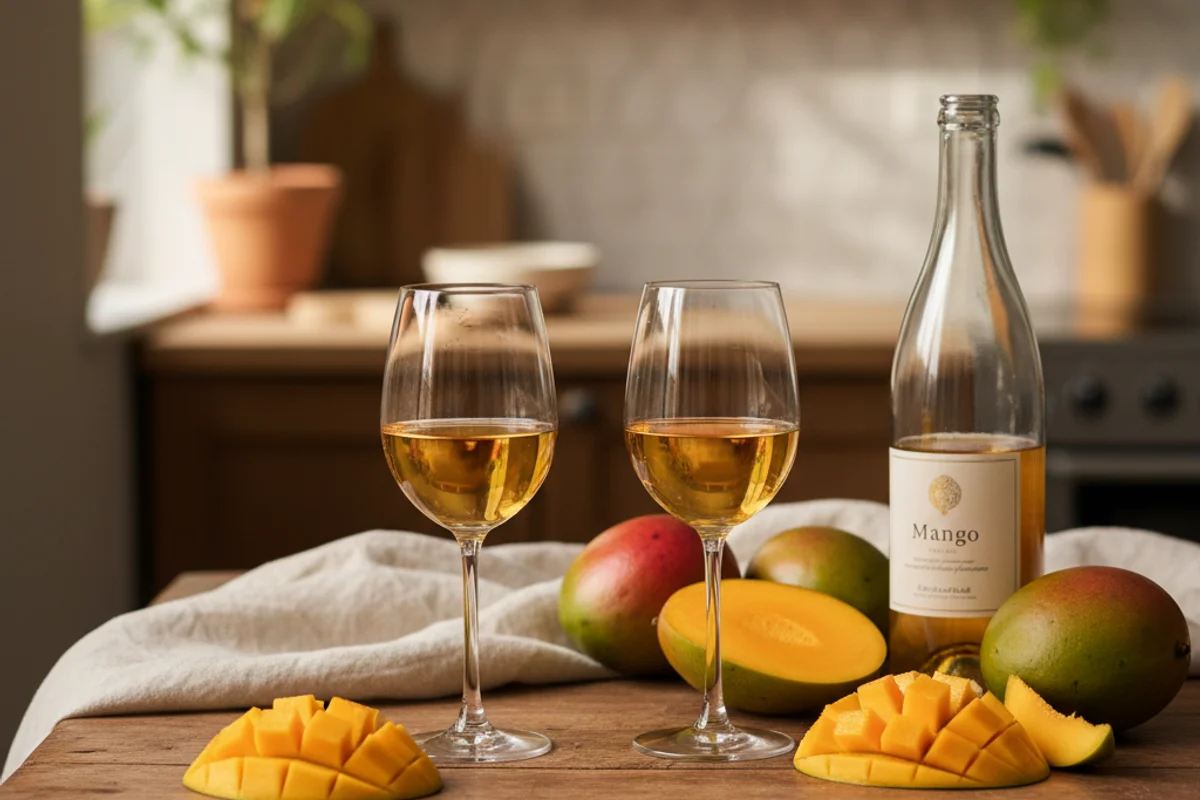
Mango brings something almost unfair to the winemaking table — a tropical perfume, a honey-like sweetness, and a deep golden color that grape wine spends years chasing. When fermented well, it produces a wine that smells like a ripe fruit stand on a warm afternoon and finishes clean and bright. This is a country wine that earns compliments from people who claim they only drink “real” wine. Give it a full year to settle into itself. Patience is the ingredient that costs nothing and pays the most.
The beginner trap: Skipping the pectic enzyme — mango is loaded with pectin, and without it you’ll end up with a permanently hazy wine that never clears no matter how long you wait.
Ingredients
- 3–4 lbs fresh mango (fresh or frozen works; about 3 large mangos)
- 1 lb 13 oz granulated white sugar
- 7¼ pts (about 3.6 quarts) water
- 1½ tsp acid blend (find at homebrew shops; or substitute 1 tsp lemon juice per ½ tsp as a rough stand-in)
- ½ tsp pectic enzyme
- 1 tsp yeast nutrient
- ¼ tsp wine tannin (or 1 strongly brewed, cooled cup of plain black tea)
- 1 packet Montrachet or Champagne wine yeast
Method
- Bring the water to a boil and dissolve the sugar in it completely, then set aside to cool.
- Peel the mangos, slice the flesh away from the pit, and dice it into rough chunks.
- Place the diced fruit into a nylon straining bag, tie it closed, and set it in your primary fermenter (a food-grade bucket works fine).
- Mash the fruit through the bag using clean hands or a sanitized potato masher until it’s well broken down.
- Pour the sugar water over the mashed fruit, then stir in the acid blend, tannin, and yeast nutrient.
- Cover the fermenter and let everything cool to room temperature (below 75°F).
- Once cool, add the pectic enzyme, cover again, and leave it alone for 12 hours.
- Sprinkle in the yeast, cover, and ferment at room temperature for 10 days, squeezing the bag 2–3 times each day to extract juice and flavor.
- After 10 days, lift the bag, let it drip drain, give it a gentle squeeze, and discard the pulp.
- Let the liquid settle overnight, then rack (siphon) it into a clean secondary fermenter, top up to reduce headspace, and fit an airlock.
- Rack again at 30 days, then once every two months for the next six months.
- Stabilize with potassium sorbate and potassium metabisulfite, sweeten to taste if desired, wait 10 days, then rack into bottles.
- Age at least one year before drinking; serve chilled or over ice.
Why this works
Mango flesh is rich in pectins — long-chain carbohydrate molecules that naturally cause haze in finished wine. Pectic enzyme (pectinase) breaks those chains apart before fermentation gets going, which lets the wine clear properly later. Adding it before the yeast matters: active fermentation raises alcohol levels, and alcohol reduces how well the enzyme works. The 12-hour wait after adding pectic enzyme gives it time to do its job in a low-alcohol, room-temperature environment where it’s most effective. Yeast nutrient supports a healthy, complete fermentation because fruit musts — unlike grape juice — are often short on the nitrogen that yeast need to thrive.
Notes
Frozen mango chunks from the grocery store work extremely well here and are available year-round — the freezing process even helps break down cell walls for better juice extraction. If you can’t find acid blend, a measured amount of lemon juice can fill in, but the balance will be less precise. This wine benefits more from aging than most fruit wines, so resist the urge to open it early.