MANGOSTEEN WINE
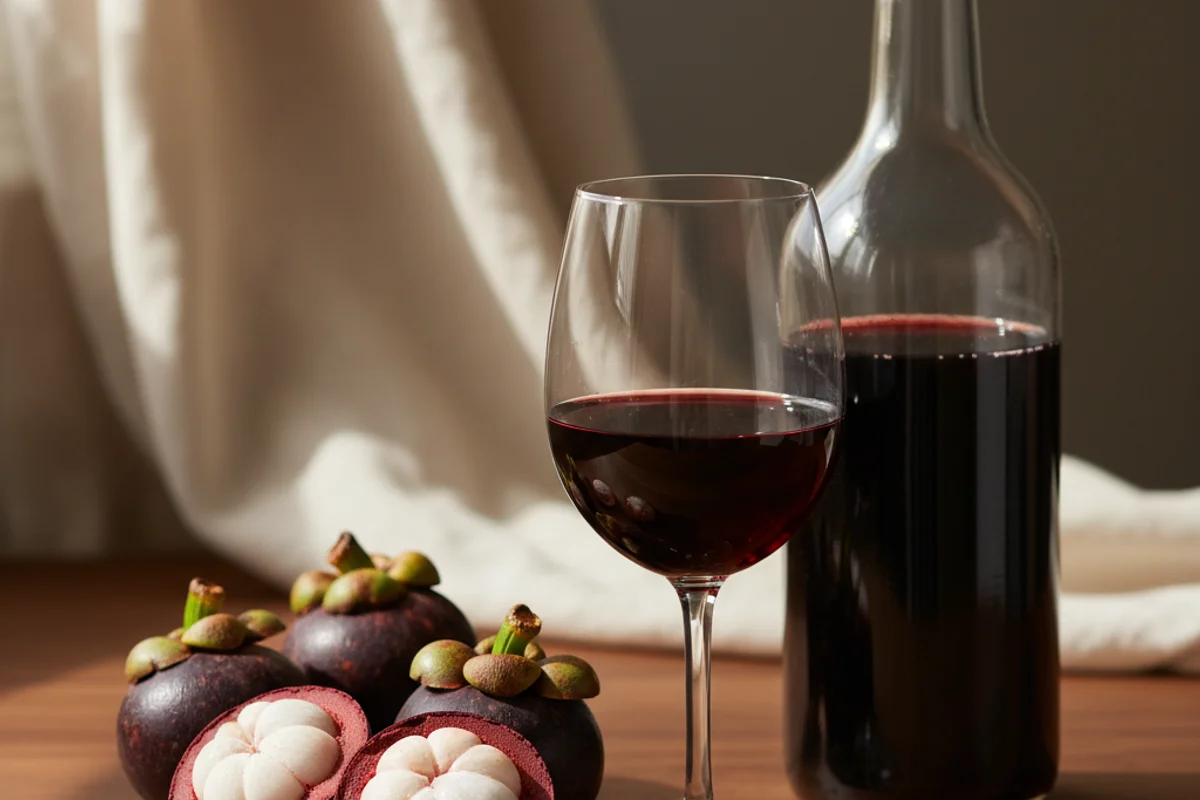
If a fruit could hold a royal title, the mangosteen would wear the crown. Native to Thailand and the broader Asian tropics, this small, purple-rinded fruit hides snow-white segments inside that taste like someone blended a peach, a lychee, and a hint of citrus, then forgot to stop. Fresh mangosteen is nearly impossible to find at a typical grocery store in North America, but good-quality bottled juice brings those flavors into your fermentation vessel just fine — and the resulting wine is bright, aromatic, and surprisingly elegant.
The beginner trap: Rushing the long clearing and racking schedule will leave you with a cloudy, rough wine — patience through multiple rackings is what turns this juice into something genuinely special.
Ingredients
- 150 fl oz (six 20-oz bottles) mangosteen juice (look for 100% juice with no added sweeteners; Nantucket Nectars or any pure Asian fruit juice brand works if Mystic Zotics is unavailable)
- 1½ lbs finely granulated white sugar
- 1½ tsp acid blend
- 1 tsp pectic enzyme
- 1 tsp yeast nutrient
- ¼ tsp grape tannin (or 1 cooled cup of strong-brewed black tea as a substitute)
- 1 packet Lalvin K1V-1116 wine yeast (or any Champagne-style wine yeast)
- 1 Campden tablet
Method
- Pour all the juice into your primary fermenter and stir in the sugar until it fully dissolves.
- Add the acid blend, pectic enzyme, yeast nutrient, and grape tannin, stirring well after each addition.
- Cover the primary fermenter loosely and let it rest for 10–12 hours at room temperature.
- Activate your yeast according to packet directions, then add it to the must and recover the fermenter.
- Stir the must once daily until the vigorous bubbling slows noticeably — this typically takes 5–7 days.
- Transfer the wine to a secondary fermenter (a 4-liter jug works well at this volume) and attach an airlock.
- After 45 days, rack the wine into a standard 1-gallon jug, top up to minimize headspace, and reattach the airlock.
- Rack again every 60 days until you see zero sediment forming between rackings.
- Stabilize the wine according to your stabilizer’s instructions, then set it aside for 4 months.
- Crush 1 Campden tablet, dissolve it in a small splash of wine, and stir it into the secondary; reattach the airlock and wait 48 hours before bottling.
Why this works
Mangosteen juice is rich in xanthones — natural antioxidant compounds that are delicate and can degrade under stress. Pectic enzyme breaks down fruit pectin early, which prevents a stubborn haze that no amount of racking will fix. The long, patient racking schedule isn’t just tradition — it gives fine particles time to settle by gravity rather than forcing a filtration that can strip aroma. K1V-1116 yeast is a strong, clean fermenter that handles lower-nutrient musts well and preserves the delicate floral top notes that make mangosteen worth the effort in the first place. The Campden tablet at the end acts as a final antimicrobial and antioxidant shield before the wine goes into the bottle.
Notes
If you can’t find mangosteen juice at an Asian grocery store or online, look for blended tropical juice products that list mangosteen as a primary ingredient — avoid anything with added sugar or juice concentrates, as they’ll throw off your balance. Frozen mangosteen pulp, if available, can be used in place of juice; thaw completely and strain before adding. This wine is ready to drink as soon as it’s clear, but an extra few months in the bottle will reward you.