May Wine
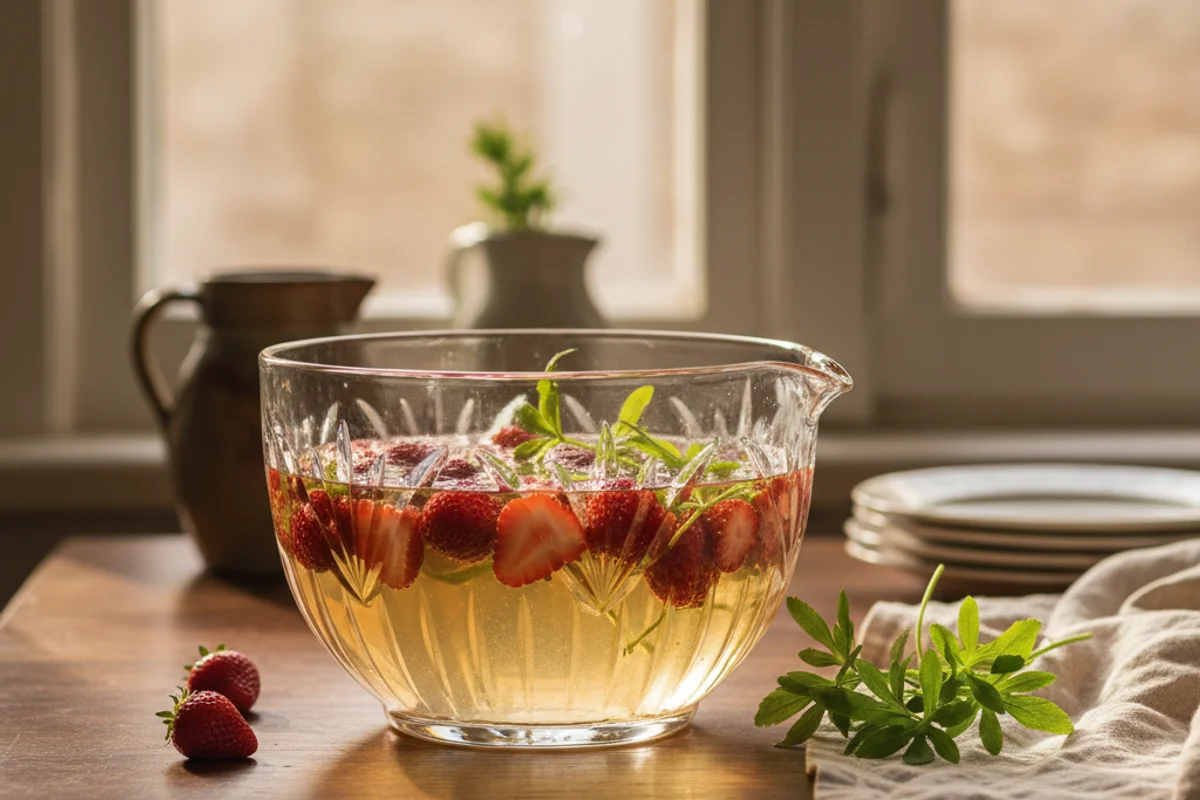
Picture a gallon jug sitting in a cool corner, slowly transforming a jumble of spring herbs, tart rhubarb, and raw sugar into something quietly complex. This recipe traces back to a handwritten 19th-century note — imprecise by modern standards, brilliant in spirit. The idea is simple: pick three to five fragrant, edible plants from your yard or farmer’s market, combine them with rhubarb and lemon, and let time do the heavy lifting. The result is a floral, lightly tart country wine that rewards patience over precision.
The beginner trap: Skipping the Campden tablet at the start and relying on wild yeast alone — you’ll likely end up with an unpredictable ferment or a vinegary mess instead of wine.
Ingredients
- 4 lbs raw cane sugar (or honey — raw sugar preferred)
- 2 quarts fresh red rhubarb stalks, chopped small
- Zest and juice of 2 lemons
- 1 thin slice fresh ginger root
- 1 tsp loose black tea leaves (used or fresh)
- 3½ quarts water (tap is fine)
- 1 Campden tablet, crushed
- 1 tsp yeast nutrient
- 1 packet general-purpose wine yeast (e.g., Lalvin EC-1118 or Red Star Côte des Blancs)
- Choose 3–5 of the following aromatic additions:
- 1 quart dandelion petals (green parts removed)
- 2 large handfuls fresh rose petals (fragrant variety)
- 1–2 cups fresh lemon balm leaves
- 1 handful dried lavender flowers (or ½ cup fresh)
- 1–2 cups fresh sage leaves
- 1 small sprig fresh rosemary (about 3 inches)
- 1–2 cups young nettle tops (wear gloves)
- 1 handful elderflower blossoms (fresh or dried)
Method
- Combine the rhubarb, lemon zest and juice, ginger, tea leaves, and your chosen aromatic herbs in a clean 2-gallon bucket or crock. Pour in all 3½ quarts of water.
- Crush one Campden tablet and stir it into the mixture. Cover with a clean cloth and let it sit at room temperature for 24 hours to sanitize the must and knock out wild yeast.
- Strain the liquid through a fine-mesh bag or cheesecloth into a second clean bucket, squeezing the bag firmly to extract all the juice from the rhubarb pulp. Discard the solids.
- Add half the sugar (2 lbs) and all the yeast nutrient to the strained liquid. Stir well until the sugar fully dissolves — no undissolved granules left on the bottom.
- Sprinkle the wine yeast over the surface, stir gently, and transfer the liquid into a 1-gallon glass jug. Fit an airlock and stopper, then move the jug to a warm spot (68–75°F).
- Once vigorous bubbling slows down — usually after 4 to 5 days — dissolve the remaining 2 lbs of sugar in a small amount of warm water and stir it gently into the jug. Top up with water to within an inch of the neck.
- Re-fit the airlock and move the jug to a cool, dark location. Let it sit undisturbed until mid to late summer (about 3 months).
- Rack the wine off the sediment into a clean jug using a siphon. Re-fit the airlock and leave it alone for another 3 months.
- Rack again. If the wine is clear and has no off smells, bottle it and cork tightly. Allow at least 3 more months of bottle aging before drinking — 6 months is better.
Why this works
Rhubarb brings two things to this recipe: tart malic acid and natural body. The lemon adds citric acid, which works alongside the rhubarb to keep the pH low enough for yeast to stay healthy while suppressing most spoilage bacteria. The tea leaves contribute a small but meaningful dose of tannin — the same polyphenol compound found in grape skins — which helps the wine clarify and gives it a little structural grip. The fragrant herbs don’t just add flavor; many contain volatile aromatic compounds that slowly bind with alcohol during aging, softening and integrating over time. The two-stage sugar addition is a smart load-management trick: dumping all the sugar in at once can stress yeast with high osmotic pressure, stalling fermentation before it ever gets going.
Notes
If fresh rhubarb isn’t available, frozen works well — thaw it completely and use the liquid that drains off, since freezing ruptures the cell walls and releases more juice. Dried lavender is much more concentrated than fresh; cut the quantity in half if that’s what you have. If you can’t find fresh rose petals with a strong scent, dried culinary rose petals from a spice shop or bulk food store are a solid substitute.