MINCEMEAT WINE
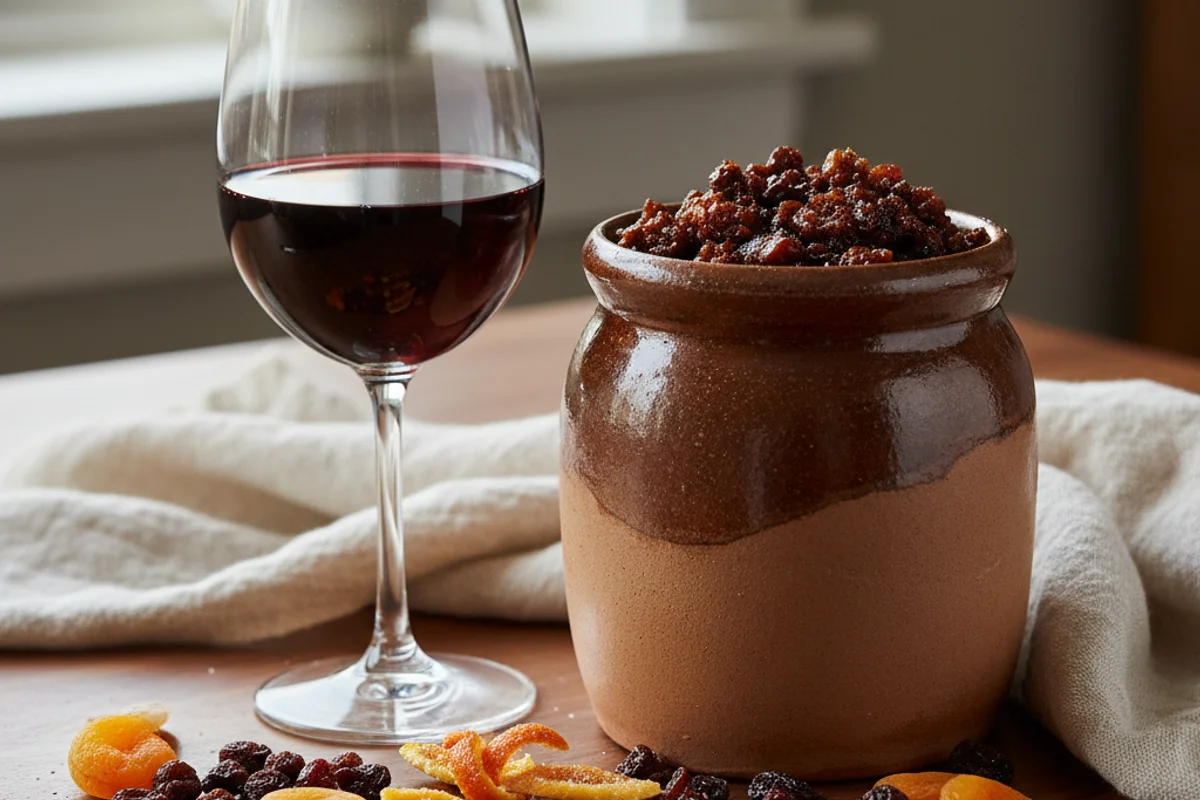
Think of mincemeat as a pre-loaded flavor bomb. Apples, raisins, warm spices, citrus zest, and a splash of brandy or rum are already packed into that jar sitting on the holiday shelf at your grocery store. When you ferment it, those layered flavors — sweet, spiced, slightly boozy — carry over into a wine that tastes like Christmas in a glass. It’s unusual, yes. It’s also genuinely good. Give it a full year to mellow and you’ll have something worth opening for guests.
The beginner trap: Mincemeat is loaded with pectin, which will leave your wine permanently hazy if you skip or under-dose the pectic enzyme.
Ingredients
- 2 lbs mincemeat (jarred or canned; the kind without meat works fine and is easiest to find near Thanksgiving and Christmas)
- 1 lb 11 oz granulated sugar
- 1 can (11.5 oz) Welch’s 100% White Grape Juice frozen concentrate (or any 100% white grape juice concentrate)
- 1 lemon, zest and juice
- 1 orange, zest and juice
- 2 tsp pectic enzyme
- ¼ tsp grape tannin (or 1 cup strong-brewed black tea, cooled, as a substitute)
- 6½ pints warm water
- 1 tsp yeast nutrient
- 1 packet general-purpose wine yeast
Method
- Place the mincemeat inside a nylon straining bag and tie it closed, then add it to your primary fermenter along with all other ingredients except the yeast.
- Stir everything together, cover the fermenter, and let it sit for 12 hours so the pectic enzyme can start breaking down fruit solids.
- Activate your yeast according to the packet instructions, then stir it into the must and cover the fermenter with a sanitized cloth.
- Ferment in a warm spot, stirring once daily, until vigorous bubbling slows down — this usually takes 7 to 10 days.
- Check the specific gravity; when it reads 1.010 or below, squeeze out the straining bag and transfer the wine to a sanitized secondary fermenter fitted with an airlock.
- After 60 days, check for clarity — if the wine is still cloudy, rack it into a clean vessel and stir in 1 additional tsp of pectic enzyme, then reattach the airlock and wait another 30 days.
- Once the wine is clear, rack it again and add 1 crushed Campden tablet (sodium or potassium metabisulfite) and ½ tsp potassium sorbate, both dissolved in a small amount of wine first.
- Wait 10 days, then sweeten to taste if desired, and let the wine rest for another 30 days before bottling.
- Bottle and age for at least 1 year before drinking.
Why this works
Mincemeat contains a lot of pectin — the same stuff that makes jam gel. In a finished wine, pectin shows up as a stubborn, protein-like haze that won’t drop out on its own. Pectic enzyme (also called pectinase) breaks those long pectin chains into smaller fragments that can settle out or be filtered away. The trick is giving the enzyme enough time before fermentation starts, since alcohol reduces its effectiveness. That 12-hour head start before pitching yeast matters. If haze persists, a second dose after primary fermentation — when the alcohol level is still climbing — can finish the job.
Notes
Both meat-free and traditional mincemeat work here; most grocery-store jars are meat-free, which makes this recipe accessible year-round if you buy extra jars during the holiday season and store them. If grape tannin isn’t available at your local homebrew shop, a cup of strong unsweetened black tea adds a similar structural backbone. This wine benefits enormously from a full year of aging — at six months it may taste thin or sharp, but by twelve months the spice notes integrate and it becomes genuinely impressive.