MINT WINE
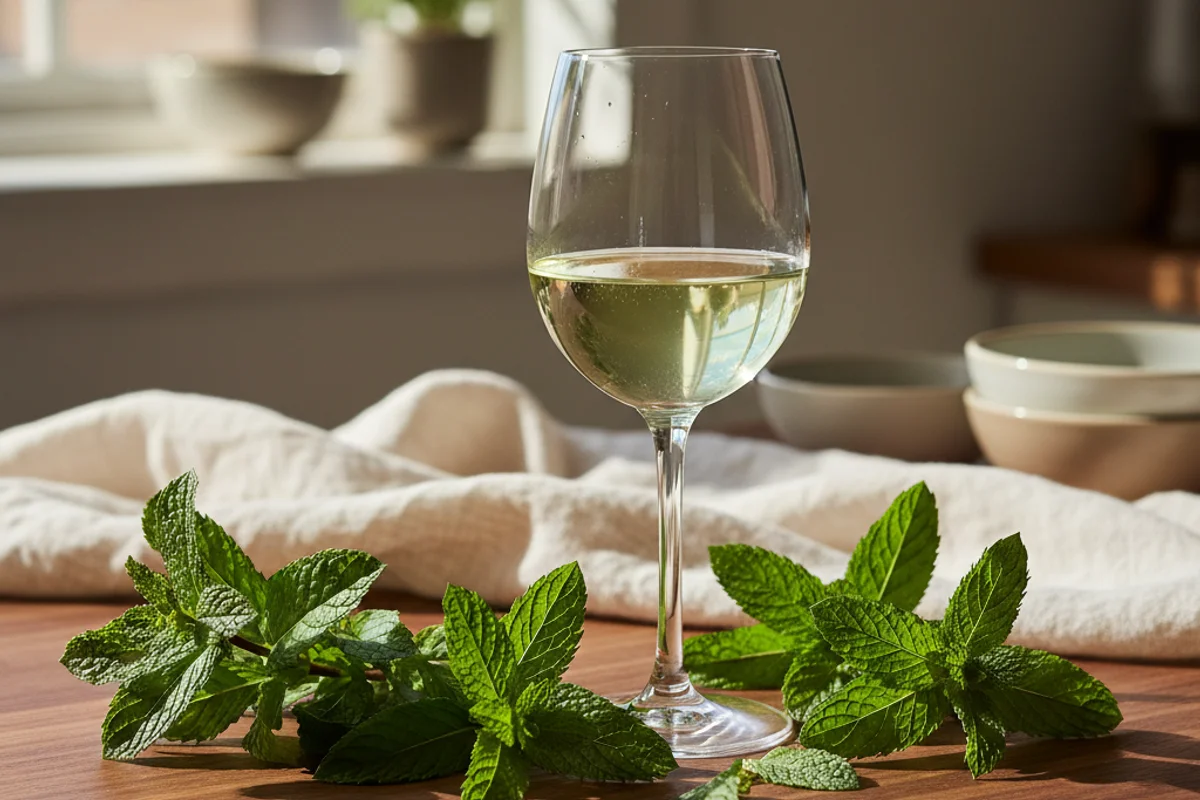
Think of mint wine as the herb garden’s answer to a crisp white — cool, bright, and just a little unexpected in the glass. The finished wine carries that clean menthol snap up front, then softens into something almost floral as it warms. It ferments dry and lean, which means the mint never turns aggressive. Spearmint and peppermint both work beautifully here. Skip horse mint entirely — it’s more medicinal than pleasant, and you’ll regret it at the one-year mark.
The beginner trap: Skipping the full year of aging — this wine tastes harsh and thin until it has had time to mellow, so patience is not optional here.
Ingredients
- 1 qt loosely packed fresh mint leaves (spearmint or peppermint work best)
- 2 lbs finely granulated white sugar
- 7¼ pts water (about 3.6 liters), divided
- 3 tsp citric acid (found in the canning aisle or homebrew shop)
- 1 tsp yeast nutrient
- ¼ tsp wine tannin (or substitute 2 oz strong-brewed plain black tea)
- 1 packet Champagne yeast (or any dry white wine yeast)
Method
- Rinse the mint leaves thoroughly under cold running water, then place them in a small pot with a lid.
- Bring all the water to a boil, then pour roughly one-quarter of it over the mint leaves in the pot.
- Bring the mint infusion to a gentle simmer, then remove from heat and let it steep for one hour with the lid on.
- While the mint steeps, stir the sugar into the remaining hot water until fully dissolved, then let that sugar-water cool.
- Strain the mint liquid through a fine mesh strainer or cheesecloth into your primary fermenter; press the leaves to extract as much liquid as possible, then discard them.
- Add the sugar-water, citric acid, tannin, and yeast nutrient to the primary and stir to combine.
- Let the must cool to room temperature, then pitch the yeast and cover the fermenter loosely.
- Ferment for 7 days, stirring once daily, then rack into a clean secondary fermenter, top up to minimize headspace, and fit an airlock.
- Rack again after 30 days, then once more 3 months after that.
- Stabilize with potassium sorbate and potassium metabisulfite, wait 10 days, then back-sweeten to taste if desired.
- Let the wine settle overnight, rack into bottles, and store in a dark place for at least one full year before opening. Serve chilled.
Why this works
Mint gets its flavor from volatile aromatic compounds — mainly menthol and menthone. Hot water pulls these compounds out of the leaves efficiently, but a full rolling boil would drive most of them off as steam before they ever reach your fermenter. Steeping at a simmer keeps those aromatics in the liquid where you want them. Citric acid drops the pH into a range where yeast thrive and spoilage bacteria struggle. The tannin adds just enough structure to keep the finished wine from tasting flat. Because there is no natural fruit sugar here, the sugar-to-water ratio controls your starting gravity and final alcohol level — stay close to the listed amounts for a balanced 11–12% ABV result.
Notes
Any common grocery-store mint variety works fine; a mix of spearmint and peppermint produces a more complex result. If citric acid is hard to find, the juice of two lemons is a reasonable stand-in. Potassium sorbate and potassium metabisulfite (Campden tablets) are the standard stabilizers — find them at any homebrew shop or online.